AP Board 7th Class Maths Solutions Chapter 1 పూర్ణ సంఖ్యలు Ex 1.3

SCERT AP 7th Class Maths Solutions Pdf Chapter 1 పూర్ణ సంఖ్యలు Ex 1.3 Textbook Exercise Questions and Answers.

AP State Syllabus 7th Class Maths Solutions 1st Lesson పూర్ణ సంఖ్యలు Exercise 1.3

ప్రశ్న 1.
కింది వాటిలో ఉన్న ధర్మాలను గుర్తించి రాయండి. విభాగ న్యాయమును పాటిస్తాయి.
(i) – 3 + 5 = 5 + (- 3)
సాధన.
– 3 + 5 = 5 + (- 3) సంకలన వినిమయ (స్థిత్యంతర) ధర్మము.

AP Board 7th Class Maths Solutions Chapter 1 పూర్ణ సంఖ్యలు Ex 1.3

(ii) – 2 × 1 = 1 × (- 2) = – 2
సాధన.
(- 2) × 1 = 1 × (- 2) = – 2 గుణకార తత్సమ ధర్మము.

(iii) [[- 5) × 2] × 3 = (- 5) × [[2 × 3)]
సాధన.
[(- 5) × 2] × 3 = (- 5) × [(2 × 3)] గుణకార సహచర న్యాయము

(iv) 18 × [7 + (- 3)] = [18 × 7] + [18 × (-3)]
సాధన.
18 × [7 + (- 3)] = [18 × 7] + [18 × (- 3)] సంకలనం పై గుణకార విభాగ న్యాయము

(v) – 5 × 6 = – 30
సాధన.
(- 5) × 6 = – 30 గుణకార సంవృత ధర్మము

(vi) – 3 + 0 = 0 + (-3) = – 3
సాధన.
-3 + 0 = 0 + (-3) = – 3 సంకలన తత్సమ ధర్మము

ప్రశ్న 2.
కింది సందర్భాలలో లబ్దము యొక్క సంజ్ఞ (గుర్తు)ను రాయండి.
(i) ఋణ పూర్ణ సంఖ్యకు 24 రెట్లు
సాధన.
(- 1) × (- 1) ×…………… 24 రెట్లు = + 1 (ధనాత్మకం)

(ii) ఋణ పూర్ణ సంఖ్యకు 35 రెట్లు
సాధన.
(- 1) × (- 1) × ………………. 35 రెట్లు = – 1 (ఋణాత్మకం)

ప్రశ్న 3.
కింది ఖాళీల నందు సరైన పూర్ణ సంఖ్యలను తగిన న్యాయాల ఆధారంగా పూరించుము.
(i) – 3 + ________ = – 3.
సాధన.
– 3 + 0 = – 3

(ii) 2 × (- 3) = (- 3) × ________
సాధన.
2 × (- 3) = (- 3) × 2

(iii) – 6 + [3 + (- 2)] = [[- 6) + ________] + ________
సాధన.
– 6 + [3 + (-2)] = [(- 6) + 3 ] + (- 2)

(iv) – 6 × ________ = – 6
సాధన.
– 6 × 1 = – 6

(v) 5 × [[- 6) + 9] = ________ × (-6) + 5 × ________
సాధన.
5 × [(- 6) + 9] = 5 × (- 6) + 5 × 9

AP Board 7th Class Maths Solutions Chapter 1 పూర్ణ సంఖ్యలు Ex 1.3

ప్రశ్న 4.
కింది వాక్యాలు సత్యమా ? అసత్యమా ? తెల్పండి. కారణాలు వ్రాయండి.
(i) 2 యొక్క గుణకార తత్సమాంశము – 2.
సాధన.
అసత్యం. 2 యొక్క గుణకార తత్సమాంశం [latex]\frac{1}{2}[/latex].

(ii) పూర్ణ సంఖ్యలు వ్యవకలనము దృష్ట్యా వినిమయ న్యాయము పాటిస్తాయి.
సాధన.
అసత్యం . (-5) – 3 ≠ 3 – (-5)

(iii) a మరియు bలు ఏవైనా రెండు పూర్ణ సంఖ్యలు అయిన a × b = b × a.
సాధన.
సత్యం .
4 × (-5) = (- 5) × 4 .
-(4 × 5) = – (5 × 4)
– 20 = -20
పూర్ణ సంఖ్యలు గుణకార వినిమయ ధర్మాన్ని పాటిస్తాయి.

(iv) సున్నాతో పూర్ణసంఖ్యల భాగహారము నిర్వచించబడదు.
సాధన.
సత్యం
6 ÷ 0 (సాధ్యం కాదు)

(v) 6 + (-6) = (-6) + 6 = 0 అనునది సంకలన తత్సమ ధర్మమును సూచించును.
సాధన.
అసత్యం.
6 + (-6) = (-6) + 6 = 0 అనునది సంకలన విలోమ ధర్మము.

ప్రశ్న 5.
కింది వాటిని తగిన న్యాయాలనుపయోగించి సూక్ష్మీ కరించుము.
(i) – 11 × ( 25) × (- 4)
సాధన.
– 11 × (- 25) × (4)
a × (b × c)
= (- 11) × [[- 25) × (- 4)]
= (- 11) × (25 × 4)
= – 11 × 100
= – (11 × 100)
= – 1100

(ii) 3× (- 18) + 3 × (- 32)
సాధన.
3 × (- 18) + 3 × (- 32)
(a × b) + (a × c) = a × (b + c)
= 3 × [[- 18) + (- 32)]
= 3 × (- 18 – 32)
= 3 × (- 50)
= – (3 × 50)
= – 150

AP Board 7th Class Maths Solutions Chapter 1 పూర్ణ సంఖ్యలు Ex 1.3

ప్రశ్న 6.
పూర్ణ సంఖ్యలు వ్యవకలనము దృష్ట్యా సహచర న్యాయమును పాటిస్తాయా ? ఉదాహరణ ద్వారా వివరించుము.
సాధన.
పాటించవు.
మూడు పూర్ణసంఖ్యలు a = 2, b = -3, c = 5 అనుకొందాం.
(i) (a – b) – c = [2 – (-3)] – (5)
= (2 + 3) – 5 = 5 – 5 = 0

(ii), a – (b – c) = 2 – [[-3) – (5)] = 2 – [- 3 – 5]
= 2 – (- 8) = 2 + 8 = 10
(a – b) – c ≠ a – (b – c)
∴ [2 – (-3)] – (5) ≠ 2 – [[-3) – (5)]
కావున, పూర్ణసంఖ్యలు వ్యవకలనం దృష్ట్యా సహచర న్యాయమును పాటించవు.

ప్రశ్న 7.
[(-5) × 2] × 3 = (-5) × [[2 × 3)] సరిచూడుము.
సాధన.
[(-5) × 2)] × 3 = (-5) × [(2 × 3)]
(a× b) × c = a × (b × c)
(- 10) × 3 = (-5) × 6
– 30 = – 30
∴ పూర్ణసంఖ్యలు గుణకారము దృష్ట్యా సహచర న్యాయమును పాటిస్తాయి.

AP Board 7th Class Maths Solutions Chapter 1 పూర్ణ సంఖ్యలు Ex 1.2

SCERT AP 7th Class Maths Solutions Pdf Chapter 1 పూర్ణ సంఖ్యలు Ex 1.2 Textbook Exercise Questions and Answers.

AP State Syllabus 7th Class Maths Solutions 1st Lesson పూర్ణ సంఖ్యలు Exercise 1.2

ప్రశ్న 1.
క్రింది వాటిని లెక్కించండి..
(i) (- 96) ÷ 16
సాధన.
(-96) ÷ 16 = – 6

AP Board 7th Class Maths Solutions Chapter 1 పూర్ణ సంఖ్యలు Ex 1.2

(ii) 98 ÷ (- 49)
సాధన.
98 ÷ (- 49) = – 2

(iii) (- 51) ÷ 17.
సాధన.
(- 51) ÷ 17 = – 3

(iv) 38 ÷ (- 19)
సాధన.
38 ÷ (- 19) = – 2

(v) (- 80) ÷ 20
సాధన.
(- 80) ÷ 20 = – 4.

(vi) (- 150) ÷ (- 25)
సాధన.
(- 150) ÷ (- 25) = 6

(vii) (- 600) ÷ 60
సాధన.
(- 600) ÷ 60 = – 10

(viii) (- 54) ÷9
సాధన.
(- 54) ÷ 9 = – 6

(ix) 130 ÷ 65
సాధన.
130 ÷ 65 = 2

(x) (- 315) ÷ (- 315)
సాధన.
(- 315) ÷ (- 315) = 1

ప్రశ్న 2.
రెండు పూర్ణ సంఖ్యల లబ్దము – 165. అందులో ఒక సంఖ్య -15 అయిన రెండవ సంఖ్య కనుగొనుము.
సాధన.
రెండు పూర్ణ సంఖ్యల లబ్దము = -165
అందులో ఒక సంఖ్య = -15
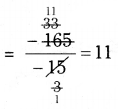
రెండవ సంఖ్య = (-165) + (-15)
AP Board 7th Class Maths Solutions Chapter 1 పూర్ణ సంఖ్యలు Ex 1.2 1
∴ రెండవ సంఖ్య = 11

AP Board 7th Class Maths Solutions Chapter 1 పూర్ణ సంఖ్యలు Ex 1.2

ప్రశ్న 3.
2020 సం||లో కోవిడ్-19 వలన ఒక కంపెనీ 6 నెలలు లాక్ డౌన్ లో వుండినది మరియు ₹ 1,32,000 నష్టపోయినది. నెలసరి సరాసరి నష్టమును కనుగొనుము.
AP Board 7th Class Maths Solutions Chapter 1 పూర్ణ సంఖ్యలు Ex 1.2 2
సాధన.
6 నెలల లాక్ డౌన్ సమయంలో వచ్చిన నష్టము = ₹(- 1,32,000)
నెలసరి సరాసరి నష్టము = – 1,32,000 ÷ 6
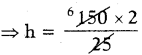
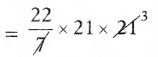
= [latex]\frac{-1,32,000}{6}[/latex] = ₹ – 22,000
∴ ప్రతినెల సరాసరి ₹ 22,000 నష్టం వచ్చినది.

ప్రశ్న 4.
మధ్యాహ్నం 12 గంటలకు ఉష్ణోగ్రత 0° పైన 10°C అని గుర్తించబడినది. ఉష్ణోగ్రత ప్రతి గంటకు 2°C చొప్పున అర్ధరాత్రి వరకు తగ్గుతుంది. ఏ సమయానికి 0° కన్నా 8°C తక్కువగా ఉంటుంది ? అర్ధరాత్రి ఉష్ణోగ్రత ఎంత ?
సాధన.
మధ్యాహ్నం 12 గంటలకు ఉష్ణోగ్రత = + 10°C
ప్రతి గంటకు తగ్గుతున్న ఉష్ణోగ్రత = – 2°C
0° కన్నా 8°C తక్కువగా ఉండుటకు (- 8°C) అవుటకు తగ్గవలసిన ఉష్ణోగ్రత = (-8) – (10) = – 18°C
– 18°C ఉష్ణోగ్రత తగ్గుటకు పట్టుకాలము = -18 + (-2) = 9 గంటలు
∴ రాత్రి 9 గంటలకు 0° కన్నా 8°C తక్కువగా ఉంటుంది.
∴ అర్ధరాత్రి ఉష్ణోగ్రత = (- 8°C) + (- 2°C × 3 గంటలు) = (- 8°C + – 6°C) = – 14°C

ప్రశ్న 5.
ఒక కూరగాయల వ్యాపారి ఒక కి.గ్రా. టమోటాపై ₹7 లాభముతో, ఒక కి.గ్రా. వంకాయలపై ₹ 4 నష్టముతో అమ్మాడు. అతను సోమవారము 68 కి.గ్రా.ల టమోటాలు అమ్మినా లాభము కానీ నష్టము కానీ రాలేదు. అయిన అతను ఆ రోజు ఎన్ని కి.గ్రా.ల వంకాయలు అమ్మాడు?
AP Board 7th Class Maths Solutions Chapter 1 పూర్ణ సంఖ్యలు Ex 1.2 3
సాధన.
కూరగాయల వ్యాపారికి ఒక కి.గ్రా. టమోటాపై వచ్చు లాభము = ₹7
1 కి.గ్రా. వంకాయలపై వచ్చు నష్టము = ₹(4)
వ్యాపారి అమ్మిన టమోటాలు = 68 కి.గ్రా.
టమోటా కిలోల సంఖ్య = x కి.గ్రా. అనుకొనుము
వంకాయలు కిలోల సంఖ్య = y కి.గ్రా. అనుకొనుము
7x – 4y = 0
⇒ 7 × 68 – 4y = 0
⇒ – 4y = – 7 × 68
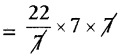
⇒ y = [latex]\frac{-7 \times 68}{-4}[/latex]
∴ ఆ రోజు వ్యాపారి అమ్మవలసిన వంకాయలు
= + 7 × 17 = + 119 కిలోలు.

AP Board 7th Class Maths Solutions Chapter 1 పూర్ణ సంఖ్యలు Ex 1.2

ప్రశ్న 6.
ఒక పరీక్షలో, ప్రతి సరైన సమాధానానికి + 3 మార్కులు మరియు ప్రతి తప్పుకు -1 మార్కులు ఇవ్వబడతాయి. సోనా అన్ని ప్రశ్నలకు సమాధానాలు వ్రాయగా, అందులో 10 సరియైనవి మరియు ఆమె 20 మార్కులు పొందినది.
(i) ఆమె రాసిన తప్పు సమాధానాలు ఎన్ని ?
సాధన.

ప్రతి సరైన సమాధానానికి మార్కులు = + 3 .
కావున, 10 సరైన సమాధానాలకు మార్కులు = 10 × 3 = 30
ఇవ్వబడిన లెక్క ప్రకారం, సోనాకు వచ్చిన మార్కులు = 20
తప్పు సమాధానాలకు మార్కులు = 20 – 30 = – 10
ప్రతి తప్పు సమాధానానికి మార్కులు = – 1
∴ తప్పు సమాధానాలు రాసిన ప్రశ్నల సంఖ్య = (- 10) ÷ (- 1) = 10

(ii) పరీక్షలో ఇవ్వబడిన మొత్తం ప్రశ్నలు ఎన్ని ?
సాధన.
పరీక్షలోని మొత్తం ప్రశ్నల సంఖ్య = సరైన సమాధానాలు రాసిన ప్రశ్నలు + తప్పు సమాధానం రాసిన ప్రశ్నలు
= 10 + 10 = 20

ప్రశ్న 7.
a ÷ b = – 4 అగునట్లు 5 పూర్ణ సంఖ్యల జత (a, b) లు వ్రాయుము.
(ఉదా: (12, – 3) ఎందుకనగా 12 ÷ (- 3) = – 4).
సాధన.
(i) (16, – 4)
(ii) (- 48, 12)
(iii) (40, – 10)
(iv) (- 64, 16)

AP Board 7th Class Maths Solutions Chapter 1 పూర్ణ సంఖ్యలు Ex 1.1

SCERT AP 7th Class Maths Solutions Pdf Chapter 1 పూర్ణ సంఖ్యలు Ex 1.1 Textbook Exercise Questions and Answers.

AP State Syllabus 7th Class Maths Solutions 1st Lesson పూర్ణ సంఖ్యలు Exercise 1.1

ప్రశ్న 1.
కింది వాటిని గుణించండి.
(i) 5 × 7
సాధన.
5 × 7 = 35

AP Board 7th Class Maths Solutions Chapter 1 పూర్ణ సంఖ్యలు Ex 1.1

(ii) (-9) × (6)
సాధన.
(-9) × 6 = – 54

(iii) (9) × (- 4)
సాధన.
9 × (4) = – 36

(iv) (8) × (-7)
సాధన.
8 × (-7) = – 56

(v) (-124) × (-1)
సాధన.
(-124) × (-1) = + 124

(vi) (-12) × (-7)
సాధన.
(-12) × (-7) = + 84

(vii) (- 63) × 7,
సాధన.
(- 63) × 7 = – 441

(viii) 7 × (- 15)
సాధన.
7 × (- 15) = – 105

ప్రశ్న 2.
కింది వాటిలో పెద్దది ఏది ?
(i) 2 × (- 5) లేదా 3 × (-4)
సాధన.
2 × (- 5) లేదా 3 × (4)
– (2 × 5) = – 10, – (3 × 4) = – 12
– 10 > – 12
∴ 2 × (-5) పెద్దది

(ii) (- 6) × (- 7) లేదా (-8) × 5
సాధన.
(- 6) × (- 7) లేదా (-8) × 5
+ (6 × 7) = 42, – (8 × 5) = – 40
42 > – 40
∴ (- 6) × (- 7) పెద్దది

AP Board 7th Class Maths Solutions Chapter 1 పూర్ణ సంఖ్యలు Ex 1.1

(iii) (- 6) × 10 లేదా (-3) × (- 21)
సాధన.
(- 6) × 10 లేదా (-3) × (-21).
– (6 × 10) = – 60, + (3 × 21) = 63
63 > – 60
∴ (- 3) × (- 21) పెద్దది

(iv) 9 × (- 11) లేదా 6 × (- 16)
సాధన.
9 × (-11) లేదా 6 × (-16)
– (9 × 11) = – 99, – (6 × 16) = – 96
– 96 > – 99
∴ 6 × (-16) పెద్దది

(v) (- 8) × (- 5) లేదా (-9) × (-4)
సాధన.
(- 8) × (- 5) లేదా (-9) × (4)
+ (8 × 5) = 40, + (9 × 4) = 36
40 > 36
∴ (- 8) × (-5) పెద్దది

ప్రశ్న 3.
రెండు పూర్ణసంఖ్యల లబ్దము i) ఒక ధన పూర్ణ సంఖ్య ii) ఒక రుణ పూర్ణ సంఖ్య iii) సున్నా అగునట్లు పూర్ణ సంఖ్యలను వ్రాయుము.
సాధన.
లబ్దము (i) ఒక ధన పూర్ణ సంఖ్య:
(i) 4 × 3
(ii) (+ 4) × (- 3)
(iii) (- 10) × (- 5)

లబ్దము (ii) ఒక రుణ పూర్ణ సంఖ్య:
(i) (4) × 3
(ii) 4 × (-3)
(iii) (- 10) × 5

లబ్దము (iii) సున్న:
(i) 0 × 5
(ii) (- 5) × 0
(iii) 0 × 0

AP Board 7th Class Maths Solutions Chapter 1 పూర్ణ సంఖ్యలు Ex 1.1

ప్రశ్న 4.
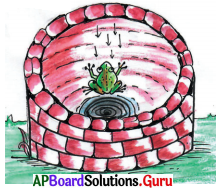
ఒక కప్ప నిముషానికి 3 మీటర్ల వంతున బావి పై ఉపరితలం నుండి లోపలికి జారుతున్నది. కప్ప 5 నిముషాల తరువాత బావిలో ఏ స్థానములో ఉంటుంది?
AP Board 7th Class Maths Solutions Chapter 1 పూర్ణ సంఖ్యలు Ex 1.1 1
సాధన.
కప్ప నిముషానికి బావి లోపలికి జారుతున్న లోతు = -3 మీటర్లు
5 నిముషాలలో కప్ప జారు లోతు = 5 × (-3) = -15 మీటర్లు
∴ 5 నిమిషాల తరువాత కప్ప బావి ఉపరితలం నుండి 15 మీటర్ల లోతులో ఉంటుంది.

ప్రశ్న 5.
వేసవిలో ఒక కొలనులో నీటిమట్టము బాష్పీభవనం వలన ఒక వారానికి 5 అంగుళాల చొప్పున తగ్గుతున్నది. నీటి స్థాయి స్థిర పరిమాణములో తగ్గుచున్నచో, 6 వారాల తరువాత కొలనులో నీటి మట్టములో మార్పు ఎంత ఉండును?
AP Board 7th Class Maths Solutions Chapter 1 పూర్ణ సంఖ్యలు Ex 1.1 2
సాధన.
బాష్పీభవనం వలన ఒక వారానికి తగ్గు నీటి మట్టము = – 5 అంగుళాలు
6 వారాల తరువాత కొలనులో నీటి మట్టంలో మార్పు = 6 × (- 5) = -30 అంగుళాలు
∴ 6 వారాల తరువాత నీటి మట్టం 30 అంగుళాలు తగ్గుతుంది.

ప్రశ్న 6.
ఒక దుకాణదారుడు ఒక్కొక్క పుస్తకం అమ్మడం వలన ₹5లు లాభాన్ని మరియు ఒక్కొక్క పెన్ను అమ్మడం వలన ₹3లు నష్టము పొందును. జూలై నెలలో అతను 1500 పుస్తకాలు మరియు 1500 పెన్నులు అమ్మిన అతనికి వచ్చిన లాభము లేదా నష్టమును కనుగొనుము.
సాధన.
ఒక్కొక్క పుస్తకం అమ్మడం వలన దుకాణదారునకు వచ్చు లాభము = ₹5
1500 పుస్తకాలు అమ్మడం వలన వచ్చు లాభం = 1500 × 5 = ₹7500
ఒక్కొక్క పెన్ను అమ్మడం వలన దుకాణదారునకు వచ్చు నష్టం = ₹(-3)
1500 పెన్నులు అమ్మడం వలన వచ్చు నష్టం = 1500 × (-3) = ₹ – 4500
1500 పుస్తకాలు, 1500 పెన్నులు అమ్మడం వలన వచ్చు లాభము లేదా నష్టము = 7500 + (- 4500) = ₹3000
ఫలితం ధన సంఖ్య కావున ₹ 3000 లాభం వస్తుంది.

AP Board 7th Class Maths Solutions Chapter 1 పూర్ణ సంఖ్యలు Ex 1.1

ప్రశ్న 7.
ఒక సిమెంటు కంపెనీ ఒక్కొక్క తెలుపు రంగు బస్తా సిమెంటుపై ₹8 లాభం మరియు బూడిద రంగు బస్తా సిమెంటుపై ₹6 నష్టముతో అమ్మింది. ఒక నెలలో 2,000 బస్తాల తెలుపు రంగు సిమెంటు, 3,000 బస్తాల బూడిద రంగు సిమెంటు అమ్మిన దానికి వచ్చినది లాభమా లేదా నష్టమా ఏమిటో కనుగొనండి.
సాధన.
సిమెంటు కంపెనీకి ఒక్కొక్క తెలుపు రంగు సిమెంటు బస్తాపై వచ్చు లాభము = ₹8
2000 తెలుపు రంగు సిమెంటు బస్తాలపై వచ్చు లాభము = 2000 × 8 = ₹ 16,000
సిమెంటు కంపెనీకి ఒక్కొక్క బూడిదరంగు సిమెంటు బస్తాపై వచ్చు నష్టము = ₹ (- 6)
3,000 బూడిద రంగు సిమెంటు బస్తాలపై వచ్చు నష్టము = 3000 × (- 6) = ₹ – 18000
2,000 బస్తాల తెలుపు రంగు సిమెంట్, 3000 బస్తాల బూడిద రంగు సిమెంట్ అమ్మడం వలన వచ్చు లాభం లేదా నష్టము = (16000) + (-18000) = ₹ – 2000
∴ ఫలితం రుణసంఖ్య కావున ₹ 2000 నష్టం వస్తుంది.

ప్రశ్న 8.
ప్రవచనం సరియగునట్లు కింది ఖాళీలను సరైన పూర్ణ సంఖ్యచే పూరించుము.
(i) (-4) ×________ = – 20
సాధన.
(- 4) × 5 = – 20

(ii) ________ × 5 = – 35
సాధన.
(- 7) × 5 = – 35

(iii) (-6) × ________ = 48
సాధన.
(- 6) × (-8) = 48

(iv) ________ × (-9) = 45
సాధన.
(5) × (-9) = 45

(v) ________ × 1 = – 42
సాధన.
(-6) × 7 = – 42

AP Board 7th Class Maths Solutions Chapter 1 పూర్ణ సంఖ్యలు Ex 1.1

(vi) 8 × ________ = – 8
సాధన.
8 × (- 1) = – 8

AP Board 7th Class Maths Solutions Chapter 1 పూర్ణ సంఖ్యలు Review Exercise

SCERT AP 7th Class Maths Solutions Pdf Chapter 1 పూర్ణ సంఖ్యలు Review Exercise Questions and Answers.

AP State Syllabus 7th Class Maths Solutions 1st Lesson పూర్ణ సంఖ్యలు Review Exercise

ప్రశ్న1.
కింది వాక్యాలను సరైన పూర్ణ సంఖ్యతో సూచించండి.
(i) స్నేహ తన పొదుపు ఖాతాలో ₹2000 జమ చేసినది.
సాధన.
+ ₹ 2000

AP Board 7th Class Maths Solutions Chapter 1 పూర్ణ సంఖ్యలు Review Exercise

(ii) జలాంతర్గామి సముద్ర మట్టము నుండి 350 అడుగుల లోతులో ఉంది.
సాధన.
– 350 అడుగులు

(iii) ఎవరెస్టు శిఖరం సముద్ర మట్టము నుండి 8848 మీ. ఎత్తులో ఉంది.
సాధన.
+ 8848 మీ.

(iv) 0°C కన్నా 14 డిగ్రీల తక్కువ ఉష్ణోగ్రత ఉంది.
సాధన.
– 14°C

ప్రశ్న2.
క్రింది సంఖ్యారేఖపై లేని పూర్ణసంఖ్యలను గుర్తించండి.
AP Board 7th Class Maths Solutions Chapter 1 పూర్ణ సంఖ్యలు Review Exercise 1
సాధన.
AP Board 7th Class Maths Solutions Chapter 1 పూర్ణ సంఖ్యలు Review Exercise 2

ప్రశ్న3.
క్రింది పూర్ణ సంఖ్యలను అవరోహణ మరియు ఆరోహణ క్రమంలో వ్రాయండి.

(i) -9, -1, 0, – 10, -6
సాధన.
అవరోహణ క్రమం: 0, -1, -6, -9, -10
ఆరోహణ క్రమం: -10, -9, -6, -1, 0

(ii) -6, 6, -9, 5, 10, -3
సాధన.
అవరోహణ క్రమం: 10, 6, 5, -3, -6, -9
ఆరోహణ క్రమం: -9, -6, -3, 5, 6, 10

AP Board 7th Class Maths Solutions Chapter 1 పూర్ణ సంఖ్యలు Review Exercise

(iii) -15, -20, -35, 0, 2
సాధన.
అవరోహణ క్రమం: 2, 0, -15, -20, -35
ఆరోహణ క్రమం: -35, -20, -15, 0, 2

ప్రశ్న4.
క్రింది వాటిని లెక్కించుము.
(i) – 2 + 3
సాధన.
– 2 + 3 = + 1

(ii) -6 + (-2)
సాధన.
– 6 + (-2) = – 8

(iii) 8 – (-6)
సాధన.
8 – (-6) = 8 + 6 = + 14

(iv) -9 + 4
సాధన.
-9 + 4 = -5

(v) – 23 – (-30)
సాధన.
– 23 – (-30) = – 23 + 30 = + 7

(vi) 50 – 153
సాధన.
50 – 153 = – 103

(vii) 71 + (-10) – 8
సాధన.
71 + (-10) – 8 = 71 + (-18) = + 53

AP Board 7th Class Maths Solutions Chapter 1 పూర్ణ సంఖ్యలు Review Exercise

(viii) – 30 + 58 – 38
సాధన.
– 30 + 58 – 38 = – 68 + 58 = – 10

ప్రశ్న5.
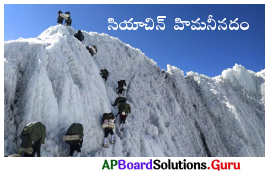
సియాచిన్ వద్ద 5 a.m ఉష్ణోగ్రత 0°C కన్నా 10°C తక్కువ ఉంది. ఆరు గంటల తర్వాత అది 14°C పెరిగినది. 11 a.m వద్ద ఉష్ణోగ్రత ఎంత ఉంటుంది?
AP Board 7th Class Maths Solutions Chapter 1 పూర్ణ సంఖ్యలు Review Exercise 3
సాధన.
సియాచిన్ వద్ద 5 a.m ఉష్ణోగ్రత = – 10°C
ఆరు గంటల తర్వాత పెరిగిన ఉష్ణోగ్రత = + 14°C
∴ 11 a.m వద్ద ఉష్ణోగ్రత = (-10) + 14 = + 4°C

ప్రశ్న6.
ఒక చేప సముద్ర ఉపరితలం నుండి 16 అడుగుల లోతులో ఉంది మరియు మరొక 17 అడుగుల కిందకు వెళ్ళింది. ప్రస్తుతం సముద్ర మట్టం నుండి చేప స్థానం ఏమిటి ?
సాధన.
సముద్రమట్టం నుండి మొదట చేపగల స్థానం = -16 అడుగులు
చేప మరొక 17 అడుగులు క్రిందకు వెళితే చేప ప్రస్తుత స్థానం = (-16) + (-17) = – 33 అడుగులు
అనగా చేప ప్రస్తుతం సముద్ర మట్టం నుండి 33 అడుగుల లోతులో ఉంటుంది.

ప్రశ్న7.
ఒక ఆకుకూరల వ్యాపారి సోమవారం నాడు ₹250 లాభం, మంగళవారం నాడు ₹ 120 నష్టం మరియు బుధవారం నాడు ₹180 నష్టం పొందాడు. మూడు రోజుల తరువాత వచ్చిన మొత్తం లాభం లేదా నష్టం ఎంతో కనుగొనుము.
సాధన.
ఆకుకూరల వ్యాపారికి
సోమవారం లాభం = ₹250
మంగళవారం నష్టం = ₹120
బుధవారం నష్టం = ₹180
∴ మూడు రోజుల తర్వాత వచ్చిన మొత్తం లాభం లేదా నష్టం = + 250 + (-120) + (-180)
= 250 + (-300) = -50
∴ వ్యాపారికి మూడు రోజుల తరువాత ₹ 50 నష్టం వస్తుంది.

AP Board 7th Class Maths Solutions Chapter 1 పూర్ణ సంఖ్యలు Review Exercise

ప్రశ్న8.
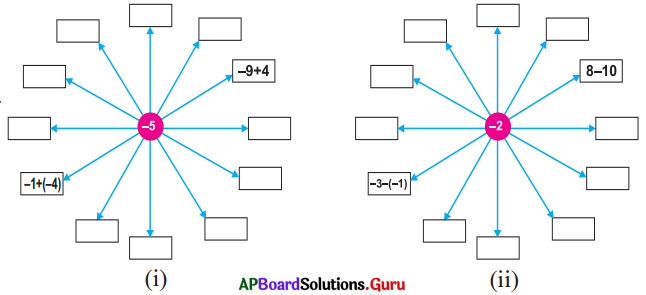
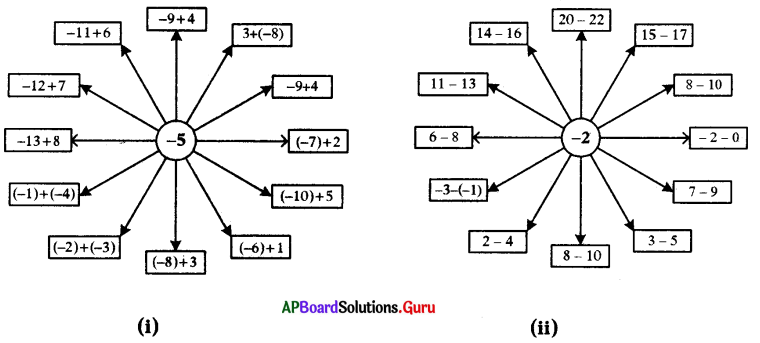
మొదటి పటంలో రెండు పూర్ణసంఖ్యల యొక్క సంకలనం ఆధారంగా మరియు రెండో పటంలో రెండు పూర్ణసంఖ్యల వ్యవకలనం ఆధారంగా పూర్తి చేయుము.
AP Board 7th Class Maths Solutions Chapter 1 పూర్ణ సంఖ్యలు Review Exercise 4
పాదన.
AP Board 7th Class Maths Solutions Chapter 1 పూర్ణ సంఖ్యలు Review Exercise 5

AP 7th Class Social Important Questions 8th Lesson Bhakthi – Sufi

These AP 7th Class Social Important Questions 8th Lesson Bhakthi – Sufi will help students prepare well for the exams.

AP Board 7th Class Social 8th Lesson Important Questions and Answers Bhakthi – Sufi

7th Class Social 8th Lesson Bhakthi – Sufi 2 Marks Important Questions and Answers

Question 1.
What is Bhakti?
Answer:
Bhakti Means a path of loving devotion to a particular deity.

Question 2.
What is the main characteristic of Bhakti Movement?
Answer:
Universal Brotherhood and equality of all in the society.

Question 3.
When did Bhakti movement became popular in all religions?
Answer:
In the medieval period the path of Bhakti became more popular in all religions.

Question 4.
Who started the Bhakti Movement?
Answer:
Bhakti movement was started by Adi Shankaracharya.

AP 7th Class Social Important Questions 8th Lesson Bhakthi – Sufi

Question 5.
Who lead the Bhakti movement in North India?
Answer:
Ramananda, Kabir, Ravidas, Surdas, Mira Bai, etc.

Question 6.
Who spread the Bhakti movement in Tamilnadu?
Answer:
Alwars and Nayanars spread Bhakti movement in South India, mainly in’Tamilnadu.

Question 7.
Write a few words about Shankaracharya.
Answer:

  1. Shankaracharya was born in Kaladi of Kerala.
  2. He became a saint at the age of 5.
  3. He preached Advaita Philosophy.
  4. He established four Shakthi Peethas in all the four corners of India.

Question 8.
Names of Shakthi Peethas.
Answer:

  1. Badri in the North.
  2. Srungeri in the South.
  3. Puri in the East and
  4. Dwaraka in the West.

Question 9.
Name the works of Shankaracharya.
Answer:
Shankaracharya wrote Viveka Chudamani, Soundaryalahari, Sivanandalahari, Atmabodha, etc.

Question 10.
Define Dwaita Philosophy.
Answer:
According to Dwaita Philosophy, the world is not an illusion but a reality. Brahman, Atman and matter are unique in nature.

Question 11.
What is the idealogy of Vajlabhacharya?
Answer:
Vallabhacharya idealogy is known as Suddhadvaita.

Question 12.
What was the Cardial quote of Sant Ravi Das?
Answer:
Santa Ravi Das cardial quote was “Hari is in all and all in Hari”.

Question 13.
Who was the founder of Sikh religion?
Answer:
Guru Nanak was the founder of Sikh religion.

AP 7th Class Social Important Questions 8th Lesson Bhakthi – Sufi

Question 14.
Write about the teachings of Guru Nanak.
Answer:
The most famous teaching attributed to Guru Nanak are :

  1. There is only one God.
  2. That all human beings can have direct access to God.
  3. He taught that everyone is equal, regardless of caste or gender.

Question 15.
Write about Molla.
Answer:

  1. Molla is also called Mollamamba.
  2. She is a Telugu poet.
  3. She wrote Ramayana in Telugu.

Question 16.
Write a few words about Annamayya.
Answer:

  1. Tallapaka Annamacharya came from Tallapaka village of Kadapa district.
  2. He is known as Padakavita pithamaha.
  3. He wrote 32,000 Keerthanas in praise of lord Venkateswara.

Question 17.
Define Sufi movement.
Answer:

  1. The Sufi movement was a socio-religious movement in Islam.
  2. The Sufis emphasised on an egalitarian society based on universal love.

Question 18.
What is the impact of Sufi movement?
Answer:

  1. Sufi’s travelled all over the country to reach the poor and rural communities.
  2. They preached in the local languages.
  3. They lived a modest simple life.

7th Class Social 8th Lesson Bhakthi – Sufi 4 Marks Important Questions and Answers

Question 1.
Explain about Saguna and Nirguna Bhakthi.
Answer:

  1. The gunas are a key concept in nearly all schools of Hindu philosophy.
  2. These three gunas are called: Sattva (goodness, calmness, harmonious), Rajas (passion, activity, movement) and Tamas (ignorance, inertia, laziness).
  3. All of these three gunas are present in everyone and everything.
  4. Attributing these gunas to the God is Saguna Bhakthi.
  5. Worshipping the god without these Gunas is Nirguna Bhakthi.

Question 2.
What is the impact of the Bhakti Movement on the Medieval Indian society?
Answer:

  1. The most important social impact of the Bhakti movement was that the followers of the Bhakti movement rejected caste discrimination.
  2. This movement encouraged religious tolerance.
  3. The bhakti saints preached religous tolerance and monotheism.
  4. A spiral of harmony developed among different sections of the society.
  5. It tried to develop humanitarian attitude.

AP 7th Class Social Important Questions 8th Lesson Bhakthi – Sufi

Question 3.
What are the salient features of Sufism?
Answer:
The salient features of Sufism :

  1. There is only one God. All are children of God.
  2. To love a fellow human being is to love God.
  3. Devotional music is one of the ways to reach the presence of God.
  4. Sufi believes WahdatTul-Wujud which means worship for a single God.

7th Class Social 8th Lesson Bhakthi – Sufi 8 Marks Important Questions and Answers

Question 1.
Appreciate Sufi movement.
Answer:
Sufi Movement:
The Sufi movement was a socio-religious movement in Islam. The Sufis emphasised on an egalitarian society based on universal love. The word Sufi is derived from an Arabic word Saf. Saf means purity / clean. The Sufi saints were always in meditation and they led a simple life. They wore woollen clothes.

The salient features of Sufisim :

  1. There is only one God. All are children of God.
  2. To love ones fellow men is to love God.
  3. Devotional music is one of the ways to move nearer to God.
  4. Sufi believes Wahdat-ul-Wujud means worship for a single God.

Question 2.
Why Hindus worship many forms of God while there is only one form of God in Islamism?
Answer:

  1. Hindus worship many Gods. But all the Gods are not human beings, they are energies.
  2. The common man cannot understand or pray the immortal forms. So the rishis of Hinduism gave names to certain energies and physical shape.
  3. Later due to lack of knowledge the energies are forgotten by the common people and the physical forms and names only recorded in their minds.
  4. It also can be said that these energies are in subtle form in human bodies.

So Hindus worship many forms of God. But they also have only one Universal Supreme Being, PARAMATMA.

AP 7th Class Social Important Questions 8th Lesson Bhakthi – Sufi

Question 3.
What are the inferences from the poetry of Bhakti and Sufi saints about the existing social order ?
Answer:
Inferences from the Poetry of Bhakti and Sufi saints about the existing social order:

  1. Bhakti movement and Sufi movement influenced the life style, cultural practices and traditions of people.
  2. The saints and their followers resented caste, religious inequalities that prevailed in society.
  3. Dignity of labour enhanced the recognition of the people in Agriculture, Handloom, Art crafts etc.
  4. Inspiration of Bhakti movement lead to the formation of new kingdoms.
    1) Vijayanagara kingdom was established with the inspiration of Swami Vidyaranya.
    2) The Maratha kingdom by Shivaji with the inspiration of Samardha Ramadas.
  5. Bhakti movement enhanced the essence of local languages. The saints of Bhakti movement composed songs and poems to attract common man easily. This enhanced the literature in regional languages.
    Ex : Writings of Akkamahadevi, Meera Bhajans, Tiruppavai of Godadevi.
  6. The sufi saints propagated the principles of monotheism (belief in one God) simple way of worship and protested superstitions.
  7. Sufi saints propagated their principles in poems and songs. Music has great prominence in praising God. Ex : Quwwali.
  8. Simplicity, disciplined life dedication towards Islam etc. Attracted the society towards Sufism.

AP Board 7th Class Social 8th Lesson 1 Mark Bits Questions and Answers Bhakthi – Sufi

I. Multiple Choice Questions

1. The Bhakti Movement reached its prominence in _______ century.
A) 5th
B) 6th
C) 7th
D) 8th
Answer:
D) 8th

2. Saguna Bhakti means ___________ .
A) Worshipping god with form
B) Worship of the divine as formless
C) A & B both
D) None
Answer:
A) Worshipping god with form

3. Nirguna Bhakti means ________ .
A) Worshipping god with form
B) Worship of the divine as formless
C) A & B both
D) None
Answer:
B) Worship of the divine as formless

AP 7th Class Social Important Questions 8th Lesson Bhakthi – Sufi

4. The Bhakti movement was started by _________ .
A) Adi Shankaracharya
B) Ramanujacharya
C) Madhwacharya
D) Nimbarka
Answer:
A) Adi Shankaracharya

5. Alwars and Nayanars spread Bhakti movement in _________ .
A) Andhra Pradesh
B) West Bengal
C) Odisa
D) Tamilnadu
Answer:
D) Tamilnadu

6. Tukaram, Namdev, Samartha Ramadas belongs to _________ .
A) Assom
B) Punjab
C) Maharashtra
D) Kerala
Answer:
C) Maharashtra

7. Alwars were ______ saints
A) Sufi
B) Vaishnava
C) Saiva
D) All the above
Answer:
B) Vaishnava

8. Nayanars were ______ saints.
A) Saiva
B) Vaishnava
C) A & B both
D) None
Answer:
A) Saiva

9. Which of the following saint belongs North India?
A) Mira Bai
B) Shankardev
C) Basaveswara
D) Tukaram
Answer:
A) Mira Bai

10. Sankaracharya was born in ______ .
A) Perumbudur
B) Kaladi
C) Palani
D) Ooty
Answer:
B) Kaladi

11. Shankaracharva preached _______ .
A) Advaita
B) Dvaita
C) Visisthadvaita
D) Dvaita-Dvaita
Answer:
A) Advaita

12. Who established Shakthi Peethas?
A) Ramanuja
B) Madhwa
C) Shankaracharya
D) Basaveswara
Answer:
C) Shankaracharya

AP 7th Class Social Important Questions 8th Lesson Bhakthi – Sufi

13. Shankaracharva attained nirvana at the age of ______ .
A) 12
B) 60
C) 32
D) 50
Answer:
C) 32

14. Ramanuiacharva was born in ______ .
A) Kaladi
B) Sri Perumbudur
C) Prayag
D) Chittor
Answer:
B) Sri Perumbudur

15. Ramanuja preached ______ .
A) Vishishtadwaita
B) Dwaita
C) Adwaita
D) All the above
Answer:
A) Vishishtadwaita

16. Madhwacharva promoted ______ philosophy.
A) Advaita
B) Dvaita
C) Vishishtadvaita
D) All the above
Answer:
B) Dvaita

17. He hailed from a Telugu family
A) Basaveswara
B) Ramananda
C) Vallabhacharya
D) Ramanuja
Answer:
C) Vallabhacharya

18. Who popularised the Veerasaivism?
A) Basaveswara
B) Ramananda
C) Molla
D) Shankaracharya
Answer:
A) Basaveswara

19. Basaveswara’s famous quote was
A) God is one
B) All men are equal. There is no caste or sub-caste
C) Unity of god
D) All the above
Answer:
B) All men are equal. There is no caste or sub-caste

20. Ramananda was born at
A) Kaladi
B) Prayag
C) Sri Perumbudur
D) Odisa
Answer:
B) Prayag

AP 7th Class Social Important Questions 8th Lesson Bhakthi – Sufi

21. Kabir was brought up by a Muslim weaver named
A) Niru
B) Guru
C) Siru
D) None
Answer:
A) Niru

22. Kabir became a disciple of
A) Ramanuja
B) Ramanand
C) Adi Shankara
D) Vallabhacharya
Answer:
B) Ramanand

23. Sant Ravidas lived at
A) Banares
B) Prayag
C) Chittod
D) Kaladi
Answer:
A) Banares

24. Mira Bai became a devotee of
A) Sri Krishna
B) Rama
C) Hanuma
D) All the above
Answer:
A) Sri Krishna

25. Guru Nanak was born at
A) Lahore
B) Talwandi
C) Prayag
D) Banares
Answer:
B) Talwandi

26. Guru Nanak followers were known as :
A) Buddhists
B) Jains
C) Sikhs
D) Sufis
Answer:
C) Sikhs

27. Namdev was a devotee of
A) Nanak
B) Kabir
C) Ramanuja
D) Vithoba of Pandharpur
Answer:
D) Vithoba of Pandharpur

28. Jnaneswar used ______ to convey his thoughts.
A) Sanskrit
B) Marathi
C) Hindi
D) Telugu
Answer:
B) Marathi

29. Molla wrote Ramayana in ______ language.
A) Telugu
B) Sanskrit
C) Hindi
D) Marathi
Answer:
A) Telugu

AP 7th Class Social Important Questions 8th Lesson Bhakthi – Sufi

30. ______ was a great Sufi saint of India.
A) Khwaja-Pir-Mohammad
B) Nizam-Ud-Din-Auliya
C) Khwaja Moinuddin Chishti
D) Shaikh Niamat Ullah
Answer:
C) Khwaja Moinuddin Chishti

II. Intext – Bits – Fill in the Blanks

1. Bhakti means …………….. devotion to a particular deity.
2. Saguna bhakti means …………….. .
3. Nirguna Bhakti means …………….. .
4. Bhakti movement was started by …………….. .
5. Basaveswara isfrom …………….. .
6. Ramananda is from …………….. .
7. Guru Nanak Dev isfrom …………….. .
8. Shankaradev is from …………….. .
9. Shankaracharya became a saint at the age of …………….. .
10. Shankaracharya was considered the greatest reformer of …………….. .
11. Ramanujacharya was a philosopher and …………….. .
12. Ramanujacharya was born in …………….. year.
13. Ramanujacharya wrote a commentary on the Brahma Sutras popularly known as …………….. .
14. Madhwacharya was born on the west coast of …………….. .
15. Vallabhacharya idealogy is known as …………….. .
16. Vallabhas teachings are also known as …………….. .
17. Basaveswara literary works are named …………….. .
18. The credit forthe spread of N/aishnava religion in Northern India goes to …………….. .
19. Ramananda adopted …………….. to spread his teachings.
20. Kabir advocated …………….. .
21. Sant Ravidas cardial quote was …………….. .
22. …………….. was another important woman saint of the medieval times.
23. Chaitanya Mahaprabhu is also known as …………….. .
24. Shankara deva is the saint of …………….. .
25. Guru Nanak was born in …………….. year.
26. Namdev was born in a …………….. family.
27. Jnaneswar wrote his commentary on the Bhagawadgita called …………….. .
28. Molla is also called …………….. .
29. Tallapaka Annamacharya is popularly known as …………….. .
30. Annamayya is known as ……………..
31. The sufi movement was a …………….. movement fn Islam.
32. The word Sufi is derived from an Arabic word …………….. .
33. Khwaja Moinuddin Chishti was born in …………….. .
34. Moinuddin Chishti Dargah is located at …………….. in India.
35. Farid-ud-din Ganj-i-Shakar is known as …………….. .
36. ‘Saf means …………….. .
Answer:

  1. a path of loving
  2. Worshipping God with form
  3. Worshipping God without form
  4. Adi Shankaracharya
  5. Karnataka
  6. North India
  7. Talwandi near Lahore
  8. Assom
  9. 5
  10. Sanatana Dharma
  11. Social reformer
  12. 1017CE
  13. Sri Bhasya
  14. Karnataka
  15. Suddhadvaita
  16. Pushlimarga or the Path of Grace
  17. Vachanas
  18. Ramananda
  19. Hindi
  20. All are equal before God
  21. Hari is in all and all in Hari
  22. Mira Bai
  23. Sri Gauranga
  24. Assam
  25. 1469 AD
  26. Tailor
  27. Bhagavat Deepika
  28. Mollamamba
  29. Annamayya
  30. Padakavitha Pithamaha
  31. Socio-religious
  32. Sal
  33. 1143 AD
  34. Ajmer in Rajasthan
  35. Baba Farid
  36. Purity/clean

III. Match the following
1.

Group-A Group-B
1. Sankaracharya A) Visishtadvaita
2. Ramanujacharya B) Pushtimarga
3. Madhwacharya C) All men are equal
4. Vallabhacharya D) Dvaita
5. Basaveswara E) Advaita

Answer:

Group-A Group-B
1. Sankaracharya E) Advaita
2. Ramanujacharya A) Visishtadvaita
3. Madhwacharya D) Dvaita
4. Vallabhacharya B) Pushtimarga
5. Basaveswara C) All men are equal

2.

Group-A Group-B
1. Mira Bai A) Sankeerthanas
2. Molla B) Fraternity of men
3. Annamayya C) Sri Krishna
4. Guru Nanak D) Telugu

Answer:

Group-A Group-B
1. Mira Bai C) Sri Krishna
2. Molla D) Telugu
3. Annamayya A) Sankeerthanas
4. Guru Nanak B) Fraternity of men

3.

Group-A Group-B
1. Namdev A) Sufi saint
2. Jnaneswar B) Seistan in Persia
3. Moinuddin Chishti C) Bhagavat Deepika
4. Baba Farid D) Vithoba of Pandharpur

Answer:

Group-A Group-B
1. Namdev D) Vithoba of Pandharpur
2. Jnaneswar C) Bhagavat Deepika
3. Moinuddin Chishti B) Seistan in Persia
4. Baba Farid A) Sufi saint

Do You Know?

7th Class Social Textbook Page No. 18

The two types of bhakti are Saguna Bhakti and Nirguna Bhakti. Saguna Bhakti means worshipping God with form, Nirguna Bhakti means worshipping God without form.

7th Class Social Textbook Page No. 20

The Brahma Suthras is a Sanskrit text. Attributed to the sages Badarayana or Vyasa. It is also known as Vedanta Sutra.

AP 7th Class Social Important Questions 8th Lesson Bhakthi – Sufi

7th Class Social Textbook Page No. 24

Moinuddin Chishti Dargah is located at Ajmer. Rajasthan in India. The shrine has the grave of the revered saint, Moinuddin Chishti.

AP 7th Class Social Important Questions 7th Lesson Mughal Empire

These AP 7th Class Social Important Questions 7th Lesson Mughal Empire will help students prepare well for the exams.

AP Board 7th Class Social 7th Lesson Important Questions and Answers Mughal Empire

7th Class Social 7th Lesson 2 Marks Important Questions and Answers

Question 1.
Who was the founder of Mughal Kingdom?
Answer:
Babur.

Question 2.
Who was the father of Akbar?
Answer:
Humayun.

Question 3.
Who was the father of Aurangazeb?
Answer:
Shah Jahan.

Question 4.
When was the Mughal empire founded?
Answer:
In 1526 C.E.

AP 7th Class Social Important Questions 7th Lesson Mughal Empire

Question 5.
Who introduced guns and cannons into the Indian warfare?
Answer:
Babur.

Question 6.
During whose reign the war of succession took place?
Answer:
During Shah Jahan’s reign.

Question 7.
Who started Din-l-llahi religion?
Answer:
Akbar.

Question 8.
Which Mughal emperor spent most of his life in exile?
Answer:
Humayun.

Question 9.
What are the contemporary kingdoms to Mughals?
Answer:
The contemporary kingdoms during Mughals were Afghans, Rajputs, Marathas and Bahamans.

Question 10.
Name the kingdoms of South, that were annexed by Aurangazeb.
Answer:
Golkonda and Bijapur.

Question 11.
Where did Akbar conduct his religious discussions?
Answer:
Fatehpur Sikri.

AP 7th Class Social Important Questions 7th Lesson Mughal Empire

Question 12.
What were the capital cities of Mughals?
Answer:
Delhi, Agra and Fatehpur Sikri.

Question 13.
Where did the war take place between Babur and Ibrahim Lodi?
Answer:
Panipat.

Question 14.
Who built Taj Mahal?
Answer:
Shah Jahan built Taj Majal.

Question 15.
Who had become the Mughal emperor in early age?
Answer:
Akbar became a emperor of Mughal empire at early age.

Question 16.
Name the first Mughal ruler who practiced the idea of “universal peace”.
Answer:
Akbar.

Question 17.
Who was the first Mughal emperor defeated by other kings?
Answer:
Humayun.

Question 18.
Which native rulers joined the Mughals voluntarily?
Answer:
The Rajputs joined the Mughals voluntarily.

Question 19.
Which Rajput kingdom resisted the Mughals?
Answer:
The Sisodiya Rajputs of Chittoor refused to accept Mughal authority for a long time.

Question 20.
How did the Rajputs maintain relationship with the Mughals?
Answer:
The Mughals married princess of many of the local rulers as a mark of friendship.

Question 21.
Who introduced Mansabdari system?
Answer:
Akbar introduced the Mansabdari system in his military policy.

Question 22.
Who abolished taxes on Hindus?
Answer:
Akbar abolished Jijya tax and pilgrim tax on Hindus.

Question 23.
Write about Shivaji.
Answer:

  1. Shivaji was great warrior and just ruler who consolidated the Maratha kingdom.
  2. He practiced religious tolerance, protected Muslim women, Mosques and Tombs.

Question 24.
Names of Mysore provinces were occupied by Shivaji?
Answer:
Jinji & Velluru.

AP 7th Class Social Important Questions 7th Lesson Mughal Empire

Question 25.
Who assisted Shivaji in administration?
Answer:
There were eight ministers called ‘Ashta Pradhans’ to assist Shivaji in administration.

7th Class Social 7th Lesson 4 Marks Important Questions and Answers

Question 1.
Appreciate the Mansabdari system.
Answer:

  1. Akbar introduced the Mansabdari system in his military policy. The term mansabdar refers to an individual who holds a mansab, meaning a position or rank.
  2. It was a grading system used by the Mughals to fix Rank, Salary and Military responsibilities. Each mansabdar consist of 10 to 10,000 soldiers.

Question 2.
Describe the structure of the Taj Mahal.
Answer:

  1. The Taj Mahal is a white marble mausoleum located in Agra, Uttar Pradesh, India. It was built by Mughal Emperor Shah Jahan in memory of his wife, Mumtaz.
  2. Taj Mahal is regarded as the finest example of the Mughal architecture and is considered as one of the Seven Wonders of the World.
  3. The Taj Mahal is widely recognized as ‘The jewel of Mughal art in India and one of the universally admired masterpieces of the world’s heritage’.

Question 3.
Write about the contemporary kingdoms during the Mughal rule.
Answer:

  1. The contemporary rulers during Mughals were Afghans, Rajputs, Marathas, and Bahaman kings. They opposed Mughal rulers and fought with them.
  2. In course of time most of these rulers could not completely succeed in defeating the Mughals.
  3. But the Maratha ruler Shivaji could resist the expansion of Mughals and established an independent kingdom.

Question 4.
Briefly tell about Babar.
Answer:
Babur (1526 -1530 CE):

  1. Babur was the founder of the Mughal empire.
  2. He was a great genius at devising war tactics.
  3. He also conquered Delhi and Agra after the first battle of Panipat.
  4. He was one of the greatest poet in Turkish literature and nature lover.
  5. Babur died in 1530 C.E.

Question 5.
Write Akbar’s administration about his vast empire.
Answer:

  1. Akbar introduced a number of administrative reforms.
  2. He divided his vast empire into several “Subas” and appointed a “subedar” for each suba.
  3. “Suba” was the term for a province in the Mughal Empire.
  4. Akbar divided his kingdom into 15 Subas.
  5. Subas were divided into “Sarkars”.
  6. These Sarkars were divided into “Paraganas”.
  7. The same pattern was followed by all other Mughal emperors.

Question 6.
What are the relations of Mughals with other rulers?
Answer:

  1. The Mughals campaigned and fought against rulers who did not obey them.
  2. As a part of their diplomacy, Mughals maintained relations with Rajputs by marrying their daughters.
  3. They offered them better position in their court.
  4. The Sisodiyas did not accept Mughal authority.
  5. The good relations with Rajputs, Sikhs and other rulers began during Akbar’s time.
  6. These relations deteriorate during Shajahan’s time and became worse during the reign of Aurangzeb.
  7. There were revolts in all parts of the empire during his reign.
  8. The empire declined very quickly after the death of Aurangzeb.

AP 7th Class Social Important Questions 7th Lesson Mughal Empire

Question 7.
What is the religion status during Mughal’s period?
Answer:

  1. Mughals are Sunni Muslims.
  2. Among them Akbar showed religious tolerance.
  3. He abolished “Jizya tax” and “Pilgrim tax” levied on the Hindus.
  4. Akbar allowed religious ceremonies of people to be celebrated openly.
  5. The majority of the people in the society were the Hindus.
  6. The society in those days consist of not only Hindus and Muslims but also of the Buddhists, the Jains, the Sikhs and the Parsis.
  7. Aurangzeb also appointed clergymen named Mutawasibs to observe the moral life of the people as per Sharia or Islamic principles.

Question 8.
Write about road system during Mughal’s period.
Answer:

  1. The Mughals were responsible for building an extensive road system.
  2. The Empire had an extensive road network built by a public works department set up by the Mughals.
  3. It designed, constructed and maintained roads, linking towns and cities across the empire.
  4. This was one of the reasons for the expansion of trade.

Question 9.
Write about the coinage system during Mughal’s period.
Answer:
Coinage :

  1. The Mughals were creation of uniform currency and unification of the country.
  2. The Mughals adopted and standardized the Rupee(silver) and Dam (copper) currencies.
  3. These are introduced by the Sur emperor Sher Shah Sur during his brief rule.
  4. The Dam was initially the most common coin in Akbar’s time.

Question 10.
What is agriculture position during Mughals1 period?
Answer:

  1. Indian Agricultural production increased under the Mughal Empire.
  2. A variety of crops were grown, including food crops such as wheat, rice, and barley and cash crops such as cotton, indigo and opium.
  3. Indian cultivators began to grow extensively the commercial crops maize and Tobacco.
  4. The important source of income was the revenue from agricultural tax.

Question 11.
What is Zabt? Write about it.
Answer:

  1. A remarkable feature of the Mughal system under Akbar was his revenue administration.
  2. He developed that largely under the supervision of his famed Revenue Minister Raja Todar Mai.
  3. It took two decades for Akbar to develop and implement a revenue system that would benefit both the State and the Farmer.
  4. In 1580 C.E. he obtained the previouslO years’ focal revenue statistics, detailed productivity and price fluctuations.
  5. He averaged the produce of different crops and their prices.
  6. It ranged from one-third to one-half of production value and was payable in “dams”. This system was called zabt.

7th Class Social 7th Lesson 8 Marks Important Questions and Answers

Question 1.
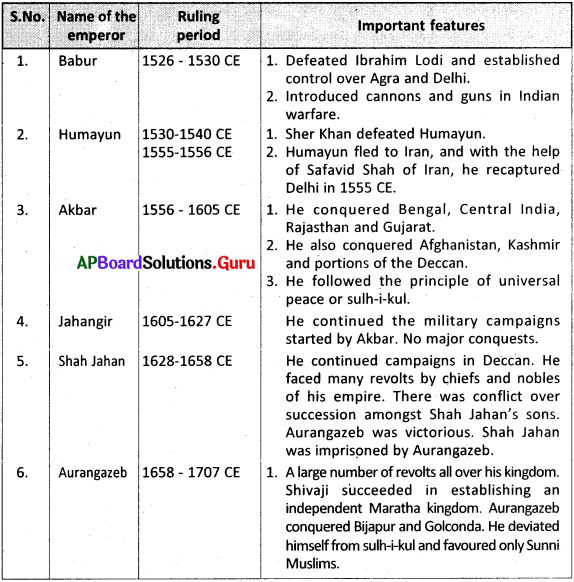
Write about the particulars of Mughal emperors with their ruling period and important features in the tabular form.
AP 7th Class Social Important Questions 7th Lesson Mughal Empire 1
Answer:
AP 7th Class Social Important Questions 7th Lesson Mughal Empire 2

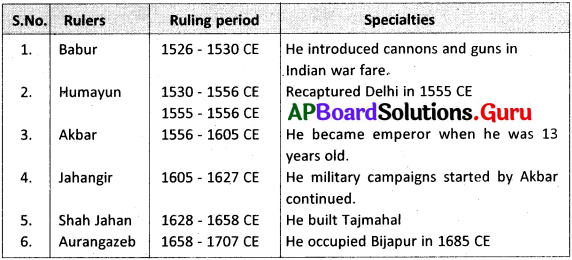
2. Observe the table and answer the following questions.
AP 7th Class Social Important Questions 7th Lesson Mughal Empire 3
Questions :
a) Who was the founder of Mughal dynasty?
Answer:
Babur was the founder of Mughal dynasty.

b) Who built Tajmahal?
Answer:
Shahjahan built the Tajmahal.

c) Who had become the Moghul emperor in early age?
Answer:
Akbar became an emperor of Mughal empire at early age.

d) Which Mughal Emperor ruled longest period?
Answer:
Aurangzeb and Akbar both are ruled nearly longest period.

Question 3.
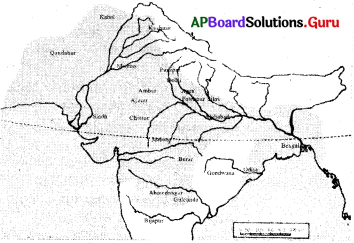
Study the given map :
AP 7th Class Social Important Questions 7th Lesson Mughal Empire 4
Now answer the following questions.
a. Whose empire does this map show?
Answer:
The map shows the empire of Akbar.

b. What were the places that were annexed by Akbar in the north-west region?
Answer:
Qandahar and Kabul.

c. Identify the important battle place which has its own significance in the history of the Mughals.
Answer:
Panipat.

d. Name the kingdom annexed by Akbar in south India.
Answer:
Ahmednagar.

e. Name the kingdoms of South that were annexed by Aurangazeb.
Answer:
Golkonda and Bijapur.

f. Where did Akbar conduct his religious discussions?
Answer:
Fatehpur Sikri.

g. What was the capital city of the Mughals?
Answer:
Delhi.

AP 7th Class Social Important Questions 7th Lesson Mughal Empire

Question 4.
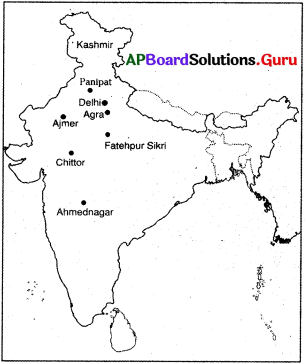
Locate the following on the map of India.
1. Delhi
2. Agra
3. Panipat
4. Fatehpur Sikri
5. Ahmednagar
6. Ajmer
7. Chittor
8. Kashmir
AP 7th Class Social Important Questions 7th Lesson Mughal Empire 5

Question 5.
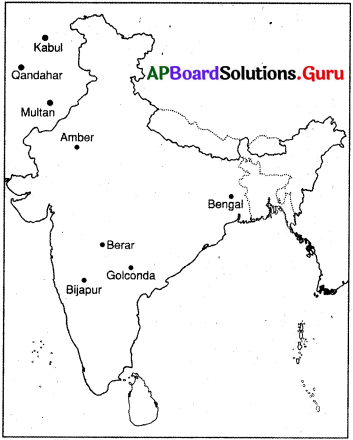
Locate the following on the map given below.
1. Kabul
2. Qandahar
3. Multan
4. Bijapur
5. Golkonda
6. Bengal
7. Berar
8. Amber
AP 7th Class Social Important Questions 7th Lesson Mughal Empire 6

Question 6.
Appreciate Shivaji and his administration.
Answer:

  1. At the age of 19, Shivaji captured Torana Durga, which was under the control of Mahammad Adilshah of Bijapur.
  2. After this, he won Raigarh, Simhagarh, Pratapgarh etc., one by one. Enraged by this the Sultan of Bijapur sent his general Afzal Khan to suppress Shivaji.
  3. Afzal Khan wanted to kill Shivaji deceitfully. So he invited Shivaji under the pretext of reconciliation. Expecting this, Shivaji killed Afzal Khan with ‘Vyaghra Nakha’ (Tiger’s claw), a weapon that he had with him.
  4. On learning these advancements of Shivaji, Aurangzeb sent his general Shaista Khan to Deccan province to curb him down. But clever Shivaji was able to defeat Shaista Khan.
  5. This maddened Aurangazeb. So he sent a huge army under the leadership of Raja Jayasimha. Jayashimha defeated Shivaji and captured a few Maratha forts.
  6. At the end Jayasimha invited Shivaji to come to have treaty with Aurangzeb. Aurangzeb arrested Shivaji on his arrival and kept him in the prison of Agra.
  7. But Shivaji cleverly escaped from jail and reached his capital. After that, he won all the forts that he had lost to the Mughals. He attacked Surat and ransacked heavy wealth from there.

AP Board 7th Class Social 7th Lesson 1 Mark Bits Questions and Answers Mughal Empire

I. Multiple Choice Questions

1. This fort was built by Shah Jahan
A) Rayagarh
B) Pratapgarh
C) Red Fort
D) Fort of Kondapalli
Answer:
C) Red Fort

2. Who was the founder of Mughal Empire?
A) Akbar
B) Babur
C) Ibrahim Lodi
D) Qutubuddin Ibaq.
Answer:
B) Babur

3. Who built Taj Mahal?
A) Akbar
B) Babur
C) Shah Jahan
D) Aurangzeb
Answer:
C) Shah Jahan

4. When did Babur become the ruler of Delhi?
A) 1526 CE
B) 1523 CE
C) 1504 CE
D) 1530 CE
Answer:
A) 1526 CE

5. Who was the Sultan of Delhi, when Babur captured it?
A) Seconder Lodi
B) Ibrahim Lodi
C) Dahir
D) Gazni Muhammad
Answer:
B) Ibrahim Lodi

6. Babur occupied Delhi after the battle of
A) Panipat-I
B) Panipat-II
C) Panipat — III
D) Wandwash
Answer:
A) Panipat-I

7. The death of Babur in
A) 1530 CE
B) 1536 CE
C) 1565 CE
D) 1526 CE
Answer:
A) 1530 CE

8. The word “Mughal” comes from
A) Mangal
B) Mongol
C) Mangale
D) Mangala
Answer:
B) Mongol

9. The son of Babur
A) Akbar
B) Aurangzeb
C) Shah Jahan
D) Humayun
Answer:
D) Humayun

10. Humayun died in
A) 1550 CE
B) 1556 CE
C) 1540 CE
D) 1545 CE
Answer:
B) 1556 CE

11. Sher Shah was an
A) Afghan
B) Indian
C) Italian
D) Indonesian
Answer:
A) Afghan

12. Sher Shah defeated the
A) Babar
B) Humayun
C) Akbar
D) Jahangir
Answer:
B) Humayun

13. Sher Shah belongs to dynasty.
A) Sur
B) Sunni
C) Khan’s
D) None of the above
Answer:
A) Sur

AP 7th Class Social Important Questions 7th Lesson Mughal Empire

14. Sher Shah was died in
A) 1545 CE
B) 1555 CE
C) 1556 CE
D) 1550 CE
Answer:
A) 1545 CE

15. Who was the youngest to become a Mughal ruler?
A) Humayun
B) Akbar
C) Aurangazeb
D) Shah Jahan
Answer:
B) Akbar

16. When did Humayun recapture Delhi from Sher Khan?
A) 1530 CE
B) 1555 CE
C) 1556 CE
D) 1540 CE
Answer:
B) 1555 CE

17. Akbar defeated Hemu in the battle of
A) Panipat-I
B) Panipat – II
C) Panipat – III
D) None of the above
Answer:
B) Panipat – II

18. The guardian of Akbar
A) Babar
B) Sher Shah
C) Bairam Khan
D) Humayun
Answer:
C) Bairam Khan

19. The title of Salim was
A) Shah Jahan
B) Jahangir
C) Bahadur Shah
D) Aurangzeb
Answer:
B) Jahangir

20. Shah Jahan was the son of
A) Humayun
B) Sher Shah
C) Jahangir
D) Aurangzeb
Answer:
C) Jahangir

21. Aurangzeb conquered Bijapur in
A) 1600 CE
B) 1685 CE
C) 1656 CE
D) 1658 CE
Answer:
B) 1685 CE

AP 7th Class Social Important Questions 7th Lesson Mughal Empire

22. Aurangzeb conquered Golkonda in
A) 1687 CE
B) 1685 CE
C) 1656 CE
D)1658 CE
Answer:
A) 1687 CE

23. Mughals are Muslims.
A) Sunni
B) Sur
C) Shia
D) Khan
Answer:
A) Sunni

24. He abolished Jizya tax and pilgrim tax
A) Akbar
B) ShahJahan
C) Babur
D) Aurangzeb
Answer:
A) Akbar

25. Akbar announced the new religion Din-l-llahi in
A) 1575 CE
B) 1582 CE
C) 1585 CE
D) 1590 CE
Answer:
B) 1582 CE

26. Zabat means
A) confiscation of property of a farmer who could not pay his taxes.
B) Maintenance of cavalry by rriansabdars.
C) The revenue system of Mughals.
D) The religious tradition of Muslims.
Answer:
C) The revenue system of Mughals.

27. Raja Todar Mai was the revenue minister of
A) Sher Shah
B) Akbar
C) Shah Jahan
D) Aurapgzeb
Answer:
B) Akbar

28. The Dam coin is in time.
A) Babar
B) Akbar
C) Humayun
D) Jahangir
Answer:
B) Akbar

29. Fateh means
A) Kingdom
B) Victorious
C) Looser
D) Emperor
Answer:
B) Victorious

30. Buland Darwaza was built by
A) Babar
B) Jahangir
C) Akbar
D) Shivaji
Answer:
C) Akbar

31. The Taj Mahal is at
A) Delhi
B) Simla
C) Agra
D) Patna
Answer:
C) Agra

32. Ramacharita Manas was written by
A) Ramadas
B) Kabirdas
C) Tulasidas
D) Akbar
Answer:
C) Tulasidas

33. Mughal miniature painting belongs to
A) Babar
B) Akbar
C) Jahangir
D) Khurram
Answer:
C) Jahangir

34. Shivaji was born in
A) Shivaneri fort
B) Raigarh fort
C) Pratapgarh fort
D) Red fort
Answer:
A) Shivaneri fort

AP 7th Class Social Important Questions 7th Lesson Mughal Empire

35. Who established the Maratha Kingdom?
A) Balaji Viswanath
B) Shambhaji
C) Shivaji
D) Baji Rao
Answer:
C) Shivaji

36. The Guru of Shivaji
A) Bairam Khan
B) Dadaji Khondadev
C) Ramadas
D) Tulasidas
Answer:
B) Dadaji Khondadev

37. Shivaji killed Afzal Khan with
A) Tiger’s claw
B) Lion’s claw
C) With knife
D) With bombs
Answer:
A) Tiger’s claw

38. The year of first Panipat war
A) 1526 AD
B) 1530 AD
C) 1527 AD
D) 1535 AD
Answer:
A) 1526 AD

39. The year of Second Panipat War
A) 1550 CE
B) 1556 CE
C) 1560 CE
D) 1561 CE
Answer:
B) 1556 CE

40. The Iranian emperor that helped Humayun
A) Dara-Shukoh
B) SherShah
C) Akbar
D) Safavid Shah
Answer:
D) Safavid Shah

41. Humayun re-occupied Delhi in
A) 1520 CE
B) 1526 CE
C) 1530 CE
D) 1555 CE
Answer:
D) 1555 CE

AP 7th Class Social Important Questions 7th Lesson Mughal Empire

42. The Mughal rule was expanded in Deccan region by
A) Babur
B) Akbar
C) Humayun
D) Shah Jahan
Answer:
B) Akbar

II. Intext – Bits – Fill in the Blanks

1. Red Fort was built by ………………. .
2. Red Fort is in ………………. .
3. Once the Red Fort was the residence of ………………. .
4. Babar occupied Delhi and Agra after the ………………. .
5. Babar was related to ………………. from his father’s side and to Chengiz Khan’s dynasty from his ………………. .
6. The word “Mughal” comes from ………………. .
7. Sher Khan, defeated Humayun at ………………. and ………………. .
8. Sher Shah was an ………………. Leader.
9. Sher Shah died in an ………………. in 1545 AD
10. Akbar was just ………………. years old when his father was passed away.
11. Akbar defeated Hemu with the help of ………………. .
12. Akbar died in ………………. .
13. ………………. was a close associate of emperor Akbar.
14. Jahangir came under the influence of ………………. .
15. Shah Jahan was the son of ………………. .
16. Shah Jahan’s period was much known for the construction of ………………. .
17. ………………. was imprisoned for rest of his life in Agra.
18. Aurangazeb was a younger son of ………………. .
19. Aurangazeb did not show ………………. to other religions.
20. The Mughals had a ………………. administration.
21. Akbar divided his vast empire into several ………………. .
22. ………………. was appointed to each subha.
23. Subas were divided into ………………. .
24. Sarkars were divided into ………………. .
25. Akbar introduced the ………………. system in his military policy.
26. Mughalsare ………………. Muslims.
27. Akbar showed ………………. tolerance.
28. Akbar built Ibadat Khana at ………………. .
29. Din-l-llahi means ………………. .
30. Only ………………. people joined in Din-l-lllahi.
31. The ………………. industry developed in the Mughal empire.
32. Buland Darwaza as a ………………. .
33. Panch Mahal is in ………………. .
34. Taj Mahal is one of ………………. wonder’s of the world.
35. ………………. language was the dominant and official language of Mughal empire.
36. Abdul Fazal wrote ………………. .
37. Dhara Shukoh translated ………………. and ………………. into Persian language.
38. Aurangazeb ………………. all programmes of music.
39. The most famous singers of Akbar’s court are ………………. and ………………. .
40. Shivaji’s father was ………………. .
41. Shivaji’s mother was ………………. .
42. ………………. and ………………. taught Shivaji the lessons of warfare.
43. At the age of 19, Shivaji captured ………………. .
44. In Raigarh Shivaji was conferred with the title ………………. .
45. In Shivaji’s court eight ministers called ………………. .
46. The Prime Minister was called ………………. .
Answer:

  1. Shah Jahan
  2. Agra
  3. Mughal Emperors
  4. defeating Ibrahim Lodi – Panipat – I
  5. Timur, mother side
  6. Mongol
  7. Chausa and Kanauj
  8. Afghan
  9. Explosion
  10. 13
  11. Bairam Khan
  12. 1605 CE
  13. Raja Birbal
  14. Mcharunnisa (Nurjahan)
  15. Jahangir
  16. buildings
  17. Shah Jahan
  18. Shah Jahan
  19. tolerance
  20. Centralised
  21. Subhas
  22. Subedar
  23. Sarkars
  24. Paraganas
  25. Mansabdari
  26. Sunni
  27. religious
  28. Fatehpur Sikri
  29. Peace with all
  30. 18
  31. Textile
  32. Victory arch
  33. Fatehpur Sikri
  34. 7
  35. Persian
  36. Ain-I-Akbari and Akbar Nama
  37. Bhagavat Gita and Mahabharata
  38. Prohibited
  39. Tansen and Bajbahadur
  40. Shaji Bhonsle
  41. Jijabai
  42. Dadaji Khondadev and Tanaji Malasure
  43. Torana Durga
  44. Chhatrapati
  45. Ashta Pradhans
  46. Peshwa

III. Match the following

1.

Group-A Group-B
1. Chhatrapati A) World conqueror
2. Salim B) Jahangir
3. Meharunnisa C) Shivaji
4. Jahangir D) Nurjahan

Answer:

Group-A Group-B
1. Chhatrapati C) Shivaji
2. Salim B) Jahangir
3. Meharunnisa D) Nurjahan
4. Jahangir A) World conqueror

2.

Group-A Group-B
1. 1526 CE A) Panipat War-I
2. 1556 CE B) Golkonda
3. 1685 CE C) Bijapur
4. 1687 CE D) Panipat War-II

Answer:

Group-A Group-B
1. 1526 CE A) Panipat War-I
2. 1556 CE D) Panipat War-II
3. 1685 CE C) Bijapur
4. 1687 CE B) Golkonda

Do You Know?

7th Class Social Textbook Page No. 4

Babur was related to Timur from his father’s side and to Ghengis Khan’s dynasty from his mother side. The Mughals (descendants of Mongols) preferred to call themselves, the Chaghatayids, after Chengiz’s second son, Chaghatay.

The Word “Mughal” comes from “Mongol”.

7th Class Social Textbook Page No. 5

Birbal :
Raja Birbal was a close associate of emperor Akbar. Birbal was a great singer and poet in the court of Akbar. Akbar was highly influenced by him.

Rani Chand Bibi of Ahmednagar was the woman who fought bravely and opposed Akbar.

7th Class Social Textbook Page No. 7

Jizya Tax :
The Jizya tax is a tax paid by non-Muslims to Muslim rulers for practicing their religion and obtaining exemptions from joining the Army. This tax was first introduced by Qutb-ud-din Aibak, the founder of the Slave dynasty.

Pilgrim Tax :
A tax imposed on Hindus by the Muslim emperors for undertaking a journey to a religious are sacred place.

7th Class Social Textbook Page No. 8

Akbar, in 1575 CE built a meeting house of worship called Ibadat Khana at Fatehpur Sikri. In 1582 CE he proclaimed a new religion called Din-I-Ilahi. Literally meaning “Peace with all”, Universal Peace or absolute peace. As applied by Akbar, it described a peaceful and harmonious relationship among different religions. Only 18 people joined this religion. This remained a court religion.

AP 7th Class Social Important Questions 7th Lesson Mughal Empire

7th Class Social Textbook Page No. 14

Ashtapradhans :
Ashtapradhan was a system of a ministerial delegation in Maratha . empire. The council is credited with having implemented good governance practices in the Maratha heartland.

  1. Peshwa : Prime Minister – General administration of the empire.
  2. Amatya : Finance Minister – Managing accounts of the empire.
  3. Sacheev : Secretary – Preparing royal edicts.
  4. Waqia-i-Navis : Home Minster – managing internal affairs especially intellige- nee and espionage.
  5. Senapati : Commander – in – chief, managing the forces and defence of the empire.
  6. Sumant: Foreign Minister – to manage relationships with other sovereigns.
  7. Nyayadhish : Chief Justice – dispensing justice on civil and criminal matters.
  8. Panditrao : High priest – managing internal religious matters.

AP 7th Class Social Important Questions 6th Lesson Vijayanagara Empire

These AP 7th Class Social Important Questions 6th Lesson Vijayanagara Empire will help students prepare well for the exams.

AP Board 7th Class Social 6th Lesson Important Questions and Answers Vijayanagara Empire

Question 1.
When was the Vijayanagara Kingdom founded?
Answer:
1336 CE

Question 2.
Who were the founders of Vijayanagara Kingdom?
Answer:
Hari Hara Raya and Bukka Raya.

Question 3.
Who was the last Vijayanagara Ruler?
Answer:
Venkatapathi Raya – II

AP 7th Class Social Important Questions 6th Lesson Vijayanagara Empire

Question 4.
Name the rulers who belonged the Sangama dynasty.
Answer:
Hari Hara Raya, Bu’kka Raya, Hari Hara Raya – II, Devaraya – II.

Question 5.
Name the rulers who belonged to Saluva dynasty.
Answer:
Saluva Narasimha Raya, Immadi Narasimha Raya.

Question 6.
Name the rulers who belonged to Thuluva dynasty.
Answer:
Sri Krishna Devaraya, Atchutarayalu etc.

Question 7.
Name the rulers of Araveedu Dynasty.
Answer:
Aliya Rama Raya, Venkatapati Raya – II etc.

Question 8.
Where was Vijayanagara kingdom located?
Answer:
The Vijayanagara kingdom was located on the banks of Tungabhadra river in Karnataka.

Question 9.
What was the capital of Bahamani Kingdom?
Answer:
Capital of Bahamani kingdom was Gulbarga.

Question 10.
Into how many smaller kingdoms did the Bahamani kingdom broke up? What are they?
Answer:
Bahamani Kingdom broke up into five kingdoms. Ahmednagar, Bivar, Bidar, Bijapur and Golkonda were the five kingdoms.

AP 7th Class Social Important Questions 6th Lesson Vijayanagara Empire

Question 11.
Mention the names of eight great poets of Sri Krishna pevaraya Court.
Answer:

  1. Allasani Peddana,
  2. Nandi Timmana,
  3. Madayagaari Mallana,
  4. Dhurjati,
  5. Ayyala Raju Ramabhadrudu,
  6. Pingali Surana
  7. Rama Raja Bhushana and
  8. Tenali Rama Krishna

Question 12.
Name the Moroccan Traveller who visited Vijayanagara Kingdom and whose period?
Answer:
Ibn Battuta – Hari Hara – I period.

Question 13.
Name the Italian traveller who visited Vijayanagara Kingdom and whose period?
Answer:
Nicolo Conti – Devaraya II – period.

Question 14.
Name the Persian traveller who visited Vijayanagara Kingdom and whose period?
Answer:
Abdul Razzaq – Devaraya – II.

Question 15.
Name the Portuguese travellers, who visited Vijayanagara Kingdom and whose period?
Answer:
Duarte Barbosa and Domingo Paes – Sri Krishna Devaraya.

Question 16.
Name the Portuguese traveller, who visited Vijayanagara Kingdom and whose period?
Answer:
Fernao Nuniz – Atchuta Deva Raya.

Question 17.
Name of the countries with whom Vijayanagara rulers maintained commercial contacts.
Answer:
Arabia, Persia, South Africa, Portugal, Burma, Malaya and China.

AP 7th Class Social Important Questions 6th Lesson Vijayanagara Empire

Question 18.
When did the battle of Rakkasi Tangadi took place and what is the another name of the battle?
Answer:
The battle of Rakkasi Tangadi took place in the year 1565 CE.

The another name is battle of Tallikota.

Question 19.
Write about Sri Krishna Devaraya.
Answer:
AP 7th Class Social Important Questions 6th Lesson Vijayanagara Empire 1

  1. Sri Krishna Deva Raya rule, which was marked by victories, wealth, and prosperity, was a high point in the history of the Vijayanagara Empire.
  2. Apart from being a renowned warrior and an able administrator, he was also an excellent writer, and a patron of arts and culture.
  3. In his reign, Vijayanagara was not only militarily and politically powerful, but was also a thriving center for learning and arts.
  4. It was where all the writers, poets, artistes, and sculptors flocked to produce some of the finest works ever.
  5. While his reign is described often as the Golden Age of Telugu Literature, equal patronage was also given to Kannada, Tamil, and Sanskrit authors and writers.
  6. Krishna Deva Raya himself was a polyglot, fluent in Telugu, Kannada, Sanskrit, and Tulu.
  7. He was praised as “Narasimha Krishna Deva Raya” hearing whose name the Turks quivered and elephants ran away, by one of his poets Mukku Timanna.

Question 20.
Collect a song from old telugu movies on the constructions of the the Vijayanagara Empire and Sri Krishna Deva Raya.
Answer:

అహో ఆంధ్రభోజా శ్రీకృష్ణదేవరాయా
విజయనగర సామ్రాజ్య నిర్మాణ తేజోవిరాజా
ఈ శిధిలాలలో చిరంజీవివైనావయా
శిలలపై శిల్పాలు చెక్కినారు
మనవాళ్ళు సృష్టికే అందాలు తెచ్చినారు
శిలలపై శిల్పాలు చెక్కినారు

కనుచూపు కరువైన వారికైనా
కనిపించి కనువిందు కలిగించు రీతిగా
శిలలపై శిల్పాలు చెక్కినారు

ఒక వైపు ఉర్రూతలూపు కవనాలు
ఒక ప్రక్క ఉరికించు యుద్ధభేరీలు
ఒక చెంప శృంగారమొలుకు నాట్యాలు
నవరసాలొలికించు నగరానికొచ్చాము
కనులు లేవని నీవు కలత పడవలదు

కనులు లేవని నీవు కలత పడవలదు నా కనులు నీవిగా చేసికొని చూడు
శిలలపై శిల్పాలు చెక్కినారు మనవాళ్ళు సృష్టికే అందాలు తెచ్చినారు
శిలలపై శిల్పాలు చెక్కినారు
ఏకశిల రథముపై లోకేశు వడిలోన ఓరచూపులదేవి ఊరేగి రాగా
రాతి స్థంభాలకే చేతనత్వము కలిగి సరిగమా పదనిసా స్వరములే పాడగా
కొంగుముడి వేసుకొని క్రొత్త దంపతులు
కొంగుముడి వేసుకొని క్రొత్త దంపతులు కొడుకు పుట్టాలనీ కోరుకున్నారనీ
శిలలపై శిల్పాలు చెక్కినారు మనవాళ్ళు సృష్టికే అందాలు తెచ్చినారు
శిలలపై శిల్పాలు చెక్కినారు

రాజులే పోయినా రాజ్యాలు కూలినా
కాలాలు మారినా గాడ్పులే వీచినా
మనుజులే దనుజులై మట్టిపాల్టేసినా
ఆ ఆ ఆ ఆ చెదరనీ కదలనీ శిల్పాల వలెనే నీవు నా
హృదయాన నిత్యమై సత్యమై
నిలిచివుందువు చెలీ నిజము నా జాబిలీ.

Question 21.
Get the story behind the selection of place of the Vijayanagara empire and discuss in the class.
Answer:
Once, during a hunt, Harlhara saw a big rabbit and sent his hunting dog after it. However, the rabbits chased the dog and escaped. While returning from the hunt, Harihara saw a holyman, and narrated the strange incident to him. The holyman was Vidyaranya. The two men went to the place where the rabbit chased the dog. Vidyaranya told him that the place was sacred, and advised him to establish the capital of his new kingdom there.

Question 22.
What do you know about Amaranayakas?
Answer:
A) AMARA NAYAKAS were those who exercised power in the Empire were military chiefs who usually control forts and had armed supporters.

B) These chiefs often move from one area toanotherand in many cases were accompanied by persants looking for fertile land on which they could settle. These chiefs were known as Nayakas.

C) The Amaranayaka system was a major political innovation of Vijayanagara empire.The Amaranayakas form military commandars who are given territories to be governed by the Raya.

Question 23.
Write the four important dynasties of Vijayanagara empire in a tabular form.
Answer:

Dynasty Name Period Famous Kings
1) Sangama Dynasty 1336-1485 AD Haihara Raya -1 (1336-1357 AD)
Bukka Raya -1 (1357-1377 AD)
Harihararaya – II (1377-1404 AD)
Devaraya – II (1426-1446 AD)
2) Saluva Dynasty 1485-1505 AD Saluva Narasimharava (1485-1491 AD)
3) Thuluva Dynasty 1505- 1570 AD Srikrishna Devaraya (1509-1529 AD)
Atchutarayalu (1529-1542 AD)
4) Aravedu Dynasty 1570- 1646 AD Aliya Rama Raya (1543-1565 AD)
Venkatapati Raya-ll (1585- 1614 AD)

AP 7th Class Social Important Questions 6th Lesson Vijayanagara Empire

Question 24.
Write the names of Astadiggajas and their writing books in a tabular form.
Answer:

Name of the Poet Name of the Book
1. Allsani Peddana Manu Charita, Harikatha saram.
2. Nandi Timmana Parijathapaharanam.
3. Madayagaari Mallana Rajasekhara Charitham.
4. Dhurjati Sree Kaalahasthisvara Mahathyam.
5. Ayyalaraju Ramabhadrudu Sakala neethi saara sangraham.
6. Pingali Surana Raghava pandaveeyam.
7. Ramaraja Bhushana Vasu charitra.
8. Tenali Ramakrishna Pandu ranga mahatyam.

AP Board 7th Class Social 6th Lesson 1 Mark Bits Questions and Answers Vijayanagara Empire

I. Multiple Choice Questions

1. The Ruling period of Vijayanagara empire
A) 1465 -1565 CE
B) 1206 -1806 CE
C) 1336 -1646 CE
D) 1191-1206 CE
Answer:
C) 1336 -1646 CE

2. The capital of Vijayanagara Kingdom
A) Bangalore
B) Hampi
C) Vijayawada
D) Guntur
Answer:
B) Hampi

3. The city of Vijayanagara was located on the banks of the river …………..
A) Krishna
B) Godavari
C) Tungabhadra
D) Kaveri
Answer:
C) Tungabhadra

4. The kingdom of Vijayanagara was founded in the year ……………..
A) 1336 CE
B) 1339 CE
C) 1347 CE
D) 1346 CE
Answer:
A) 1336 CE

5. The sage with whose blessings Hari Hara and Bukka founded the Vijayanagara kingdom was …………..
A) Vidyaranya
B)Vidyanadha
C) Ramanuja
D) Vijayaranya
Answer:
A) Vidyaranya

6. The capital of Bahamani kingdom was
A) Prussia
B) Egypt
C) Bijapur
D) Gulbarga
Answer:
D) Gulbarga

AP 7th Class Social Important Questions 6th Lesson Vijayanagara Empire

7. ‘Ashtadiggajas’ – eight poets adorned the court of ………….
A) Saluva Narasimha
B) Devaraya – II
C) Krishna Devaraya
D) Aliya Rama Raya
Answer:
C) Krishna Devaraya

8. Who destroyed the Madurai Sultans?
A) Bukkaraya – I
B) Hari Hara Raya
C) Devaraya
D) Kumara Kampana Raya
Answer:
A) Bukkaraya – I

9. The region between Krishna and Tungabhadra rivers
A) Raichur Doab
B) Vengi Doab
C) Godavari Delta
D) None
Answer:
A) Raichur Doab

10. The greatest ruler of Sanga dynasty was
A) Virupaksha Raya
B) Maalikarjuna Raya
C) Devaraya – II
D) Aliya Rama Raya
Answer:
C) Devaraya – II

11. Who is the founder of Saluva dynasty?
A) Narasimha Raya
B) Rama Raya
C) Devaraya II
D) Virupaksharya II
Answer:
A) Narasimha Raya

AP 7th Class Social Important Questions 6th Lesson Vijayanagara Empire

12. Sri Krishna Devarya belongs to
A) Sangama dynasty
B) Tuluva dynasty
C) Saluva dynasty
D) Aravedu dynasty
Answer:
B) Tuluva dynasty

13. The founder of Tuluva dynasty
A) Narasimha
B) Narasa Nayaka
C) Venkatapati Raya
D) Bukkaraya
Answer:
B) Narasa Nayaka

14. The wise minister of Sri Krishna Devaraya was
A) Timmarusu
B) Tikkana
C) Tenali Ramakrishna
D) Dhoorjati
Answer:
A) Timmarusu

15. Sri Krishna Devarya was known as
A) Praudha Devaraya
B) Andhra Bhoja
C) Andhra Kavita Pitamaha
D) Andhra Ratna
Answer:
B) Andhra Bhoja

16. Who said “Desa Bhasalandu Telugu Lessa”
A) Rama Raya
B) Hari Hara Raya
C) Sri Krishna Devaraya
D) Narasimha Raya
Answer:
C) Sri Krishna Devaraya

17. Who was called Andhra Kavita Pitamaha?
A) Durjati
B) Tenali Rama Krishna
C) Allasani Peddanna
D) Pingali Surana
Answer:
C) Allasani Peddanna

18. Jambavathi Kalyanam was written by
A) Allasani Peddana
B) Tenali Rama Krishna
C) Pingali Surana
D) Sri Krishna Devaraya
Answer:
D) Sri Krishna Devaraya

AP 7th Class Social Important Questions 6th Lesson Vijayanagara Empire

19. Nagalapuram city was constructed by
A) Devaraya II
B) Sri Krishna Devaraya
C) Atchutarayalu
D) Ramaraya
Answer:
B) Sri Krishna Devaraya

20. Land revenue of Vijayanagara empire
A) 1/6th
B) 1/5th
C) 1/3rd
D) 1/5th
Answer:
A) 1/6th

21. Top-grade officers of the army are
A) Nayaks
B) Palegars
C) Both A & B
D) None
Answer:
C) Both A & B

22. The famous music of Vijayanagara empire
A) Carnatic
B) Hindustani
C) Indolam
D) None
Answer:
A) Carnatic

23. The famous work of Swamy Vidyaranya
A) Usha Parinayam
B) Sangeetha Sarwaswam
C) Mahanataka Sudhanidhi
D) None
Answer:
B) Sangeetha Sarwaswam

24. Who introduced Bharata Natyam?
A) Bharata Muni
B) Siddendra Yogi
C) Narayana
D) None
Answer:
A) Bharata Muni

25. Kuchipudi dance was introduced by
A) Yamini Krishna Murthy
B) Siddendra Yogi
C) Bharata Muni
D) Narayana Yogi
Answer:
B) Siddendra Yogi

26. The Reddy kingdom was established in South India by .
A) Raghuveera
B) Prolaya Vema Reddy
C) Komaragiri Reddy
D) Pedakomati Vema Reddy
Answer:
B) Prolaya Vema Reddy

27. Errapragada was a poet in the court of
A) Komaragiri Reddy
B) Pedakomati Vema Reddy
C) Prolaya Vema Reddy
D)Raghuveera Reddy
Answer:
C) Prolaya Vema Reddy

28. The Bahmani Kingdom was founded in
A) 1336 AD
B) 1339 AD
C) 1340 AD
D) 1347 AD
Answer:
D) 1347 AD

AP 7th Class Social Important Questions 6th Lesson Vijayanagara Empire

29. Errapragada honoured with the title.
A) Andhra Kavita Pitamaha
B) Andhra Bhoja
C) Prabandha Parameswara
D) Yasobhushana
Answer:
C) Prabandha Parameswara

II. Intext – Bits – Fill in the Blanks

1. Mari Hara Raya and Bukka Raya brothers of the …………….. dynasty.
2. The capital of Vijayanagara was Hampi in the present state of …………….. .
3. The struggle between Vijayanagara and Sultanate of Madurai lasted for …………….. decades.
4. Deva Raya II was known as …………….. .
5. Saluva Narasimha Raya was succeeded by his son …………….. .
6. The ruling period of Sri Krishna Devaraya is …………….. .
7. Sri Krishna Devaraya mainted friendly relations with …………….. and …………….. .
8. Amuktamalyada was written by …………….. .
9. The mother of Sri Krishna Devaraya was …………….. .
10. The fourth and last dynasty of Vijayanagara empire was …………….. .
11. The governor of Mandala was called …………….. .
12. …………….. is the wife of Kumara Kampana.
13. …………….. and …………….. were famous Telugu poets of Viajayanagara period.
14. …………….. was the general practice.
15. Polygamy was prevalent among the ……………..
16. …………….. mines were located in Kurnool and Anantapur district.
17. The sculptures on the pillars were carved with …………….. features.
18. …………….. was the most common animal found in the pillars.
19. The city of Vijayanagara was destroyed by …………….. kings.
20. The last ruler of Vijayanagara kingdom was …………….. .
21. The time period of Reddy kingdom from …………….. .
22. The intial capital of Reddy kingdom was …………….. .
23. During Reddy kingdom sea trade was carried through the port of …………….. .
24. Alauddin Bahman Shah also known as …………….. .
25. Ahmadali Shah shifted the capital from Gulbarga to …………….. .
26. Muhmud Gawan was a …………….. .
27. Muhammad Shah-III died in …………….. .
28. After the death of Sri Krishna Devaraya …………….. and …………….. succeeded the throne.
29. Krishna Devaraya himself was a scholar in …………….. and …………….. .
Answer:

  1. Sangama
  2. Karnataka
  3. four
  4. Proudha Devarya
  5. Immadi Narasimha Raya
  6. 1509- 1526 C.E.
  7. Portuguese, Arab trades
  8. Sri Krishna. Devaraya
  9. Nagalamba
  10. Araveedu Dynasty
  11. Mandaleswara
  12. Ganga devi
  13. Tallapaka Timmakka and Atukuri Molla
  14. Monogamy
  15. royal families
  16. Diamond
  17. distinctive
  18. Horse
  19. Muslim
  20. Sri Ranga III
  21. 1325 – 1448 A.D.
  22. Addanki
  23. Motupalli
  24. Hasan Gangu
  25. Bidar
  26. Persian Merchant
  27. 1482 CE
  28. Achutadevaraya and Venkata Raya
  29. Sanskrit and Telugu

III. Match the following

1.

Group-A Group-B
1. Errapragada A) Hari Hara -I
2. Domingo Paes B) Devaraya II
3. Ibn Battuta C) Reddy Kings
4. Nicolo Conti D) Sri Krishna Devaraya

Answer:

Group-A Group-B
1. Errapragada C) Reddy Kings
2. Domingo Paes D) Sri Krishna Devaraya
3. Ibn Battuta A) Hari Hara -I
4. Nicolo Conti B) Devaraya II

2.

Group-A Group-B
1. Gangadevi A) Telugu poet
2. Tallapaka Timmakka B) Wife of Sri Krishna Devaraya
3. Nagalamba C) Wife of Kumara Kampana
4. Tirumalamba D) Mother of Sri Krishna Devaraya

Answer:

Group-A Group-B
1. Gangadevi C) Wife of Kumara Kampana
2. Tallapaka Timmakka A) Telugu poet
3. Nagalamba D) Mother of Sri Krishna Devaraya
4. Tirumalamba B) Wife of Sri Krishna Devaraya

3.

Group-A Group-B
1. Araveedu Dynasty A) Panduranga Mahatyam
2. Ashta Diggajas B) Persian Traveller
3. Tenali Rama Krishna C) Reddy kingdom
4. Abdul Razzaq D) Venkatapati Raya-ll
5. Vinukonda and Nagarjuna E) Sri Krishna Devaraya

Answer:

Group-A Group-B
1. Araveedu Dynasty D) Venkatapati Raya-ll
2. Ashta Diggajas E) Sri Krishna Devaraya
3. Tenali Rama Krishna A) Panduranga Mahatyam
4. Abdul Razzaq B) Persian Traveller
5. Vinukonda and Nagarjuna C) Reddy kingdom

Do You Know?

7th Class Social Textbook Page No. 78

The Ruins at Hampi were brought into light in 1805 by an engineer and antiquarian named Colonal Collin Mackenzie. He was the employee of the English East India company and also the first Surveyor General of India

7th Class Social Textbook Page No. 81

NAME OF THE POET NAME OF THE BOOK
1. Allsani Peddana Manu Charita, Harikatha saram.
2. Nandi Timmana Parij athapaharanam
3. Madayagaari Mallana Rajasekhara Charitham
4. Dhurjati Sree Kaalahasthisvara Mahathyam.
5. Ayyalaraju Ramabhadrudu Sakala neethi saara sangraham.
6. Pingali Surana Raghava pandaveevam
7. Ramaraja Bhushana Vasu charitra.
8. Tenali Ramakrishna Pandu ranga mahatyam

7th Class Social Textbook Page No. 82

Elephants are slow moving but powerful in attack during wars.

Animals played a crucial part of the war effort. Horses, donkeys, mules and camels carried food, water, ammunition and medical supplies to men at the front, and dogs and pigeons carried messages. Canaries were used to detect poisonous gas, and cats and dogs were trained to hunt rats in the trenches.

AP 7th Class Social Important Questions 6th Lesson Vijayanagara Empire

7th Class Social Textbook Page No. 83

List of Foreign Travelers who visited during Vijayanagar Dynasty

Name of the Visitor During whose period
1. Ibn Battuta – Moroccan Traveller Harihara – I
2. Nicolo Conti, Italian traveller Devaraya-II
3. Abdul Razzaq, Persian traveller Devaraya-II
4. Duarte Barbosa, Portuguese traveller Sri Krishnadevaraya
5. Domingo Paes, Portuguese traveller Sri KrishnadevaRaya
6. Fernao Nuniz, Portuguese traveller Achuta Deva Raya

AP 7th Class Social Important Questions 5th Lesson Kakatiya Kingdom

These AP 7th Class Social Important Questions 5th Lesson Kakatiya Kingdom will help students prepare well for the exams.

AP Board 7th Class Social 5th Lesson Important Questions and Answers Kakatiya Kingdom

Question 1.
Who built Kala Toranam?
Answer:
Kakatiya Kings.

Question 2.
Where did they built Kakatiya Kalatoranam?
Answer:
At Warangal.

Question 3.
What is the title of Ganapathi Deva?
Answer:
Mahamandaleswara.

Question 4.
What is the time period of Rudra Deva?
Answer:
1158-1195 CE

AP 7th Class Social Important Questions 5th Lesson Kakatiya Kingdom

Question 5.
When did capital shifted?
Answer:
During Rudradeva’s rule the capital was shifted from Hanumakonda to Orugallu.

Question 6.
Which temple is in Hanumakonda?
Answer:
Thousand pillared temple. ,

Question 7.
What are the names of the dynasties emerged in South India during medieval period?
Answer:
The Chalukyas of Kalyani, the Yadavas, the Kakatiyas, the Hoyasalas and the Pandyas.

Question 8.
Who was the founder of Chalukyas of Kalyani and what is their capital?
Answer:
Tailapa II was the founder of Western Chalukyas. Basava Kalyani is their capital.

Question 9.
Who wrote Vikramankadeva Charitra?
Answer:
Bilhana wrote Vikramankadeva Charitra.

Question 10.
What are the religions patronised by Western Chalukyas?
Answer:
The Western Chalukyas patronised Hinduism, Jainism and Veera Saivism.

Question 11.
How did Yadavas last their kingdom?
Answer:
Yadavas last their kingdom due to the invasions of the Delhi Sultans.

Question 12.
Name the temples which are built by Pandyas.
Answer:
Srirangam, Chidambaram, Rameswaram etc., were built by Pandyas.

AP 7th Class Social Important Questions 5th Lesson Kakatiya Kingdom

Question 13.
Define Historian.
Answer:
A person who studies and writes about the past.

Question 14.
Define Archaeodogist.
Answer:
A person who studies about the remains of buildings, sculpture, inscriptions and excavations.

Question 15.
Which regions are called as Thrilinga Desa?
Answer:
Kaleswaram, Srisailam, Draksharamam are joined together called Thrilinga Desa.

Question 16.
What is the present and ancient name of Orugallu?
Answer:
Present name of Orugallu is Warangal and Ancient name was Ekasilanagaram.

Question 17.
Name the famous inscriptions of Kakatiyas.
Answer:

  1. Hanumakonda inscription.
  2. Motupalli inscription.

Question 18.
What is Rachapolam?
Answer:
Rachapolam means land under the control of king during the reign of Kakatiyas.

Question 19.
What is Veiipolam?
Answer:
The land which is having irrigation facilities.

Question 20.
Define Artha Seeri.
Answer:
The government land which is cultivated by farmers on rent basis.

AP 7th Class Social Important Questions 5th Lesson Kakatiya Kingdom

Question 21.
Names of tanks which are used for agriculture.
Answer:
Pakala, Lakkavaram, Ghanapuram etc.

Question 22.
What is the work of Karanam in Kakatiya’s period?
Answer:
The main work of Karanam is to maintain village records officially.

Question 23.
Who is Reddi?
Answer:
Reddi is a village headman.

Question 24.
Who is Talari?
Answer:
Talari is a village police man.

Question 25.
Name the taxes which are imposed by Kakatiyas.
Answer:
House tax – lllari, tax on forest products – Pullari, trade tax, tax on flock – Addapattu Sunkam and profession tax on Artisans etc. Upakrithi, Appanam, Darisanam were taxes paid directly to King.

Question 26.
Name of the religions which are very popular during Kakatiya’s period.
Answer:
Saivism and Veerasaivism.

Question 27.
Name the important poets of Kakatiya’s period.
Answer:
Palkuriki Somarratha, Vidhyanatha, Jayapa Senani, Vallabha Raya etc.

Question 28.
What are the three Thrilinga places?
Answer:
Thrilinga places : Kaleswaram (Telangana), Srisailam (Rayalaseema), Draksharamam (Coastal Andhra). ‘ ‘

Question 29.
Who changed the capital from Hanumakonda?
Answer:
Rudradeva, the Kakatiya king built a new capital called Orugallu. After that, they changed their capital from Hanumakonda to Orugallu.

AP 7th Class Social Important Questions 5th Lesson Kakatiya Kingdom

Question 30.
Appreciate Prolaraju-ll (1115 -1157 CE).
Answer:
The reign of the Prola II, was a land mark in the history of the Kakatiyas. He was the son of Betha Raja II. He threw off the lordship of the Chalukyas and carved out for himself an independent kingdom. It grew into a powerful kingdom under his successors embracing the whole of the Andhra region. He started independent rule from Hanumakonda.

Question 31.
What do you know about Ganapathi Deva (1199 -1262 AD)?
Answer:

  1. Though Ganapati Deva began his rule under unfavourable circumstances, his reign was destined to become one of the most brilliant epochs in the history of Andhra.
  2. He united all Telugu speaking people. He had a title Mahamandaleswara.
  3. He built up an extensive empire stretching from the Godavari region upto Chengalpattu and from Yelagandal up to the sea.
  4. He invaded the coastal region and captured Vijayawada and the island of Diviseema.
  5. He issued the Motupalli inscription. According to that inscription, he enunciated the principles of taxation, foreign trade and imposition of taxes on various goods.
  6. He took measures for improving Trade and Agriculture. He constructed reservoirs and dug tanks for irrigation.
  7. Large amount of forest land was brought under cultivation. Ganapathideva encouraged temple construction and literary works.
  8. He strengthened his relations with neighbouring kingdoms by arranging matrimonial alliances.

Question 32.
Describe the End of the Kakatiya Dynasty.
Answer:

  1. During Prataparudra’s time Delhi Sultans invaded the Kakatiya kingdom many times. Kakatiya kingdom was finally occupied by Delhi Sultans when Ulghu Khan invaded it in 1323 C.E.
  2. Prataprudra was taken as prisioner. Unable to bear the humiliation, Prataprudra committed suicide. Thus, the glory of the Kakatiya dynasty came to an end.
  3. After the decline of this kingdom, many small kingdoms like Addanki, Kondaveedu, Rajahmundry, Kandukuru etc., emerged in coastal Andhra.

Question 33.
Observe the given below table and answer the following questions.

Kakatiya Ruler Ruling Period Importance
Prola II 1115-1157 CE The first independent ruler of the Kakatiyas.
Rudra Deva 1158-1195 CE Constructed Rudreswara temple at Hanumakonda
Maha Dev 1195-1199 CE Died while besieging the Yadava capital Devagiri
Ganapathi Deva 1199-1262 CE This period is called the Golden era.
Rudrama Devi 1262- 1289 CE One and only woman ruler of Kakatiya Dynasty
Pratapa Rudra 1289-1323 CE The last ruler of the Kakatiya dynasty

Questions :
1. Who is the brave women ruler in Kakatiya Dynasty?
Answer:
Rani Rudrama Devi.

2. What was the contribution of Rudra Deva?
Answer:
Rudra Deva constructed Rudreswara temple at Hanumakonda.

3. Who ruled longest period in Kakatiyas?
Answer:
Ganapathi Deva ruled longest period in Kakatiyas.

4. Who was the last king in Kakatiya dynasty?
Answer:
Pratapa Rudra was the last king in Kakatiya dynasty.

AP Board 7th Class Social 5th Lesson 1 Mark Bits Questions and Answers Kakatiya Kingdom

I. Multiple Choice Questions

1. How many kingdoms were emerged in South India during medieval period?
A) one
B) two
C) five
D) four
Answer:
C) five

2. These five kingdoms faced invasions from
A) Mughals
B) Rajputs
C) Delhi Sultans
D) Mongols
Answer:
C) Delhi Sultans

3. Who was the founder of Western Chalukyas?
A) Prola -I
B) Prola-II
C) Tailapa – II
D) Gundaya
Answer:
C) Tailapa – II

4. The capital of Western Chalukyas
A) Warangal
B) Dwara Samudra
C) Madurai
D) Basava Kalyani (Badami)
Answer:
D) Basava Kalyani (Badami)

5. The capital of Eastern Chalukyas
A) Badami
B) Vatapi
C) Vengi
D) Kondaveedu
Answer:
C) Vengi

AP 7th Class Social Important Questions 5th Lesson Kakatiya Kingdom

6. Vikramankadeva charitra was written by
A) Kalhana
B) Bilhana
C) Ranna
D) Jayapa
Answer:
B) Bilhana

7. Educational institutions of Western Chalukyas
A) Academis
B) Madarsas
C) Ghatikas
D) None
Answer:
C) Ghatikas

8. Who was the founder of Yadava dynasty?
A) Singhana
B) Billama
C) Mallana
D)None
Answer:
B) Billama

9. The capital of Yadavas _________
A) Dwara Samudra
B) Vengi
C) Orugallu
D) Devagiri
Answer:
D) Devagiri

10. The capital of Hoyasalas
A) Dwara Samudra
B) Devagiri
C) Hanumakonda
D) Delhi
Answer:
A) Dwara Samudra

11. Who is the last ruier of Hoyasalas?
A) Prola I
B) Singhana
C) Ballala IV
D)Ranna
Answer:
C) Ballala IV

AP 7th Class Social Important Questions 5th Lesson Kakatiya Kingdom

12. Who propagated Dwaita philosophy?
A) Ramanuja
B) Madhvacharya
C) Gowthama
D) Mahaveera
Answer:
B) Madhvacharya

13. Who propagated Visishta Dwaita philosophy?
A) Madhvacharya
B) Ramanujacharaya
C) Siddhartha
D) Asoka
Answer:
B) Ramanujacharaya

14. The capital city of Pandyas is
A) Vengi
B) Badami
C) Madurai
D) Delhi
Answer:
C) Madurai

15. Srirangam, Chidambaram, Rameswaram were built by
A) Chalukyas
B) Cholas
C) Hoyasalas
D) Pandyas
Answer:
D) Pandyas

16. Which dynasty united entire Andhra area politically?
A) Sangama
B) Chola
C) Kakatiya
D) Chera dynasty
Answer:
C) Kakatiya

17. Kakatiyas worshipped goddess
A) Kali
B) Kakati
C) Mahankali
D) Shakti
Answer:
B) Kakati

18. Who built a new capital Orugallu?
A) Ganapathi Deva
B) Rudra Deva
C) Pratapa Rudra
D) Prola
Answer:
B) Rudra Deva

19. What is the present name of Orugallu?
A) Warangal
B) Ekashilanagaram
C) Kodada
D) Suryapuram
Answer:
A) Warangal

AP 7th Class Social Important Questions 5th Lesson Kakatiya Kingdom

20. What is the ancient name of Orugallu?
A) Kakatipuram
B) Ekashilanagaram
C) Srisailam
D) Kondaveedu
Answer:
B) Ekashilanagaram

21. Thousand pillar temple was built by
A) Ganapathi Deva
B) Rudra Deva
C) Rudrama Devi
D) Bhallala
Answer:
B) Rudra Deva

22. The period of Rudrama Devi is
A) 1115 -1157 CE
B) 1195 – 1199 CE
C) 1262 – 1289 CE
D) 1289 – 1323 CE
Answer:
C) 1262 – 1289 CE

23. An European traveller visited Rudrama Devi’s Court, who is he?
A) Abdul Razak
B) Morco Polo
C) Nicholo Konti
D) Megasthanese
Answer:
B) Morco Polo

24. Who is the village headman in Kakatiya’s period?
A) Kapu
B) Choudary
C) Reddi
D) Raju
Answer:
C) Reddi

25. Who is the village police man during Kakatiya’s period?
A) Reddi
B) Talari
C) Raju
D) Soldier
Answer:
B) Talari

AP 7th Class Social Important Questions 5th Lesson Kakatiya Kingdom

26. Tax on House
A) Pullari
B) lllari
C) Addapattu Sunkam
D) None
Answer:
B) lllari

27. Tax on Forest products
A) lllar
B) Pullari
C) Artha Seeri
D) None of the above
Answer:
B) Pullari

28. The famous dance during the Kakatiya’s period
A) Perini Natyam
B) Kathakali
C) Odissy
D) Bharata Natyam
Answer:
A) Perini Natyam

29. Who get Padma Sri award for Perini Natyam?
A) Nataraja Rama Krishna
B) Yamini Rama Krishna
C) Rukmini Devi
D) Sonai Mansingh
Answer:
A) Nataraja Rama Krishna

AP 7th Class Social Important Questions 5th Lesson Kakatiya Kingdom

30. Who wrote Kreedabhiramam in Telugu?
A) Jayapa
B) Vidhyanath
C) Vallabha Raya
D) Nannechoda
Answer:
C) Vallabha Raya

II. Intext – Bits – Fill in the Blanks

1. ……………. and ……………. temples were glorious constructions of the Kakatiya dynasty.
2. Thousand pillar temple is locally called ……………. .
3. The thousand pillar temple is also called ……………. .
4. ……………. and ……………. were very popular religious sects during Kakatiya period.
5. The deity in Ramappa temple is ……………. .
6. Ramappa temple was built with ……………. .
7. The statues of Ramappa temple were made of ……………. .
8. The statue of ……………. here is very splendid.
9. Some of the pillars of the temple produce ……………. .
10. Nrutyaratnavali written by ……………. .
11. Thousand pillared temple, Ramappa temple are recognised by the ……………. as world heritage centres.
12. During Pratapa Rudra’s time ……………. invaded the Kakatiya kingdom many times.
13. Musunuri Kapaya Nayaka came to the throne after his brother ……………. .
14. Prolaya Verna Reddi and Prolaya Nayaka had joined efforts to drive ……………. out from their area.
15. Chalukyas of Kalyani patronised ……………. and ……………. .
16. ……………. was famous Kannada poet.
17. Western Chalukyas established educational institutions called ……………. .
18. Yadavas ruled the present ……………. and ……………. areas.
19. ……………. was the famous king among the Yadavas.
20. Yadavas kingdom extended from the river Narmada to ……………. .
21. Yadavas last their kingdom due to invasions of ……………. .
22. Sanskrit and ……………. languages were patronised by Hoyasalas.
23. Dwaita of ……………. .
24. Visishtadwaita of ……………. .
25. Kula Sekhar of the Pandya dynasty made a successful expedition upto ……………. .
26. ……………. Venetian traveller visited Kula Sekhar’s court.
27. Pandyas followed the administrative pattern of the ……………. .
28. Pandyas patronised Saivism and ……………. .
29. Early Kakatiyas served as a feudatories to ……………. and ……………. .
30. The Kakatiya kingdom emerged after the fall of the ……………. .
31. Kakatiyas contribution is remarkable to ……………. literature.
32. Kakatiya dynasty was founded by ……………. .
33. Rudra deva built a new capital ……………. .
34. Tikkana’s first poetic work is ……………. .
35. Prola II was the son of ……………. .
36. Rudra Deva’s achievements were mentioned in ……………. inscription.
37. Rudra Deva wrote a book ……………. in Sanskrit.
38. Rudra Deva was succeeded by his brother ……………. .
39. Ganapathi Deva had a title ……………. .
40. Ganapathi Deva captured Vijayawada and the island of ……………. .
41. Ganapathi Deva issued the ……………. inscription.
42. Rudrama Devi came to the throne in ……………. CE.
43. Rudrama Devi completed the construction of the fort ……………. .
44. Rudrama Devi patronised ……………. .
45. Rudrama Devi married ……………. .
46. There were nearly ……………. in the Pratapa Rudra’s reign.
47. House tax called ……………. .
48. Tax on forest products called ……………. .
49. Kakatiyas collected profession tax from ……………. .
50. Tax imposed on flock was called ……………. .
Answer:

  1. Thousand Pillar and Ramappa
  2. Veyi Sthambhala Gudi
  3. Rudreswara Temple
  4. Saivism and Veerasaivism
  5. Ramalingeswara Swamy
  6. brick
  7. black granite stone
  8. Nandi
  9. Saptaswaras
  10. Jayapa
  11. UNESCO
  12. Delhi Sultans
  13. Prolaya Nayaka
  14. Muslim rule
  15. Sanskrit and Kannada
  16. Ranna
  17. Ghatikas
  18. Ahmednagar and Nasik
  19. Singhana
  20. Shimoga
  21. Delhi Sultans
  22. Kannada
  23. Madwacharya
  24. Ramanuja
  25. Ceylon
  26. Marcopolo
  27. Cholas
  28. Vaishnavism
  29. Rashtrakutas and the Western Chalukyas
  30. Western Chalukyas
  31. Telugu
  32. Gundyana
  33. Omgallu
  34. Srimadandhra Mahabharatham
  35. Betha Raju II
  36. Hanumakonda
  37. Neetisara
  38. Mahadeva
  39. Mahamandaleswara
  40. Diviseema
  41. Motupalli
  42. 1262 CE
  43. Orugallu
  44. architecture
  45. Virabhadra
  46. 72 Nayankaras
  47. Illari
  48. Pullari
  49. artisans
  50. Addapattu Sunkam

III. Match the following
1.

Group-A Group-B
1. Ganapathi Deva A) Built Orugallu
2. Bhillama B) Last ruler of Kakatiyas
3. Rudra Deva C) Yadavas
4. Rudrama Devi D) Only Woman ruler
5. Pratapa Rudra E) Maha mandaleswara

Answer:

Group-A Group-B
1. Ganapathi Deva E) Maha mandaleswara
2. Bhillama C) Yadavas
3. Rudra Deva A) Built Orugallu
4. Rudrama Devi D) Only Woman ruler
5. Pratapa Rudra B) Last ruler of Kakatiyas

2.

Group-A Group-B
1. Karanam A) Village Officials
2. Reddi B) Village Records
3. Talari C) Village Headman
4. Ayagars D) Village Policeman

Answer:

Group-A Group-B
1. Karanam B) Village Records
2. Reddi C) Village Headman
3. Talari D) Village Policeman
4. Ayagars A) Village Officials

3.

Group-A Group-B
1. Prola-II A) 1115-1157 CE
2. Rudra Deva B) 1158-1195 CE
3. Mahadev C) 1195-1199 CE
4. Ganapathidev D) 1199-1262 CE
5. Rudramadevi E) 1262-1289 CE
6. Pratapa rudra F) 1289-1323 CE

Answer:

Group-A Group-B
1. Prola-II A) 1115-1157 CE
2. Rudra Deva B) 1158-1195 CE
3. Mahadev C) 1195-1199 CE
4. Ganapathidev D) 1199-1262 CE
5. Rudramadevi E) 1262-1289 CE
6. Pratapa rudra F) 1289-1323 CE

4.

Group-A Group-B
1. Hoyasalas A) Madhurai
2. Pandyas B) Andhra Rajas
3. Kakatiyas C) Maha Mandaleswara
4. Ganapati deva D) The Village police man
5. Talari E) Dwarasamudra

Answer:

Group-A Group-B
1. Hoyasalas E) Dwarasamudra
2. Pandyas A) Madhurai
3. Kakatiyas B) Andhra Rajas
4. Ganapati deva C) Maha Mandaleswara
5. Talari D) The Village police man

Do You Know?

7th Class Social Textbook Page No- 64

Historian :
A person who studies and writes about the past.

Archaeologist :
A Person who studies about the remains of buildings, sculptui inscriptions and excavations.

7th Class Social Textbook Page No. 65

How does the name “Kakatiya” originate?

Some historians are of the opinion that the word Kakatiya comes as they worshipped the deity ‘‘Kakati’’ another form of Durga devi. Some others say the word Kakatiya has come as they are the protectors of the fort Kakati. Some more historians say that Kakatiyas belong to Kakatipura a place once ruled by Cholas.

Thrilinga places: Kaleswaram (Telangana), Srisailam (Rayalaseema), Draksharamam (Coastal Andhra).

Present name of Orugallu is Warangal and its ancient name was Ekasilanagaram.

7th Class Social Textbook Page No. 67

The Sanskrit word Annapakshi referred to a mythical bird SWAN and its image was kept on both the sides on the top of the Kakatiya Kalathomam.

7th Class Social Textbook Page No. 68

Other names of Rudrama Devi were Rudramambha, Rudradeva Maharaja.

Bollinayaka Inscription :
In the year 1270 CE on the occasion of Sankranti, Bollinayaka the guardian of the gate for Kakatiya Rudradeva Maharaja gave ten measures of land to the temple servants of God Kalyana Keshava of Karanja village in his own Nayankaramu for the merit of his master Rudra deva Maharaja.

7th Class Social Textbook Page No. 69

Land divisions in Kakatiya period
RACHA POLAM – Government land.
VELIPOLAM (Velichenu) – The land having Irrigation facilities.
THOTAPOLAM (Thota Bhumi) – Land related to plants.

AP 7th Class Social Important Questions 5th Lesson Kakatiya Kingdom

7th Class Social Textbook Page No. 70

DARISANAM, APPANAM, UPAKRUTHI were the taxes paid to the king directly.

Perini Natyam :
It was the famous dance during the Kakatiya period. This was performed at the time of warfare. It motivates soldiers and gives inspiration to them to participate in wars actively and bravely. Nataraja Ramakrishna who got Padmasri award was very famous in Perininatyam.

7th Class Social Textbook Page No. 71

Thousand pillared temple, Ramappa teirfple are recognized by the UNESCO as world heritage centres.

AP Board 7th Class Maths Solutions Chapter 11 Area of Plane Figures InText Questions

SCERT AP 7th Class Maths Solutions Pdf Chapter 11 Area of Plane Figures InText Questions and Answers.

AP State Syllabus 7th Class Maths Solutions 11th Lesson Area of Plane Figures InText Questions

Check Your Progress [Page No: 84]

Question 1.
Fill the missing values in the following table.
AP Board 7th Class Maths Solutions Chapter 11 Area of Plane Figures InText Questions 7
Answer:
AP Board 7th Class Maths Solutions Chapter 11 Area of Plane Figures InText Questions 6

AP Board 7th Class Maths Solutions Chapter 11 Area of Plane Figures InText Questions

Question 2.
Anu has 4 right angled triangles with same size. Using those triangles, she makes a star like toy given below. Calculate the area of this toy star.
AP Board 7th Class Maths Solutions Chapter 11 Area of Plane Figures InText Questions 8
Answer:
Given base of the triangle b = 5 cm
Height of the triangle h = 12 cm
Area of the triangle = [latex]\frac{1}{2}[/latex] × b × h
AP Board 7th Class Maths Solutions Chapter 11 Area of Plane Figures InText Questions 9
= 30 sq.cm
Area of star = Area of 4 triangles
∴ Area of the toy star = 4 × 30
= 120 sq.cm

Let’s Explore [Page No. 85]

Question 1.
The areas of triangular field ABC and rectangular field EFGH are equal. The length and breadth of EFGH are 15 m., 10 m. respectively. The base of ∆ABC 25 m. then find it’s height.
AP Board 7th Class Maths Solutions Chapter 11 Area of Plane Figures InText Questions 11
Answer:
Given length of rectangle l = 15 m
breadth of rectangle b = 10 m
Area of rectangle = l × b
= 15 × 10
= 150 sq.m.
Given base of the triangle b = 25 m
height of the triangle h = ? m
∴ Area of the triangle = [latex]\frac{1}{2}[/latex] × b × h
⇒ [latex]\frac{1}{2}[/latex] × 25 × h = 150
⇒ 25h = 150 × 2
AP Board 7th Class Maths Solutions Chapter 11 Area of Plane Figures InText Questions 12
∴ Height of triangle h = 12 m.

AP Board 7th Class Maths Solutions Chapter 11 Area of Plane Figures InText Questions

Question 2.
All the triangles in the given figure are on the base AB =12 cm. Find the height of each of the triangles corresponding to the base AB, by counting the grids and find the area of each triangle. What do you observe?
AP Board 7th Class Maths Solutions Chapter 11 Area of Plane Figures InText Questions 13
Answer:
Given in the figure,
Base of ∆ APB = 12 cm
Height = 8 cm
Area of ∆ APB = [latex]\frac{1}{2}[/latex] × b × h
AP Board 7th Class Maths Solutions Chapter 11 Area of Plane Figures InText Questions 14
= 48 sq.cm
Base of ∆ AQB = 12 cm
Height = 8 cm
Area of ∆ AQB
AP Board 7th Class Maths Solutions Chapter 11 Area of Plane Figures InText Questions 14
= 48 sq.cm
Base of ∆ ARB = 12 cm
Height = 8 cm
Area of ∆ ARB
AP Board 7th Class Maths Solutions Chapter 11 Area of Plane Figures InText Questions 14
= 48 sq.cm
Base of ∆ ASB = 12 cm
Height = 8 cm
Area of ∆ ASB
AP Board 7th Class Maths Solutions Chapter 11 Area of Plane Figures InText Questions 14
= 48 sq.cm
By observing area of each triangle is same.

AP Board 7th Class Maths Solutions Chapter 11 Area of Plane Figures InText Questions

Let’s Explore [Page No: 88]

Question 1.
5 cm width white tiles arranged between square shaped blue tiles along sides as shown in the figure. If the side of the total arrangement is 150 cm, find the area of the arranged white tiles.
AP Board 7th Class Maths Solutions Chapter 11 Area of Plane Figures InText Questions 21
Answer:
In the given figure side of total arrangement ABCD = 150 cm.
Width of white tile = 5 cm
AP Board 7th Class Maths Solutions Chapter 11 Area of Plane Figures InText Questions 22
Area of white tile path EFGH = 150 × 5 = 750 sq.cm
Area of white tile path MNOP = 150 × 5 = 750 sq.cm
Area of common path IJKL = 5 × 5 = 25 sq.cm
Area of total white tile path
= Area of EFGH + Area of MNOP – Area of IJKL
= 750 + 750 – 25
∴ The area of the arranged white tiles
= 1475 sq.cm.

AP Board 7th Class Maths Solutions Chapter 11 Area of Plane Figures InText Questions

Question 2.
2 m wide path is present the outer side of the square grass land of side 80 m. Find the area of path and total expenditure of the path flooring with bricks, if the cost of flooring with bricks per sq.m is ₹ 200.
AP Board 7th Class Maths Solutions Chapter 11 Area of Plane Figures InText Questions 23
Answer:
Given side of the grass land = 80 m
Width of the path = 2 m
Path laid out side the grass land.
So, outer side of grassland
= side + 2 × width
= 80 + 2 × 2 = 84 m
AP Board 7th Class Maths Solutions Chapter 11 Area of Plane Figures InText Questions 24
ABCD = 80 × 80 – 6400 sq.m
Area of the grass land with path
EFGH = 84 × 84 = 7056 sq.m
Area of the path = Area of EFGH – Area of ABCD
= 7056 – 6400 = 656 sq.m.
Cost of flooring per sq.m = ₹ 200
∴ Cost of flooring per 656 sq.m
= 656 × 200 = ₹ 1,31.200

AP Board 7th Class Maths Solutions Chapter 11 Area of Plane Figures InText Questions

Let’s Do Activity [Page No: 88]

Prepare two coloured rectangles one is red colour of length 25 cm, breadth 20 cm. Another one is green of length 20 cm, breadth 15 cm and place smaller rectangle middle to the bigger rectangle, so, that 2.5 cm red colour formed outside to green colour rectangle. Find the area of red colour path.
AP Board 7th Class Maths Solutions Chapter 11 Area of Plane Figures InText Questions 25
Answer:
Area of red rectangle = 25 × 20 = 500 cm2
Area of green rectangle = 20 × 15 = 300 cm2
∴ Area of the coloured path = (Area of red rectangle) – (Area of green rectangle)
= 500 – 300
= 200 cm2

[Page No: 89]

In the part of ‘Nadu-Nedu’ programme, Head master decided to arrange cir¬cular shape flower bed with radius 7 m in the premises of his school. How many flower plants needed if it takes 4 plants per sq. m. ?
Answer:
Here, length of the rectangle (l)
= Half of the perimeter of circle
= πr
breadth of the rectangle (b)
= radius of circle
= r
We know that the area of the rectangle = l × b = πr × r (∵ l = πr, b = r)
= πr2 – Area of the circle.
So, the area of the circle A = πr2
Now we solve above problem,
where ‘r’ = 7m
Area of flower bed = πr2
= [latex]\frac{22}{7}[/latex] × 7 × 7
= 22 × 7
= 154 sq.m
Number of plants per sq.m = 4
Number of plants for 154 sq.m
= 154 × 4 = 616 plants.
So, Headmaster needs 616 plants for the flower bed.

AP Board 7th Class Maths Solutions Chapter 11 Area of Plane Figures InText Questions

Check Your Progress [Page No. 91]

Question 1.
The circumference of the circle shaped rangoli sheet is 88 cm. Find the radius of the circle and the area of the circle.
Answer:
Given circumference of the rangoli
2πr = 88 cm
⇒ 2 × [latex]\frac{22}{7}[/latex] × r = 88
⇒ 44 r = 88 × 7
AP Board 7th Class Maths Solutions Chapter 11 Area of Plane Figures InText Questions 29
⇒ r = 14 cm
∴ Radius of rangoli r = 14 cm
Area of the rangoli = πr2
= [latex]\frac{22}{7}[/latex] × 142
AP Board 7th Class Maths Solutions Chapter 11 Area of Plane Figures InText Questions 30
∴ Area of the circle = 616 sq.cm

AP Board 7th Class Maths Solutions Chapter 11 Area of Plane Figures InText Questions

Question 2.
Calculate the areas of circles shown in the figure.
(i)
AP Board 7th Class Maths Solutions Chapter 11 Area of Plane Figures InText Questions 31
Answer:
From the figure radius r = 7 cm
Area of the circle = πr2
= [latex]\frac{22}{7}[/latex] × 72
AP Board 7th Class Maths Solutions Chapter 11 Area of Plane Figures InText Questions 32
= 154 sq.cm

(ii)
AP Board 7th Class Maths Solutions Chapter 11 Area of Plane Figures InText Questions 33
Answer:
From the figure diameter of circle d = 28 cm
Radius of circle r = [latex]\frac{\mathrm{d}}{2}[/latex] = [latex]\frac{28}{2}[/latex] = 14 cm.
Area of the circle = πr2
= [latex]\frac{22}{7}[/latex] × 142
AP Board 7th Class Maths Solutions Chapter 11 Area of Plane Figures InText Questions 34
∴ Area of the circle = 616 sq.cm

AP Board 7th Class Maths Solutions Chapter 11 Area of Plane Figures InText Questions

(iii)
AP Board 7th Class Maths Solutions Chapter 11 Area of Plane Figures InText Questions 35
Answer:
From the figure radius of circle (r) = 21 cm
Area of the circle = πr2
= [latex]\frac{22}{7}[/latex] × 212
AP Board 7th Class Maths Solutions Chapter 11 Area of Plane Figures InText Questions 36
∴ Area of the circle = 1386 sq.cm

Let’s Explore [Page No: 93]

Radius of circular shaped grass land is 11 m. A goat is tied with a rope of length 4 m at the centre, then find the area of grass land that the goat cannot graze.
Answer:
Given the radius of grass land = 11 m
Area of grass land = πr2
= [latex]\frac{22}{7}[/latex] × 11 × 11
= [latex]\frac{2662}{7}[/latex]
∴ Area of grass land = 380.29 sq.m.
Radius of the small circle = length of rope to which goat tied = 4m
Area of land that the goat can graze = πr2
= [latex]\frac{22}{7}[/latex] × 4 × 4
= [latex]\frac{352}{7}[/latex] = 50.29 sq.m
∴ Area of land that the goat cannot graze
= Area of grass land – Area of grazed
= 380.29 – 50.29
= 330 sq.m.

AP Board 7th Class Maths Solutions Chapter 11 Area of Plane Figures InText Questions

Reasoning Corner (Non-Verbal) [Page No: 96 ]

Question 1.
Embedded Figures :
The problem figure (X) is given, answer figures as (a), (b), (c) & (d) given besides. The problem figures as a hidden figure of answer figure and one should identify that figure.
AP Board 7th Class Maths Solutions Chapter 11 Area of Plane Figures InText Questions 39
Answer:
AP Board 7th Class Maths Solutions Chapter 11 Area of Plane Figures InText Questions 40

Examples

Question 1.
Find the area of the given triangles.
AP Board 7th Class Maths Solutions Chapter 11 Area of Plane Figures InText Questions 6
Answer:
(i) In ∆PQR, Base (QR) = 6 cm,
Height (PS) = 4 cm

Area of ∆PQR = [latex]\frac{1}{2}[/latex] x base x height
= [latex]\frac{1}{2}[/latex] × QR × PS
= [latex]\frac{1}{2}[/latex] × 6 cm × 4 cm
= 12 sq.cm.

(ii) In ∆LMN, Base (MN) = 3 cm,
Height (LO) = 2 cm
Area of ∆LMN = [latex]\frac{1}{2}[/latex] × base × height
= [latex]\frac{1}{2}[/latex] × MN × LO
= [latex]\frac{1}{2}[/latex] × 3 cm × 2 cm
= 3 sq.cm

AP Board 7th Class Maths Solutions Chapter 11 Area of Plane Figures InText Questions

Question 2.
The area of the ∆ XYZ is 12 sq.cm and the height XL is 3 cm, then find base YZ.
Answer:
AP Board 7th Class Maths Solutions Chapter 11 Area of Plane Figures InText Questions 2
In ∆ XYZ, Base = YZ,
Height (XL) = 3 cm,
Area of the XYZ = 12 sq.cm.
Area of the ∆XYZ = [latex]\frac{1}{2}[/latex] × base × height
= [latex]\frac{1}{2}[/latex] × YZ × XL
⇒ 12 = [latex]\frac{1}{2}[/latex] × YZ × 3
⇒ YZ = 12 × [latex]\frac{2}{3}[/latex]
So, YZ = 8 cm

Question 3.
In ∆ ABC, AC = 8 cm, BC = 4 cm and AE = 5 cm.
Find (i) the area of the AABC (ii) BD.
Answer:
AP Board 7th Class Maths Solutions Chapter 11 Area of Plane Figures InText Questions 3
(i) In ∆ ABC, Base (BC) = 4 cm,
Height (AE) = 5 cm.
Area of the ∆ ABC = [latex]\frac{1}{2}[/latex] × base × height
= = [latex]\frac{1}{2}[/latex] × 4 × 5
10 sq.cm.

(ii) In ABAC, Base (AC) = 8 cm,
height (BD) = ?,
Area of ∆ BAC = 10 sq.cm
Area of the ∆ BAC = [latex]\frac{1}{2}[/latex] × base × height
i. e. 10 = [latex]\frac{1}{2}[/latex] × 8 × BD
BD = 10 × [latex]\frac{2}{8}[/latex] = [latex]\frac{10}{4}[/latex] = [latex]\frac{5}{2}[/latex] = 2.5
So, height (BD) = 2.5 cm

AP Board 7th Class Maths Solutions Chapter 11 Area of Plane Figures InText Questions

Question 4.
Calculate the area of the given right-angled triangle with sides having right angle are 6 cm, 6 cm.
Answer:
AP Board 7th Class Maths Solutions Chapter 11 Area of Plane Figures InText Questions 4
Method – 1: Sides having right angles are 6 cm, 6 cm.
Sides forming the right angle a = 6 cm, b = 6 cm
Area of a right-angled triangle
= [latex]\frac{1}{2}[/latex] × Product of sides forming the right angle
= [latex]\frac{1}{2}[/latex] × a × b
= [latex]\frac{1}{2}[/latex] × 6 × 6
= 6 × 3 = 18 sq.cm.

(or)

AP Board 7th Class Maths Solutions Chapter 11 Area of Plane Figures InText Questions 5
Method – 2: Observe the grid carefully, the right angled triangle covering half of the area of Square.
Area of a right-angled triangle
= [latex]\frac{1}{2}[/latex] × Area of square
= [latex]\frac{1}{2}[/latex] × 6 × 6 = 18 sq.cm.

Question 5.
Find the area of the triangle shaped lawn whose base and heights are 12m.,7m. respectively. Find the total cost of laying lawn, if cost of grass is ₹ 300 per Sq. m.
AP Board 7th Class Maths Solutions Chapter 11 Area of Plane Figures InText Questions 10
Answer:
Base of the triangle shaped lawn = 12 m.
Height = 7 m.
Area of triangle shaped lawn 1
= [latex]\frac{1}{2}[/latex] × b × h
= [latex]\frac{1}{2}[/latex] × 12 × 7
= 6 × 7 = 42 Sq.m
Cost of grass for laying in lawn per 1 Sq.m = ₹ 300
Cost of grass for laying in lawn for 42 Sq.m = ₹ 300 × 42 = ₹ 12,600

AP Board 7th Class Maths Solutions Chapter 11 Area of Plane Figures InText Questions

Question 6.
The length and breadth of a rectangular field is 65 m, 30 m respectively. A path of width 2.5 m is made around the park outside. Find the area of the path.
AP Board 7th Class Maths Solutions Chapter 11 Area of Plane Figures InText Questions 18
Answer:
In the fig, ABCD is a rectangular field and shaded area shows 2.5m. wide path. EFGH is a rectangle (field with path)
Length of ABCD (AB) = 65m.,
Breadth of ABCD (AD) = 30m.
Width of path = 2.5 m.
Area of path = Area of outer rectangular- field EFGH – Area of inner rectangular field ABCD
Length of rectangle EFGH = EF
= Length of field (AB) + (2 × Width of path)
= 65m + (2 × 2.5 m)
= 65m + 5m = 70m
Breadth of rectangle EFGH = EH
= Breadth of field (AD) + (2 × Width of path)
= 30 m + (2 × 2.5m)
= 30 m + 5m = 35m
Area of outer rectangle
EFGH = length × breadth
70m × 35m = 2450 Sq.m
Area of inner rectangle
ABCD = length × breadth
= 65 m × 30 m
= 1950 Sq.m
Area of path = Area of outer rectangle EFGH – Area of inner rectangle ABCD
= 2450 Sq.m – 1950 Sq.m
= 500 Sq.m.

Question 7.
A square shaped swimming pool of side 70m. It has 5m width path is present the outer side of the boundary. Find the area of this path. Find the expenditure of covering that path with tiles at the rate of ₹ 150 per sq.m.
Answer:
WXYZ shows a square shaped swimming pool of side 70m. 5m wide path to the outer side of the swimming pool.,
Area of the path = Area of swimming pool PQRS with path – Area of swimming pool WXYZ
PS = Side of swimming pool (WZ) + (2 × breadth of path)
= 70m + (2 × 5m)
= 70m + 10m = 80m
AP Board 7th Class Maths Solutions Chapter 11 Area of Plane Figures InText Questions 19
Area of swimming pool with path
PQRS = (Side)2 = (80 m)2
= 6400 Sq.m.
Area of swimming pool
WXYZ = (Side)2 = (70 m)2
= 4900 Sq.m.
Area of path = Area of swimming pool PQRS with path – Area of swimming pool WXYZ
= 6400 – 4900 = 1500 Sq.m.
If cost of covering tiles per 1 Sq.m.
= ₹ 150
Cost of covering tiles per 1500 Sq.m.
= ₹ 150 × 1500
= ₹ 2,25,000

AP Board 7th Class Maths Solutions Chapter 11 Area of Plane Figures InText Questions

Question 8.
The length of rectangular grass land is 55 m and breadth is 45 m in the centre of the grass land two paths of 3 m wide one parallel to the length and another parallel to breadth are situated in such a way that they intersect each other. Find the area of the path.
Answer:
In fig. ABCD is rectangular grass land.
Length of ABCD = 55 m
Breadth of ABCD = 45 m
Width of path = 3 m
Area of path EFGH = Length × Width
= 55 × 3
= 165 Sq.m
AP Board 7th Class Maths Solutions Chapter 11 Area of Plane Figures InText Questions 20
Area of path MNOP
= Breadth × Width
= 45 × 3 = 135 Sq.m.
Area of common path IJKL (situated on both paths)
= Width × Width = 3 m × 3 m = 9 Sq.m.
Area of square IJKL i.e., 9 Sq.m is included in both the paths. So we subtract one time.
Area of total path = Area of path EFGH + Area of path MNOP – Area of IJKL
= (165 Sq.m. + 135 Sq.m. – 9 Sq.m.)
= (300 9) Sq.m.
= 291 Sq.m.

Question 9.
Find the area of the rangoli of it’s radius is 21 cm.
(Use π = [latex]\frac{22}{7}[/latex])
AP Board 7th Class Maths Solutions Chapter 11 Area of Plane Figures InText Questions 26
Answer:
Radius of rangoli (r) = 21 cm
AP Board 7th Class Maths Solutions Chapter 11 Area of Plane Figures InText Questions 27
Area of circular shaped rangoli = πr2
= [latex]\frac{22}{7}[/latex] × 21 cm × 21 cm
= 1386 sq. cm
∴ Area of the circle = 1386 sq. cm

AP Board 7th Class Maths Solutions Chapter 11 Area of Plane Figures InText Questions

Question 10.
Find the surface area of a circular shaped pool whose diameter is 28 m
(Use π = [latex]\frac{22}{7}[/latex]).
AP Board 7th Class Maths Solutions Chapter 11 Area of Plane Figures InText Questions 28
Answer:
The diameter of circular shaped pool (d) = 28 m
Radius (r) = [latex]\frac{28}{2}[/latex] m = 14 m
Area of a circular shaped pool = πr2
= [latex]\frac{22}{7}[/latex] × (14m)2
= [latex]\frac{22}{7}[/latex] × 14 m × 14 m
= 22 × 2 × 14 sq.m.
= 616 sq.m.

Question 11.
In a circular shaped park inner portion is given for kids to play and outer portion is given for walking to elders. If outer radius is 35 m, width of walking track is 14 m, then find the area of walking path.
AP Board 7th Class Maths Solutions Chapter 11 Area of Plane Figures InText Questions 37
Answer:
Outer radius of park (R) = 35 m,
Width of walking track = 14 m.
Radius of playground (r) = R – w = 35 – 14 = 21m.
Area of walking track = Area of the park – Area of playing ground
= πR2 – πr2
= [latex]\frac{22}{7}[/latex] × 352 – [latex]\frac{22}{7}[/latex] × 212
= [latex]\frac{22}{7}[/latex] (352 – 212)
= [latex]\frac{22}{7}[/latex] (1225 – 441)
= [latex]\frac{22}{7}[/latex] × 784
= 22 × 112 = 2464 sq.m

AP Board 7th Class Maths Solutions Chapter 11 Area of Plane Figures InText Questions

Question 12.
A water fountain is in circular shaped whose radius is 10 m. Its inner portion of radius 3m is arranged for fountain and remaining part is cemented. Find the area of that cemented part and total cost of cementing if cost of cementing is ₹ 200 per sq.m.
Answer:
Radius for total water fountain (R) = 10m
Radius of fountain arranged portion (r) = 3 m
Area of cemented part = Area of total water fountain – Area of fountain arranged portion
= πR2 – πr2
AP Board 7th Class Maths Solutions Chapter 11 Area of Plane Figures InText Questions 28
= [latex]\frac{22}{7}[/latex] × (10)2 – [latex]\frac{22}{7}[/latex] × (3)2
= [latex]\frac{22}{7}[/latex] [(10)2 – (3)2)
= [latex]\frac{22}{7}[/latex] (100 – 9) sq.m.
= [latex]\frac{22}{7}[/latex] × 91 sq.m.
= 22 × 13
= 286 sq.m
Given the cost of cementing per sq.m = ₹ 200
∴ Total cost of cementing = 286 × 200 = ₹ 57,200

Practice Questions [Page No: 96]

In each question below, you are given a figure (X) followed by four figures (a), (b), (c) and (d) such that (X) is embedded in one of them. Trace out the correct alternative.

Question 1.
AP Board 7th Class Maths Solutions Chapter 11 Area of Plane Figures InText Questions 41
Answer:
a

Question 2.
AP Board 7th Class Maths Solutions Chapter 11 Area of Plane Figures InText Questions 42
Answer:
c

Question 3.
AP Board 7th Class Maths Solutions Chapter 11 Area of Plane Figures InText Questions 43
Answer:
b

AP Board 7th Class Maths Solutions Chapter 11 Area of Plane Figures InText Questions

Question 4.
AP Board 7th Class Maths Solutions Chapter 11 Area of Plane Figures InText Questions 44
Answer:
a

Question 5.
AP Board 7th Class Maths Solutions Chapter 11 Area of Plane Figures InText Questions 45
Answer:
c

Question 6.
AP Board 7th Class Maths Solutions Chapter 11 Area of Plane Figures InText Questions 46
Answer:
a

Question 7.
AP Board 7th Class Maths Solutions Chapter 11 Area of Plane Figures InText Questions 47
Answer:
b

Question 8.
AP Board 7th Class Maths Solutions Chapter 11 Area of Plane Figures InText Questions 48
Answer:
b

AP Board 7th Class Maths Solutions Chapter 11 Area of Plane Figures InText Questions

Question 9.
AP Board 7th Class Maths Solutions Chapter 11 Area of Plane Figures InText Questions 49
Answer:
d

Question 10.
AP Board 7th Class Maths Solutions Chapter 11 Area of Plane Figures InText Questions 50
Answer:
b

AP Board 7th Class Maths Solutions Chapter 11 Area of Plane Figures Unit Exercise

SCERT AP 7th Class Maths Solutions Pdf Chapter 11 Area of Plane Figures Unit Exercise Questions and Answers.

AP State Syllabus 7th Class Maths Solutions 11th Lesson Area of Plane Figures Unit Exercise

Question 1.
AP Board 7th Class Maths Solutions Chapter 11 Area of Plane Figures Unit Exercise 1
Answer:
AP Board 7th Class Maths Solutions Chapter 11 Area of Plane Figures Unit Exercise 2

AP Board 7th Class Maths Solutions Chapter 11 Area of Plane Figures Unit Exercise

Question 2.
Write the formulae of the following:
(i) Area of the rectangular path ……………….. .
Answer:
Area of the outer rectangle – Area of the inner rectangle.

(ii) Area of the square path ……………….. .
Answer:
Area of the outer square – Area of the – inner square.

(iii)
Area of the circular path ……………….. .
Answer:
Area of the outer circle – Area of the inner circle.
π(R + r)(R – r)

Question 3.
Find the area of a triangle if its base is 18 cm, height is 13 cm.
AP Board 7th Class Maths Solutions Chapter 11 Area of Plane Figures Unit Exercise 3
Answer:
Given base of the triangle b = 18 cm
Height of the triangle h = 13 cm
Area of the triangle = [latex]\frac{1}{2}[/latex] ∙ b ∙ h
AP Board 7th Class Maths Solutions Chapter 11 Area of Plane Figures Unit Exercise 4
∴ Area of the triangle = 117 sq.cm.

AP Board 7th Class Maths Solutions Chapter 11 Area of Plane Figures Unit Exercise

Question 4.
In a park a rectangular path given outside for walking around the grassland of length 28 m., and breadth 20m. If the width of the walking path is 2m., find the area of walking path.
AP Board 7th Class Maths Solutions Chapter 11 Area of Plane Figures Unit Exercise 5
Answer:
Given inner length of the park l = 28 m
Breadth b = 20 m
AP Board 7th Class Maths Solutions Chapter 11 Area of Plane Figures Unit Exercise 6
Area of the inner rectangle = l × b
= 28 × 20
= 560 sq.m
Path laid outside around the grassland.
Width of the path = 2 m
So, outer length of rectangle
l = Inner length + 2 × Width
= 28 + 2 × 2 = 28 + 4 = 32 m
Breadth b = 20 + 2 × 2
= 20 + 4 = 24m
Area of the outer rectangle = l × b = 32 × 24 = 768 sq.m
∴ Area of the walking path = outer area – inner area
= 768 – 560 = 208 sq.m.

AP Board 7th Class Maths Solutions Chapter 11 Area of Plane Figures Unit Exercise

Question 5.
The elevation of building have square – shaped window of a side 150 cm. Around this window tiles arranged with a width of 70 cm. Find the area of tiles and total cost of tiles arranged, if cost per sq.cm. is ₹ 5.
Answer:
Side of square window = 150 cm
Area of square window = 150 × 150 A
= 22500 cm2
Area of square formed by arranging tiles around the window
= (150 + 70)2 = 2202 = 48400 cm2
Area of tiles laid = (Area of outer square) – Area of inner square
= 48400 – 22500 = 25900
∴ Total cost by laying tiles around the window
@ ₹5 per cm2 is = 259 × 5 = ₹ 1295.00

Question 6.
Two cross roads, each of width 4 m, run at right angles through the centre of a rectangular park of length 60 m and breadth 40 m and parallel to its sides. Find the area of the roads. Also find the cost of constructing the roads at the rate of ₹ 100 sq.m.
AP Board 7th Class Maths Solutions Chapter 11 Area of Plane Figures Unit Exercise 7
Answer:
Length of the rectangular park = 60 m
Breadth of the rectangular park = 40 m
Length of the path along length of the park = 60 m
Width of the path along length of the park = 40 m
Area of the path along length of the park = 60 × 4 = 240 m2
Similarly,
Length of the path along breadth of the park = 40 m
Width = 4m
∴ Area of the path along its breadth = 40 × 4 = 160 m2
Hence, area of the paths = Area of the path along length + Area of the path along breadth – Area of the intersecting square
= 240 + 160 – 4 × 4
= 400 – 16 = 384
∴ Cost of construction at the rate of
₹ 100 per sq.m = 384 × 100 = ₹ 38400

AP Board 7th Class Maths Solutions Chapter 11 Area of Plane Figures Unit Exercise

Question 7.
Find the area of the circular shaped photo frame whose radius 28 cm. If the cost of decoration is ₹ 3 per sq. cm., find total cost of decoration.
Answer:
Radius of the circle = 28 cm
Area = πr2
= [latex]\frac{22}{7}[/latex] × 28 × 28 = 2464 cm2
Circumference of the photo frame 2πr
= 2 × [latex]\frac{22}{7}[/latex] × 28 = 176 cm
∴ Cost of decorative piece at the rate of ₹ 3 per cm is 176 × 3 = ₹ 528

Question 8.
Find the path area of circular shaped grassland of radius 42 m where width of the path is 7 m. around and outside the circle. Find the area of path and total cost of flooring, if the cost of flooring ₹ 150 per sq.m.
AP Board 7th Class Maths Solutions Chapter 11 Area of Plane Figures Unit Exercise 8
Answer:
Radius of circular floor = 42 m
Width around it = 7 m
Radius of outer circle = 42 + 7 = 49 m
Area of outside path = Area of outer circle – Area of inner cirlce
Area of inner circle = πr2 = [latex]\frac{22}{7}[/latex] × 42 × 42
Area of the outer circle = πR2 = [latex]\frac{22}{7}[/latex] × 49 × 49
Area of floor = [latex]\frac{22}{7}[/latex] (49 × 49 – 42× 42)
= [latex]\frac{22}{7}[/latex] (2401 – 1764)
= [latex]\frac{22}{7}[/latex] × 637 = 2002 m2
∴ Cost of flooring at the rate of ₹ 150 per sq.m is 2002 × 150 = ₹ 300300

AP Board 7th Class Maths Solutions Chapter 11 Area of Plane Figures Ex 11.4

SCERT AP 7th Class Maths Solutions Pdf Chapter 11 Area of Plane Figures Ex 11.4 Textbook Exercise Questions and Answers.

AP State Syllabus 7th Class Maths Solutions 11th Lesson Area of Plane Figures Ex 11.4

Question 1.
The radius of a circular shaped park is 40 m. A path of width 7 m. is layed around outside the park . Find the area of circular path.
Answer:
Given the radius of a park r = 40 m
Area of inner circle = πr2
= [latex]\frac{22}{7}[/latex] × 40 × 40
= [latex]\frac{35200}{7}[/latex]
Area of outer circle = πr2
= [latex]\frac{22}{7}[/latex] × 47 × 47
= [latex]\frac{48,598}{7}[/latex] = 6942.57 sq.m
Area of the path = Outer circle area – Inner circle area
= 6942.57 – 5028.57
∴ Area of circular path = 1914 sq.m

AP Board 7th Class Maths Solutions Chapter 11 Area of Plane Figures Ex 11.4

Question 2.
Bhuvanesh builds a circular lawn of radius 28 m. in front of his house. A path of 7 m. width is laid around outside the lawn. Find the area of the circular path.
Answer:
Radius of circular lawn r = 28 m
Area of inner circle = πr2
AP Board 7th Class Maths Solutions Chapter 11 Area of Plane Figures Ex 11.4 1
= 2464 sq.m
A path laid outside the lawn.
Width of the path = 7 m.
Radius of the outer circle
= Inner radius + width of path
= 28 + 7 = 35 m
Area of the outer circle = πr2
AP Board 7th Class Maths Solutions Chapter 11 Area of Plane Figures Ex 11.4 2
= 3850 sq.m.

Question 3.
A water fountain is in circular shaped whose radius is 12 m. Its inner portion 5 m. arranged for fountain remaining part cemented. Find the area of that cemented part. Find the cost for cementing, if the rate is ₹ 150 per Sq. m.
Answer:
Radius of water fountain r = 12 m
Area of the outer circle = πr2
= [latex]\frac{22}{7}[/latex] × 12 × 12
= [latex]\frac{3168}{7}[/latex]
= 452.57 sq.m
Path laid inner side.
So, width of the path = 7 m
Radius of inner circle = Outer radius – width of the path
= 12 – 7 = 5m
Area of the inner circle = πr2
= [latex]\frac{22}{7}[/latex] × 5 × 5
= 78.57 sq.m.
Width of the path = 5 m
Area of the path = Outer area – Inner area = 452.57 – 78.57.
Area of the circular path = 374 sq.m
Cost of cementing per sq.m = ₹ 150
Cost of cementing per 374 sq.m = 374 × 150
Total cost of cementing = ₹ 56,100

AP Board 7th Class Maths Solutions Chapter 11 Area of Plane Figures Ex 11.4

Question 4.
The radius of circular shaped cricket ground is 55 m. A lobby of 5 m width has been constructed around the ground for spectators. Find the area of lobby. Find the cost of construction of the lobby for seating arrangement, if the rate of construction is ₹ 1500 per Sq. m.
Answer:
Radius of the cricket ground r = 55 m
Area of the cricket ground = πr2
= [latex]\frac{22}{7}[/latex] × 55 × 55
= [latex]\frac{66550}{7}[/latex]
= 9507.14 sq.m
Lobby in constructed around the ground.
Radius of the inner circle = Outer radius – width of the path
= 55 – 5 = 50m
Area of the inner circle = πr2
Area of the path = Outer area – Inner area
= 9507.14 – 7857.14 = 1650 sq.m
Cost of constructing seating arrangement per sq.m = ₹ 1500
Cost of seating arrangement per 1650 sq.m = 1650 × 1500 = ₹ 24,75,000