AP 8th Class Biology Bits Chapter 6 Biodiversity and its Conservation with Answers

Practice the AP 8th Class Biology Bits with Answers Chapter 6 Biodiversity and its Conservation on a regular basis so that you can attempt exams with utmost confidence.

AP State Syllabus 8th Class Biology Bits 6th Lesson Biodiversity and its Conservation with Answers

Choose the correct answer.

Question 1.
The great Indian Bustard is found in
A) Nandyal
B) Giddalur
C) Kurnool
D) Europe
Answer:
C) Kurnool

Question 2.
Pick out the odd one.
A) Feathers
B) Hoofs
C) Crown
D) Tail
Answer:
B) Hoofs

AP 8th Class Biology Bits Chapter 6 Biodiversity and its Conservation with Answers

Question 3.
Rampachodavaram belongs to the district.
A) East Godavari
B) Khammam
C) Prakasam
D) Krishna
Answer:
A) East Godavari

Question 4.
Peacock love eating of
A) Lizards
C) Snakes
B) Birds
D) Frogs
Answer:
C) Snakes

Question 5.
Extinct means
A) existence
C) found earlier
B) see in future
D) vanish forever
Answer:
D) vanish forever

Question 6.
One of the following is the endangered species.
A) Dog
B) Cat
C) Lion
D) Wolf
Answer:
C) Lion

AP 8th Class Biology Bits Chapter 6 Biodiversity and its Conservation with Answers

Question 7.
Kiwi bird belongs to the country.
A) New Zealand
B) Australia
C) India
D) Africa
Answer:
A) New Zealand

Question 8.
The number of varieties of rice plants were grown in India are
A) 20,000
B) 30,000
C) 40,000
D) 50,000
Answer:
D) 50,000

Question 9.
These help in Pollination.
A) Birds
B) Snakes
C) Insects
D) Earthworms
Answer:
C) Insects

Question 10.
Government of India launched project to save tiger in the year.
A) 1971
B) 1972
C) 1973
D) 1974
Answer:
B) 1972

AP 8th Class Biology Bits Chapter 6 Biodiversity and its Conservation with Answers

Question 11.
Our state animal is
A) Loris
B) Black Buck
C) Deer
D) Stag
Answer:
B) Black Buck

Question 12.
Tiger population in India at present is
A) 3800
B) 4000
C) 5000
D) 8000
Answer:
A) 3800

Question 13.
Which of the following is endemic to India?
A) Peacock
B) Red spur fowl
C) Malabar Parakeet
D) All the above
Answer:
D) All the above

Question 14.
Government of India launched “Project Tiger” in the year
A) 1972
B) 1960
C) 1965
D) 1975
Answer:
A) 1972

AP 8th Class Biology Bits Chapter 6 Biodiversity and its Conservation with Answers

Question 15.
Wild life Conservation Act, came into force in the year
A) 1972
B) 1960
C) 1965
D) 1975
Answer:
A) 1972

Question 16.
Mancherial, once called as
A) Tiger valley
B) Leopard valley
C) Fox valley
D) Wolf valley
Answer:
A) Tiger valley

Question 17.
How many species become extinct throughout the world per day?
A) 27
B) 29
C) 30
D) 32
Answer:
A) 27

Question 18.
We can see Gooty Tarantula are
A) Guntur and Krishna districts
B) Nandyal and Giddalur district
C) Godavari district
D) Vizag district
Answer:
B) Nandyal and Giddalur district

AP 8th Class Biology Bits Chapter 6 Biodiversity and its Conservation with Answers

Question 19.
The great Indian Bustard is found in
A) Rollapadu Bird Sanctuary
B) Kolleru Bird Sanctuary
C) Srisailam National Park
D) Pulicot Sanctuary
Answer:
A) Rollapadu Bird Sanctuary

Question 20.
The following one is a most threatened bird.
A) Flying Fox
B) Greater Flamengo
C) The Indian Bustard
D) Pipet Bird
Answer:
C) The Indian Bustard

Question 21.
Planting new trees is called
A) Species
B) Deforestation
C) Desertification
D) Reforestation
Answer:
D) Reforestation

Question 22.
The species which have been lost forever are called
A) Threatened species
B) Rare species
C) Extinct species
D) Endangered species
Answer:
C) Extinct species

AP 8th Class Biology Bits Chapter 6 Biodiversity and its Conservation with Answers

Question 23.
Tiger Project was launched on
A) 1 -4-1973
B) 2-6- 1970
C) 15-8-1969
D) 1-7-1972
Answer:
D) 1-7-1972

Question 24.
Peacocks fond of
A) Horse
B) Lion
C) Snakes
D) Crows
Answer:
C) Snakes

Question 25.
Red List Book is published by
A) STF
B) IUWC
C) ICRISAT
D) NIN
Answer:
B) IUWC

Question 26.
The animals which are exclusively found in a particular area only are called
A) Extinct species
B) Endemic species
C) Endangered species
D) Threatened species
Answer:
B) Endemic species

Question 27.
Choose the correct matching from the following.
List – A — List – B
a) Deforestation — i) Red Data Book
b) Endangered species — ii) Cutting of forests
c) Record of animals and plants — iii) Tarantula
A) i – a, ii – b, iii – c
B) i – c, ii – b, iii – a
C) i – b, ii – a, iii – c
D) i – c, ii – a, iii – b
Answer:
D) i – c, ii – a, iii – b

AP 8th Class Biology Bits Chapter 6 Biodiversity and its Conservation with Answers

Question 28.
Choose the mismatched pair.
i) Invasive alien species — Peacock
ii) Endemic species — Hyderabad pigeon
iii) Flora and fauna — Plants and animals
A) i, iii
B) ii, iii
C) iii only
D) i, ii
Answer:
D) i, ii

Question 29.
It is the place where conservation of species takes place
A) Park
B) Zoo
C) Forest
D) Sanctuary
Answer:
D) Sanctuary

Question 30.
To make 1 ton of paper, how many trees have to cut?
A) 15 trees
B) 17 trees
C) 20 trees
D) 25 trees
Answer:
B) 17 trees

Question 31.
This bird migrates from Siberia
A) Herons
B) Pelicons
C) Flemingo
D) Siberian cranes
Answer:
D) Siberian cranes

AP 8th Class Biology Bits Chapter 6 Biodiversity and its Conservation with Answers

Question 32.
The main reason for decrease in tiger population.
A) Poaching
B) Destruction of habitats
C) Deforestation
D) All the above
Answer:
D) All the above

Question 33.
If tiger has to be saved, it’s ………… should be protected.
A) Friends
B) Trees
C) Lakes
D) Food web
Answer:
D) Food web

Question 34.
11th Global Biodiversity Summit was held in
A) New Delhi
B) Mumbai
C) Pune
D) Hyderabad
Answer:
D) Hyderabad

Question 35.
Birds migrate to longer distances for
A) Reproduction
B) Nestling
C) Food
D) All the above
Answer:
D) All the above

Question 36.
White tiger is endemic to
A) India
B) Siberia
C) Canada
D) China
Answer:
B) Siberia

AP 8th Class Biology Bits Chapter 6 Biodiversity and its Conservation with Answers

Question 37.
The success of “Tiger Project” lies in
A) Strict Anti Poaching
B) Scientific conservation methods
C) People’s support
D) Both A and B
Answer:
D) Both A and B

Question 38.
W.W.F. Stands for
A) Wild World Fund
B) World Wild Fund
C) World Wildlife Federation
D) None
Answer:
C) World Wildlife Federation

Question 39.
Kolleru Sanctuary is situated in
A) Guntur (dt)
B) Khammam (dt)
C) East Godavari (dt)
D) West Godavari (dt)
Answer:
D) West Godavari (dt)

Question 40.
Kangaroo is endemic to
A) New Zealand
B) Africa
C) Australia
D) Mexico
Answer:
C) Australia

AP 8th Class Biology Bits Chapter 6 Biodiversity and its Conservation with Answers

Question 41.
Krishna sanctuary is located in
A) Srikakulam
B) Krishna
C) Guntur
D) Both B & C
Answer:
D) Both B & C

Question 42.
Choose the correct matching.
List – A — List – B
i) Jim Carbet National Park — a) Assam
ii) Kaziranga National Park — b) Karnataka
iii) Ranganathittu Sanctuary — c) Uttarakhand
A) i – a, ii – b, iii – c
B) i – c, ii – b, iii – a
C) i – b, ii – a, iii – c
D) i – c, ii – a, iii – b
Answer:
D) i – c, ii – a, iii – b

Question 43.
Choose the correct matching.
List – A — List – B
i) National Parks — a) 448
ii) Tiger Reserves — b) 27
iii) Sanctuaries — c) 90
A) i – a, ii – b, iii – c
B) i – b, ii – c, iii – a
C) i – c, ii – a, iii – b
D) i – c, ii – b, iii
Answer:
D) i – c, ii – b, iii

Question 44.
This is one of the result of decrease of forest areas.
A) Rains increases
B) Temperature decreases
C) Population decreases
D) Animals like leopards and bears intruding into our living places
Answer:
D) Animals like leopards and bears intruding into our living places

AP 8th Class Biology Bits Chapter 6 Biodiversity and its Conservation with Answers

By analyzing the data and choose the correct answers for 45 and 46.
Question 45.
The condiment plant (Sugandha dravyam) from the above table is
A) Orchids species
B) Sandalwood tree
C) Cycas
D) Rauwolfia serpentina
Answer:
A) Orchids species

Question 46.
Our national bird is
A) Pelican
B) Peacock
C) Niligiri langour
D) Loris
Answer:
B) Peacock

Question 47.

AP 8th Class Biology Bits Chapter 6 Biodiversity and its Conservation with Answers 1
Who am I?
A) Stag
B) Kashmir stag
C) Spotted Chital Deer
D) Black buck
Answer:
C) Spotted Chital Deer

Question 48.

AP 8th Class Biology Bits Chapter 6 Biodiversity and its Conservation with Answers 2
Can you identify this endangered bird?
A) Eagle
B) Great Indian Bustard
C) Kiwi
D) Vulture
Answer:
D) Vulture

Question 49.

AP 8th Class Biology Bits Chapter 6 Biodiversity and its Conservation with Answers 3
Can you identify this endangered animal?
A) Jungle pig
B) Jobi
C) Wild bore
D) Single horned Rhino
Answer:
D) Single horned Rhino

AP 8th Class Biology Bits Chapter 6 Biodiversity and its Conservation with Answers

Question 50.
AP 8th Class Biology Bits Chapter 6 Biodiversity and its Conservation with Answers 4
Can you identify this endangered animal?
A) Panda
B) Jungle cat
C) Loris
D) Night Rabbit
Answer:
C) Loris

Question 51.

AP 8th Class Biology Bits Chapter 6 Biodiversity and its Conservation with Answers 5
Name the endangered species shown in the picture.
A) Gorilla
B) Gibbon
C) Macaque
D) Black Spider Monkey
Answer:
D) Black Spider Monkey

Question 52.

AP 8th Class Biology Bits Chapter 6 Biodiversity and its Conservation with Answers 6
I am the king of the forest. But I am now endangered. Who am I ?
A) Tiger
B) African lion
C) Asiatic lion
D) None
Answer:
C) Asiatic lion

Question 53.

AP 8th Class Biology Bits Chapter 6 Biodiversity and its Conservation with Answers 7
Can you identify me? I am an insectivorous plant
A) Cycas
B) Pistia
C) Hydrilla
D) Nepenthes
Answer:
D) Nepenthes

AP 8th Class Biology Bits Chapter 6 Biodiversity and its Conservation with Answers

Question 54.
AP 8th Class Biology Bits Chapter 6 Biodiversity and its Conservation with Answers 8
I am an endangered plant species. I have very high commercial value. Who am I?
A) Teak
B) Rosewood
C) Mahagani
D) Sandalwood
Answer:
D) Sandalwood

Question 55.
The best suited slogan for conserva-tion of Biodiversity.
i) Save the lungs of the earth
ii) Hunting the wild life
iii) Be cruel towards Biodiversity
iv) Protect Nature, it protects Us
A) i & ii
B) ii & iii
C) iii & iv
D) i & iv
Answer:
D) i & iv

Question 56.
You got knowledge about biodiversity.
To conserve biodiversity what action will you perform?
A) Arranging of food grains to birds
B) Arranging of water to birds
C) Do not hunt to birds
D) All the above
Answer:
D) All the above

Question 57.
Match the following:
Group – A — Group – B
i. Flora and Fauna — a) Rhinocerous
ii. Endemic species — b) Hyderabad Pigeon
iii. Endangered species — c) Plants and animals
iv. Extinct — d) Peacock
V. Invasive alien species — e) Vanish forever
f) Crow
A) i – c, ii – d, iii – a, iv – e, v – b
B) i – a, ii – b, iii – c, iv – d, v – e
C) i – b, ii – a, iii – d, iv – c, v – e
D) i – e, ii – d, iii – c, iv – b, v – a
Answer:
A) i – c, ii – d, iii – a, iv – e, v – b

Question 58.
Which is the migratory bird?
A) Crow
B) Flemingo
C) Eagle
D) Parrot
Answer:
B) Flemingo

AP 8th Class Biology Bits Chapter 6 Biodiversity and its Conservation with Answers

Question 59.
Red data book is referred to
A) Information of endangered species of animals
B) Information of migratory birds
C) To know the information of different animals of various habitated
D) It is about disappeared species
Answer:
A) Information of endangered species of animals

Question 60.
Your friend arranged an artificial nests for birds on the terrace of his building. And also provided drinking water. What is your reaction on this activity?
A) It is not an encouraging activity
B) This is very great deed. I appreciate him
C) By this activity the birds go far away
D) I oppose this type of activities
Answer:
B) This is very great deed. I appreciate him

Question 61.
Which of the following explains what is species diversity?
A) The population of endangered species in a given region
B) The number of different species in a given region
C) The absence of any species becoming extinct in a given region
D) The number of species in that region which are not local to that region
Answer:
B) The number of different species in a given region

Question 62.
India shows.; a good number of endemic species. About 62% of world’s amphibians and 50% of lizards are endemic to ………… of India.
A) Himalayan
B) Western ghats
C) Aravali
D) Rajasthan desert
Answer:
B) Western ghats

Question 63.
Red data book consists
A) List of endangered, threatened species
B) List of common and endangered species
C) Rare and invasive species
D) Endemic species
Answer:
A) List of endangered, threatened species

AP 8th Class Biology Bits Chapter 6 Biodiversity and its Conservation with Answers

Question 64.
Why is the proper management of the environment important?
A) Humans can continue to live
B) Animals would not become extinct
C) The balance in nature can be preserved
D) All of the above
Answer:
D) All of the above

Question 65.
What h the importance of the animal shown in the picture?

AP 8th Class Biology Bits Chapter 6 Biodiversity and its Conservation with Answers 9
1) Most threatened species
2) This is called Gooty Tarantula
3) It appears in Himalayas
4) This is jerdon cursor bird.
Which of the above are correct ?
A) 1, 2 only
B) 3, 4 only
C) 1, 4 only
D) 2, 4 only
Answer:
A) 1, 2 only

Question 66.
This statement is true in case of a national park.
1) A large area hitched to conserve the wild life particularly the wild animal species in their natural habitat.
2) Place where conservation of spe-cies takes place with an objective of allowing human activities in a limited way without affecting the habitat.
A) only 1
B) both 1 and 2
C) only 2
D) none of these
Answer:
B) both 1 and 2

Question 67.
The Endemic species of Newzealand
A) Kangaroo
B) Peacock
C) Kiwi
D) Lion
Answer:
C) Kiwi

AP 8th Class Biology Bits Chapter 6 Biodiversity and its Conservation with Answers

Question 68.
Identify the migratory birds given below.
A) Siberian crane
B) Pelicans
C) Flamingos
D) Black Ducks
Answer:
A) Siberian crane

Question 69.
Plants or animals species found re-stricted to a particular area of a coun-try are called Endemic species. Identify the endemic species of Andhra Pradesh from below.
A) Kiwi bird
B) Ongole breed ox
C) Kangaroo
D) Vulture
Answer:
B) Ongole breed ox

Question 70.
Vinay brought the following material into the class room.
Plastic tube, wooden spoon, water, clean cotton cloth, old newspapers, wire screen, measuring jar, plastic wrap, blender, roller.
Which of the following can we make with above material?
A) Recycled paper
B) Compressed cardboard
C) Polythene paper
D) Cotton cloth
Answer:
A) Recycled paper

Question 71.
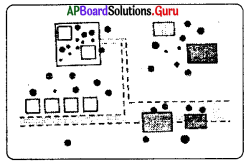
AP 8th Class Biology Bits Chapter 6 Biodiversity and its Conservation with Answers 10
Teacher conducted the following activity with the students. What do you understand with this activity?
A) To count the households
B) To know the location of the houses
C) To understand the biodiversity of a habitation
D) To count the trees in the village
Answer:
C) To understand the biodiversity of a habitation

AP 8th Class Biology Bits Chapter 6 Biodiversity and its Conservation with Answers

Question 72.
What do you do to protect biodiversity?
A) Cuts the trees
B) Hunting the animals
C) Observe the environment regularly
D) Conduct plantation and do no harm to animals
Answer:
D) Conduct plantation and do no harm to animals

Question 73.
Once upon a time, there were more vultures appears at Sireesha’s village. Now they are not seen there. Her fa-ther said that the Vultures are going to extinct. In which book, it is to be recorded?
A) Red data book
B) Green data book
C) Black data book
D) Blue data book
Answer:
A) Red data book

Question 74.
Harika told that we have to “Recycle and use the paper”. Reason for it is:
A) To reduce the price of paper
B) To remove waste papers on the road
C) To waste the paper
D) To protect the environment by avoiding to cut the trees
Answer:
D) To protect the environment by avoiding to cut the trees


AP 8th Class Biology Bits Chapter 5 Attaining the Age of Adolescence with Answers

Practice the AP 8th Class Biology Bits with Answers Chapter 5 Attaining the Age of Adolescence on a regular basis so that you can attempt exams with utmost confidence.

AP State Syllabus 8th Class Biology Bits 5th Lesson Attaining the Age of Adolescence with Answers

Choose the correct answer.

Question 1.
Adolescence age is between
A) 12 – 18 years
B) 10 – 19 years
C) 14-20 years
D) 11 – 12 years
Answer:
B) 10 – 19 years

Question 2.
Adolescents show interest to spend time with
A) infants
B) children
C) peer
D) old
Answer:
C) peer

AP 8th Class Biology Bits Chapter 5 Attaining the Age of Adolescence with Answers

Question 3.
Adam’s apple is present in …………
A) Larynx
B) Pharynx
C) Oesophagus
D) Mouth
Answer:
A) Larynx

Question 4.
In adolescents the reproductive organs produce
A) hormones
B) gametes
C) pollen grain
D) none
Answer:
B) gametes

Question 5.
The legal age for marriage for girls is
A) 16 years
B) 18 years
C) 20 years
D) 21 years
Answer:
D) 21 years

Question 6.
The glands that play an important role in development of the reproductive system
A) salivary glands
B) gastric glands
C) endocrine glands
D) liver
Answer:
C) endocrine glands

AP 8th Class Biology Bits Chapter 5 Attaining the Age of Adolescence with Answers

Question 7.
The character of living organisms is
A) digestion
B) respiration
C) nutrition
D) growth
Answer:
D) growth

Question 8.
The gland responsible for control emotions is
A) Testes
B) Ovaries
C) Pituitary
D) Adrenal
Answer:
C) Pituitary

Question 9.
The age between childhood and adulthood is
A) childhood
B) old age
C) adolescence
D) adulthood
Answer:
A) childhood

Question 10.
During adolescence children grow to the height of
A) minimum
B) maximum
C) normal
D) medium
Answer:
B) maximum

AP 8th Class Biology Bits Chapter 5 Attaining the Age of Adolescence with Answers

Question 11.
Smokers percentage in Andhra Pradesh ……….
A) 60%
B) 70%
C) 68%
D) 80%
Answer:
C) 68%

Question 12.
The partial growth of Larynx is ………..
A) Adam’s apple
B) Voice box
C) Voice chamber
D) Thyroid
Answer:
A) Adam’s apple

Question 13.
The number of cartilage present in Larynx ………
A) 8
B) 9
C) 12
D) 10
Answer:
B) 9

Question 14.
Oil glands are ………
A) Sweat glands
B) Sebaceous glands
C) Lacremal glands
D) Serumenous glands
Answer:
B) Sebaceous glands

AP 8th Class Biology Bits Chapter 5 Attaining the Age of Adolescence with Answers

Question 15.
First menstruation in girls is termed as ……….
A) Menopause
B) Hyrarche
C) Menarche
D) None
Answer:
C) Menarche

Question 16.
Legal age for marriage in Men ………
A) 18
B) 20
C) 21
D) 23
Answer:
C) 21

Question 17.
This element is essential for the production of RBC ……….
A) Magnesium
B) Boran
C) Iron
D) Zinc
Answer:
C) Iron

Question 18.
Secondary sexual characters are seen in ………..
A) Infants
B) Adolescents
C) Middle aged persons
D) Old people
Answer:
B) Adolescents

AP 8th Class Biology Bits Chapter 5 Attaining the Age of Adolescence with Answers

Question 19.
Choose the correct matching from the following.
List – A — List – B
i) Psychologist — a) Adolescent education
ii) Red Ribbon club — b) Adolescent boys
iii) Adam’s Apple — c) Stanley Hall
A) i – a, ii – b, iii – c
B) i – c, ii – b, iii – a
C) i – a, ii – c, iii – b
D) i – c, ii – a, iii – b
Answer:
D) i – c, ii – a, iii – b

Question 20.
Identify the mismatched pair from the following.
i) Adrenalin — Controls emotions
ii) Testosterone — Production of sperm cells
iii) Leutinizing Hormone — Production of ovum
A) i, ii
B) ii, iii
C) iii only
D) i only
Answer:
C) iii only

Question 21.
‘Menopause’is seen in ……….
A) Adolescent girls
B) Adolescent boys
C) 50 – 55 aged women
D) 50 – 55 aged men
Answer:
C) 50 – 55 aged women

Question 22.
During adolescent voice of boys become ……..
A) Soft
B) Smooth
C) Loud
D) Harsh
Answer:
D) Harsh

AP 8th Class Biology Bits Chapter 5 Attaining the Age of Adolescence with Answers

Question 23.
Pimples are due to the over activity of ……….. glands.
A) Sweat
B) Sebaceous
C) Serumian
D) None
Answer:
B) Sebaceous

Question 24.
We grow maximum height during ………..
A) Childhood
B) Adolescent
C) Adult
D) None
Answer:
B) Adolescent

Question 25.
Stoppage of menstruation is called ………
A) Menarche
B) Monarchy
C) Menopause
D) Monotony
Answer:
C) Menopause

Question 26.
Adolescence is an age of stress and strain, they need the help of ……..
A) Teachers
B) Parents
C) Friends
D) Both A and B
Answer:
D) Both A and B

AP 8th Class Biology Bits Chapter 5 Attaining the Age of Adolescence with Answers

Question 27.
It is very essential for overall growth during adolescence ………..
A) Fast food
B) Fruits
C) Balanced Diet
D) None
Answer:
C) Balanced Diet

Question 28.
“Adolescence is the age of stress and strain” – this was said by ……….
A) Stanley Miller
B) Thomas Hall
C) Stanley Hall
D) Stanley Joseph
Answer:
C) Stanley Hall

Question 29.
This hormone is responsible for changes in girls during adolescence ……
A) Adrenalin
B) Estrogen
C) Testosteron
D) LH
Answer:
B) Estrogen

Question 30.
Menstruation in women is a …….
A) Sin
B) Superstition
C) Untouchable thing
D) Natural phenomenon
Answer:
D) Natural phenomenon

AP 8th Class Biology Bits Chapter 5 Attaining the Age of Adolescence with Answers

Observe the following table.

Age in years % of fall height in boys % of full height in girls
13 88 95
14 92 98
15 95 99
16 98 99.5
17 99 100
18 100 100
19 100 100

Question 31.
The growth in height nearly stopped in boys is at the age of
A) 16 years
B) 17 years
C) 18 years
D) 19 years
Answer:
B) 17 years

Question 32.
Which period of age is the faster growing period for girls?
A) 13 to 14 years
B) 14 to 15 years
C) 15 to 16 years
D) 16 to 17 years
Answer:
B) 14 to 15 years

Question 33.
The growth rate is almost same in boys and girls is at the age of
A) 13 to 14 years for boys and girls.
B) 13 to 14 years for girls and 14 to 15 years for boys.
C) 14 to 15 years for girls and 15 to 16 years for boys.
D) 18 to 19 years for boys and girls.
Answer:
C) 14 to 15 years for girls and 15 to 16 years for boys.

AP 8th Class Biology Bits Chapter 5 Attaining the Age of Adolescence with Answers

Read the information and choose the correct answer for 34 & 35.
Ductless glands are called as endocrine glands. Endocrine glands secretes chemical substances known as hormones. Pituitary, Adrenal, Testes and Ovaries are important endocrine glands. Pituitary gland stimulates other endocrine glands. Adrenalin is secreted by adrenal gland. It controls emotions. Testes releases the hormone Testosterone. It helps in the releasing of sperms, developing secondary sexual characteristics in males. Oestrogen hormone is secreted by ovaries. It helps in the releasing of ova, menstruation and developing
secondary sexual characters in females.

Question 34.
The hormone responsible for the production of spermatozoa is
A) Adrenalin
B) Testosterone
C) Oestrogen
D) Alone
Answer:
A) Adrenalin

Question 35.
Master of endocrine glands is
A) Pituitary
B) Adrenal gland
C) Testes
D) Ovaries
Answer:
B) Adrenal gland

Question 36.
This is the symbol of ………
AP 8th Class Biology Bits Chapter 5 Attaining the Age of Adolescence with Answers 1
A) NPEGEL
B) Red Ribbon Club
C) NCC
D) Scout
Answer:
B) Red Ribbon Club

AP 8th Class Biology Bits Chapter 5 Attaining the Age of Adolescence with Answers

Question 37.
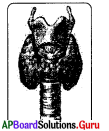
Name the endocrine gland that is present on kidney is called ……….
AP 8th Class Biology Bits Chapter 5 Attaining the Age of Adolescence with Answers 2
A) Thyroid
B) Adrenalin
C) Peneal body
D) Ovary
Answer:
B) Adrenalin

Question 38.
AP 8th Class Biology Bits Chapter 5 Attaining the Age of Adolescence with Answers 3
Write the name of the labelled area which acts as endocrine gland ………
A) Thymus
B) Thyroid
C) Pancreas
D) Pituitary
Answer:
C) Pancreas

Question 39.
Endocrine gland that is present near the heart ………
A) Thymus
B) Adrenalin
C) Pancreas
D) Pituitary
Answer:
A) Thymus

Question 40.
AP 8th Class Biology Bits Chapter 5 Attaining the Age of Adolescence with Answers 4
Name the labelled part shown in the adolescent boy.
A) Thyroid
B) Adam’s apple
C) Thorax
D) None
Answer:
B) Adam’s apple

Question 41.
As a responsible student of adolescent period you should practice
A) Good habits
B) Suitable life skills
C) Respect to mankind
D) All of these
Answer:
A) Good habits

AP 8th Class Biology Bits Chapter 5 Attaining the Age of Adolescence with Answers

Question 42.
The best suited slogan to prevent early marriages.
A) Small girl like light, don’t make it dark
B) Please encourage child marriage.
C) Early marriages helpful the country
D) Strengthen children are born with early marriages
Answer:
A) Small girl like light, don’t make it dark

Question 43.
Red ribbon club create awareness among the people for this disease
A) AIDS
B) Dengue
C) Cancer
D) Malaria
Answer:
A) AIDS

Question 44.
As a student having understanding on changes in adolescence I will
A) agree physical changes
B) develop self confidence
C) maintain personal hygiene
D) all the above
Answer:
D) all the above

Question 45.
Match the following:
Group – A — Group -B
i. Testes — a) Ova
ii. Endocrine gland — b) Estrogen
iii. Menarche — c) Pituitary gland
iv. Female hormone — d) Sperm
v. Ovaries — e) First menstruation
vi. Male hormone — f) Testosterone
— g) Stoppage of menstruation
A) i – d, ii – c, iii – e, iv – b, v – a, vi – f
B) i – c, ii – d, iii – e, iv – b, v – f, vi – a
C) i – a, ii – b, iii – c, iv – d, v – e, vi – f
D) i – f, ii – a, iii – b, iv – e, v – c, vi – d
Answer:
A) i – d, ii – c, iii – e, iv – b, v – a, vi – f

AP 8th Class Biology Bits Chapter 5 Attaining the Age of Adolescence with Answers

Question 46.
Which age group is known as adolescence period?
A) 8-13
B) 16 – 21
C) 13-19
D) 5 -10
Answer:
C) 13-19

Question 47.
The secretions of endocrine glands
A) Enzymes
B) Blood
C) Hormones
D) Saliva
Answer:
C) Hormones

Question 48.
Jaggery is a rich source of
A) Protein
B) Sodium
C) Fat
D) Iron
Answer:
D) Iron

Question 49.
These characters helps us to know adolescence in boys
A) Pimples appears on the face
B) Appears moustache on the face
C) Adam’s apple appears
D) Above said all characters
Answer:
D) Above said all characters

AP 8th Class Biology Bits Chapter 5 Attaining the Age of Adolescence with Answers

Question 50.
The secretions of this gland controls emotions
A) Pancreas
B) Testes
C) Ovaries
D) Adrenal
Answer:
D) Adrenal

Question 51.
Which of the following is true about adolescence?
A) Adam’s apple appear more prominent in boys.
B) Shoulders grow wider in girls than boys.
C) There are no voice changes in boys compared to girls.
D) Muscles grow more prominently in girls than in boys.
Answer:
A) Adam’s apple appear more prominent in boys.

Question 52.
Incorrect sentence about sweat and pimples in adolescents.
A) It appears in adolescent age.
B) Sweat and sebaceous glands are very active.
C) Sometimes lead to infection.
D) Pimples are common skin disease.
Answer:
D) Pimples are common skin disease.

Question 53.
Raju’s voice is changed now. Find out which of the following stages he is in.
A) Adolescence
B) Early – childhood
C) Adult
D) Infant
Answer:
A) Adolescence

AP 8th Class Biology Bits Chapter 5 Attaining the Age of Adolescence with Answers

Question 54.
Stanley Hall stated that
A) Adolescence is the age of stress and strain
B) Adolescence is the age of joy
C) Adolescence is not the age of distress
D) Adolescence is the age of relax
Answer:
A) Adolescence is the age of stress and strain

Question 55.
Find the wrong statements.
P. Secondary sexual characters are seen only in males
Q. Hormones control over the secondary sexual characters
R. The secretions of endocrine glands are called medicines
S. Adolescence is the period of imbalanced emotions
A) P and Q
B) R and S
C) P and R
D) Q and S
Answer:
C) P and R

Question 56.
Asa responsible student of adolescent period you should practice
A) Good habits
B) Suitable life skills
C) Respect to mankind
D) All of these
Answer:
D) All of these

Question 57.
Read the following statements and identify the changes occurred in Adolescence.
i) More interest to engage with friends than parents
ii) Voice changes in females
iii) Appears mustaches in males
iv) Attraction with opposite sex.
A) i, ii
B) i, ii , iii
C) i, iii, iv
D) ii, iv
Answer:
C) i, iii, iv

AP 8th Class Biology Bits Chapter 5 Attaining the Age of Adolescence with Answers

Question 58.
Match the following.
A — B
1. Testis — a) Estrogen
2. Pituitary gland — b) Sperms
3. Ovaries — c) Main gland
4. Adrenal gland — d) Adrenalin
A) 1 – c, 2 – b, 3 – a, 4 – d
B) 1 – d, 2 – c, 3 – b, 4 – a
C) 1 – b, 2 – c, 3 – a, 4 – d
D) 1 – c, 2 – d, 3 – b, 4 – a
Answer:
C) 1 – b, 2 – c, 3 – a, 4 – d

Question 59.
At the age of 13 years a boy can grow maximum percentage of his actual height
A) 88
B) 92
C) 95
D) 98
Answer:
A) 88

Question 60.
Match the following:
i) Mammary glands — a)Release of Sperms
ii) Estrogen — b) Production of Milk
iii) Testosteron — c) Controls emotions
iv) Adrenalin — d) Release of Ovum
A) i) – b, ii) – c, iii) – a, iv) – d
B) i) – b, ii) – d, iii) – a, iv) – c
C) i) – c, ii) – b, iii) – d, iv) – a
D) i) – d, ii) – c, iii) – a, iv) – b
Answer:
B) i) – b, ii) – d, iii) – a, iv) – c.

Question 61.
Read the following statements related to Hormones
a) Reason for changes in the body
b) Start and stoppage of menstrual cycle
c) Controls sugar levels
d) Controls water
A) a, b, c
B) b, c, d
C) a, c, d
D) All the given
Answer:
D) All the given

AP 8th Class Biology Bits Chapter 5 Attaining the Age of Adolescence with Answers

Question 62.
Testes : Sperms :: Ovary : ?
A) Ovum
B) Embryo
C) Zygote
D) Fallopian tube
Answer:
A) Ovum

Question 63.
What is the reason for getting pimples on the faces of both boys and girls in the Adolescence?
A) The secretions of sebaceous glands are very active at this stage
B) Hormones does not released
C) Uncleanliness
D) Heredity
Answer:
A) The secretions of sebaceous glands are very active at this stage

Question 64.
Estrogen : Milk :: Testosterone : ?
A) Release of sperms
B) Increase of breast
C) Anger
D) Pimples
Answer:
A) Release of sperms

Question 65.
Ganesh entered into the Adolescence stage. He looks very weak. Doctor advised him to take the food like leafy vegetables, jaggery and citrus family fruits which contains more Iron. What is the reason?
A) Bones are not strong
B) Does not have knowledge
C) Percentage of blood is very low
D) Muscles are very smooth
Answer:
C) Percentage of blood is very low

AP 8th Class Biology Bits Chapter 5 Attaining the Age of Adolescence with Answers

(66-67) Look at the picture and answer the questions.
AP 8th Class Biology Bits Chapter 5 Attaining the Age of Adolescence with Answers 5
Question 66.
What is the name of the organ?
A) Adam’s Apple
B) Sebaceous gland
C) Ovary
D) Adrenal gland
Answer:
A) Adam’s Apple

Question 67.
What changes do we see in adolescence with this organ?
A) Boys grow fast
B) Voice becomes harsh
C) Get pimples
D) Good thoughts
Answer:
B) Voice becomes harsh

Question 68.
Read the following sentences about your reaching the adolescence stage,
a) Do not want to listen to parent’s suggestions
b) Likes to stay with friends
c) Prefers to spend more time before the mirror
d) Wants to attract others
Which of the above are correct?
A) a, b, c
B) a, b, c, d
C) a, c, d
D) b, c, d
Answer:
B) a, b, c, d

AP 8th Class Biology Bits Chapter 5 Attaining the Age of Adolescence with Answers

Question 69.
Read the following slogans.
a) Take vaccines — Keep diseases far
b) Early marriages — Reasons for ill health
c) After 10th class No marriage — 11th class for you
d) Protect environment — Keep good health
In the above slogans, which are useful to give propaganda on child marriages?
A) a, b
B) b, c
C) c, d
D) a, d
Answer:
B) b, c

AP 8th Class Biology Bits Chapter 4 Reproduction in Animals with Answers

Practice the AP 8th Class Biology Bits with Answers Chapter 4 Reproduction in Animals on a regular basis so that you can attempt exams with utmost confidence.

AP State Syllabus 8th Class Biology Bits 4th Lesson Reproduction in Animals with Answers

Choose the correct answer.

Question 1.
One of the following is the viviparous animal
A) Frog
B) Sparrow
C) Leopard
D) Crow
Answer:
C) Leopard

Question 2.
Epidermal hair is seen in this animal
A) Frog
B) Snake
C) Crow
D) Cat
Answer:
D) Cat

AP 8th Class Biology Bits Chapter 4 Reproduction in Animals with Answers

Question 3.
Asexual reproduction is seen in the following
A) Hydra
B) Algae
C) Fungi
D) None
Answer:
A) Hydra

Question 4.
Binary Fission is seen in
A) Earth worm
B) Amoeba
C) Hydra
D) Monkey
Answer:
B) Amoeba

Question 5.
Female flower do not have this part
A) Ovary
B) Style
C) Stigma
D) Stamen
Answer:
D) Stamen

Question 6.
Male reproductive system consists of
A) Fallopian tube
B) Testes
C) Uterus
D) Ovary
Answer:
B) Testes

AP 8th Class Biology Bits Chapter 4 Reproduction in Animals with Answers

Question 7.
Embryo develops in this part
A) Testes
B) Fallopian tube
C) Uterus
D) None
Answer:
C) Uterus

Question 8.
In this animal fertilization takes place externally
A) Frog
B) Hen
C) Deer
D) Crow
Answer:
A) Frog

Question 9.
The larva of frog is called
A) Caterpillar
B) Tadpole
C) Meggot
D) Wriggler
Answer:
B) Tadpole

Question 10.
Pollen grains are produced by
A) Male flower
B) Female flower
C) Calyx
D) Corolla
Answer:
A) Male flower

AP 8th Class Biology Bits Chapter 4 Reproduction in Animals with Answers

Question 11.
Test tube babies are formed through
A) Test tubes
B) Testing kits
C) In Vitro Fertilization
D) External fertilization
Answer:
C) In Vitro Fertilization

Question 12.
Pregnancy period in human beings is
A) 150 days
B) 240 days
C) 270 – 280 days
D) 200 days
Answer:
C) 270 – 280 days

Question 13.
Pick out the odd one out.
A) Fish
C) Lizard
B) Frog
D) Camel
Answer:
D) Camel

Question 14.
Which of the following Oviparous?
A) Deer
C) Leopard
B) Tiger
D) Crow
Answer:
D) Crow

AP 8th Class Biology Bits Chapter 4 Reproduction in Animals with Answers

Question 15.
The basic life process, which is essential for the continuation of the species
A) Respiration
B) Excretion
C) Circulation
D) Reproduction
Answer:
D) Reproduction

Question 16.
The scientist who performed cloning for the first time is ………..
A) Flemming
B) Jenner
C) Watson
D) Ian Wiimut
Answer:
D) Ian Wiimut

Question 17.
The transformation of larva into adult through drastic changes is called …..
A) Meosis
B) Mitasis
C) Metamorphosis
D) None
Answer:
C) Metamorphosis

Question 18.
Reproduction without release of male and female gametes Is called ……..
A) Asexual
B) Sexual
C) Budding
D) Binary fission
Answer:
A) Asexual

AP 8th Class Biology Bits Chapter 4 Reproduction in Animals with Answers

Question 19.
Animals having both male and female reproductive organs are called …….
A) Unisexual animal
B) Bisexual animal
C) Hermaphrodite
D) None
Answer:
B) Bisexual animal

Question 20.
The mode of asexual reproduction in yeast cells …….
A) Binary fission
B) Budding
C) Conjugation
D) Fragmentation
Answer:
B) Budding

Question 21.
Internal fertilization takes place in
A) Fish
B) Amoeba
C) Salamander
D) Man
Answer:
D) Man

Question 22.
The larva of mosquito ……
A) Tadpole
B) Wriggler
C) Maggot
D) Nymph
Answer:
B) Wriggler

AP 8th Class Biology Bits Chapter 4 Reproduction in Animals with Answers

Question 23.
The larva of housefly ……..
A) Tadpole
B) Maggot
C) Wriggler
D) Nymph
Answer:
B) Maggot

Question 24.
The respiratory organs in Tadpole larva …….
A) Lungs
B) Gills
C) Skin
D) None
Answer:
B) Gills

Question 25.
The function of mitochondria in sperm
A) Providing energy for it’s movements
B) Respiration
C) Excretion
D) Digestion
Answer:
A) Providing energy for it’s movements

Question 26.
Development of embryo takes place in ………….
A) Oviducts
B) Fallopian tubes
C) Vagina
D) Uterus
Answer:
D) Uterus

AP 8th Class Biology Bits Chapter 4 Reproduction in Animals with Answers

Question 27.
Zygote is in this condition
A) Haploid
B) Diploid
C) Triploid
D) Tetraploid
Answer:
B) Diploid

Question 28.
This is an example for marsupials
A) Platipus
B) Echidna
C) Kiwi
D) Kangaroo
Answer:
D) Kangaroo

Question 29.
Choose the correct matching.
List – A — List – B
i) Budding — a) Amoeba
ii) Binary fission — b) Paramecium
iii) Conjugation — c) Hydra
A) i – b, ii – c, iii – a
B) i – a, ii – b, Iii – c
C) i – c, ii – a, iii – b
D) i – a, ii – c, iii – b
Answer:
C) i – c, ii – a, iii – b

AP 8th Class Biology Bits Chapter 4 Reproduction in Animals with Answers

Question 30.
Identify the mismatched pair ………
i) Dolly – Frog
ii) Test tube baby – IVF
iii) Tadpole – Sheep
A) ii only
B) i, iii
C) i only
D) i, ii, iii
Answer:
B) i, iii

Question 31.
This will happen if all the organisms stop the process of reproduction.
i) There will be no affect for the organisms.
ii) Living organisms would not survive long.
iii) Some species will increase their numbers.
iv) All species will disappear
A) i and ii only
B) iii and iv only
C) ii and iv only
D) ii, iii and iv only
Answer:
C) ii and iv only

Question 32.
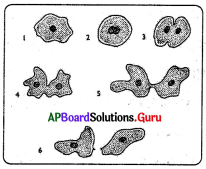
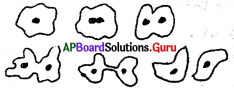
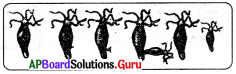
Observe the following diagram and choose the correct answer.
AP 8th Class Biology Bits Chapter 4 Reproduction in Animals with Answers 1
A) Nucleus divides into two daughter nuclei in 4th diagram.
B) Two daughter amoebae are formed in 5th diagram.
C) Constriction in centre of nucleus is found in 2nd diagram.
D) The constriction still deepens and ready to cut into two parts in 6th diagram.
Answer:
C) Constriction in centre of nucleus is found in 2nd diagram.

AP 8th Class Biology Bits Chapter 4 Reproduction in Animals with Answers

Question 33.
Observe the table and answer the following question.

Sl.No organism Type of fertilisation Habitat
1. Fish External fertilisation Water
2. Cat internal fertilisation Land
3. Frog External fertilisation Land and Water
4. Human being internal fertilisation Land

Which organism could be called as amphibian?
A) Fish
B) Cat
C) Frog
D) Human being
Answer:
C) Frog

Question 34.
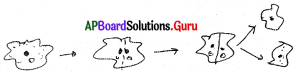
AP 8th Class Biology Bits Chapter 4 Reproduction in Animals with Answers 2
What is the process going on in Amoeba?
A) Excretion
B) Digestion
C) Binary fission
D) None
Answer:
C) Binary fission

Question 35.
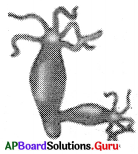
AP 8th Class Biology Bits Chapter 4 Reproduction in Animals with Answers 3
Identify this animal
A) Paramecium
B) Euglena
C) Amoeba
D) Hydra
Answer:
D) Hydra

Question 36.
AP 8th Class Biology Bits Chapter 4 Reproduction in Animals with Answers 4
What is the process going on in the picture?
A) Digestion
B) Excretion
C) Binary fission
D) Fertilization
Answer:
D) Fertilization

AP 8th Class Biology Bits Chapter 4 Reproduction in Animals with Answers

Question 37.
AP 8th Class Biology Bits Chapter 4 Reproduction in Animals with Answers 5
What is the use of the labelled
A) Providing energy
B) Movements
C) Feeding
D) Excretion
Answer:
B) Movements

Question 38.
AP 8th Class Biology Bits Chapter 4 Reproduction in Animals with Answers 6
What is the life process, going on in Hydra?
A) Binary fission
B) Budding
C) Conjugation
D) Fragmentation
Answer:
B) Budding

Question 39.
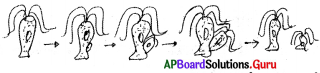
AP 8th Class Biology Bits Chapter 4 Reproduction in Animals with Answers 7
This diagram shows / discripts
A) Binary fission in Euglena
B) Budding in Hydra
C) Budding in yeast
D) Binary fission in chlamydomonas
Answer:
B) Budding in Hydra

AP 8th Class Biology Bits Chapter 4 Reproduction in Animals with Answers

Question 40.
What happen if a couple give birth to more than two babies?
i) Increasing in population
ii) Increasing in income
iii) Increasing in food problems
iv) Increasing in social and economic problems
A) i, ii and iii
B) ii, iii and iv
C) i, iii and iv
D) All of them
Answer:
C) i, iii and iv

Question 41.
Match the following.
Group – A — Group – B
i. Viviparous — a) Earthworm
ii. Oviparous — b) Zygote
iii. Invitro fertilization — c) Tadpole
iv. Asexual reproduction — d) Elephant
V. Sexual reproduction — e) Hen
vi. Hermaphrodite — f) Test tube baby
— g) Hydra
— h) The clone
A) i – d, ii – e, iii – f, iv – g, v – b, vi – a
B) i – e, ii – d, iii – g, iv – f, v – a, vi – b
C) i – a, ii – b, iii – g, iv – f, v – e, vi – d
D) i – b, ii – a, iii – f, iv – g, v – d, vi – e
Answer:
A) i – d, ii – e, iii – f, iv – g, v – b, vi – a

AP 8th Class Biology Bits Chapter 4 Reproduction in Animals with Answers

Question 42.
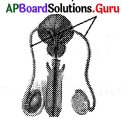
AP 8th Class Biology Bits Chapter 4 Reproduction in Animals with Answers 8
Identify the showing part in the picture.
A) Vasdeference
B) Testes
C) Penis
D) Uterus
Answer:
A) Vasdeference

Question 43.
How many daughter individuals are formed after binary fission in amoeba?
A) Only 1
B) Only 2
C) Only 4
D) More than 4
Answer:
B) Only 2

Question 44.
Which of the following can only reproduce inside the living cells of an organism?
A) Virus
B) Bacteria
C) Fungus
D) Protozoa
Answer:
A) Virus

Question 45.
Identify the correct sequence of developmental stages.
A) Embryo → Zygote → Foetus → Fertilization
B) Fertilization → Zygote → Foetus → Embryo
C) Fertilization → Zygote →Embryo → Foetus
D) Zygote → Embryo → Foetus → Fertilization
Answer:
C) Fertilization → Zygote → Embryo → Foetus

AP 8th Class Biology Bits Chapter 4 Reproduction in Animals with Answers

Question 46.
Which of the following is necessary for internal fertilisation to occur but NOT necessary for external fertilisation?
A) Zygote is developed outside and then transferred inside the female body.
B) The sperm should reach inside the body of the female.
C) The ova should be released from the ovary.
D) The sperms have to be released in a water body like a pond.
Answer:
B) The sperm should reach inside the body of the female.

Question 47.
The nucleus of an organism X is inserted into an empty egg cell of an organism Y (devoid of nucleus) and allowed to develop in It till the foetus is fully formed. Which of the following is MOST likely to happen as a result?
A) It will produce an organism with characteristics of both X and Y.
B) It will produce a new type of organism different from both X and Y.
C) It will produce the exact copy of organism X.
D) It will produce the exact copy of organism Y.
Answer:
C) It will produce the exact copy of organism X.

Question 48.
External fertilization occurs in
A) Fish, Frog
B) Crow, Hen
C) Shebuffalo, Cow
D) Snake, Squirrel
Answer:
A) Fish, Frog

AP 8th Class Biology Bits Chapter 4 Reproduction in Animals with Answers

Question 49.
Find out the Oviparous in the following
1) Shebuffalo
2) Parrot
3) Fish
4) Cow
5) Frog
6) Deer
A) 1, 4, 6
B) 1, 2, 6
C) 2, 3, 5
D) 5, 2, 1
Answer:
C) 2, 3, 5

Question 50.
The part which is absent in Male flower?
A) Calyx
B) Corolla
C) Stamen
D) Style
Answer:
D) Style

Question 51.
Choose the incorrect pair.
A) Hydra – Binary fission
B) Human – Internal fertilisation
C) Fish – External fertilisation
D) Birds – Internal fertilisation
Answer:
A) Hydra – Binary fission

AP 8th Class Biology Bits Chapter 4 Reproduction in Animals with Answers

Question 52.
The period from zygote to fully developed foetus in humans
A) 120 – 180 days
B) 270 – 280 days
C) 310 – 320 days
D) 180 – 220 days
Answer:
B) 270 – 280 days

Question 53.
In this mode of reproduction gametes are not formed, one example is
A) sexual-man
B) asexual-hydra
C) sexual-frog
D) sexual-fowl
Answer:
B) asexual-hydra

Question 54.
The zygote divides repeatedly to develop
A) Off-spring
B) Embryo
C) Foetus
D) Egg
Answer:
B) Embryo

AP 8th Class Biology Bits Chapter 4 Reproduction in Animals with Answers

Question 55.
The body parts that used for locomotion in Amoeba are
A) Contractile Vacuole
B) Cell membrane
C) Nucleus
D) seudopodia
Answer:
D) seudopodia

Question 56.
Identify the animals which undergoes external fertilisation.
i) Frog
ii) Fish
iii) Snake
iv) Dog
A) i, ii
B) i, iv
C) i, ii, iv
D) iii only
Answer:
A) i, ii

Question 57.
Which of these is useful for locomotion of sperm cell?
A) Head
B) Throat
C) Tail
D) All the above
Answer:
C) Tail

AP 8th Class Biology Bits Chapter 4 Reproduction in Animals with Answers

Question 58.
The life process happening in the above picture is
AP 8th Class Biology Bits Chapter 4 Reproduction in Animals with Answers 9
A) Budding
B) Binary fission
C) Conjugation
D) Regeneration
Answer:
B) Binary fission

Question 59.
Which of the below said organs not related to female reproductive system?
A) Fallopian tubes
B) Uterus
C) Ovary
D) Seminal duct
Answer:
D) Seminal duct

Question 60.
The stage of embryo develops fully and all other parts are distinct is called
A) Foetus
B) Embryo
C) Zygote
D) Baby
Answer:
A) Foetus

Question 61.
“Pseudopodia” are the locomotory organs in
A) Amoeba
B) Paramecium
C) Bacteria
D) Spirogyra
Answer:
A) Amoeba

AP 8th Class Biology Bits Chapter 4 Reproduction in Animals with Answers

Question 62.
Which questions are suitable to clarify your doubts about metamorphosis?
a) Is metamorphosis take place in animal lives in water?
b) What are the benefits of metamorphosis?
c) Is metamorphosis take place if a frog eggs kept in a dry bottle?
d) Why frog has tail?
A) a, b, c
B) b, c
C) c, d
D) d
Answer:
A) a, b, c

Question 63.
Bhavana observed an animal in the ZOO. She guessed it must be the ovipa-rous animal. What will be the reason?
a) It has feathers on its wings
b) No external ears appear
c) Seen hair on the skin
d) It has tail
Which of the above is suitable reasons?
A) a and c
B) b and d
C) d only
D) a and b
Answer:
D) a and b

(64-65) Look at the picture. Answer the Questions.
AP 8th Class Biology Bits Chapter 4 Reproduction in Animals with Answers 10
Question 64.
Which system does the picture belong?
A) Female reproductive system
B) Male reproductive system
C) Nervous system
D) Excretory system
Answer:
B) Male reproductive system

AP 8th Class Biology Bits Chapter 4 Reproduction in Animals with Answers

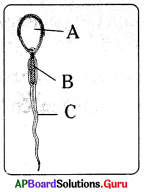
Question 65.
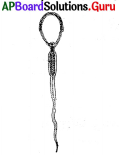
Identify the parts A, B, C in order.
A) Head, Neck, tail
B) Head, Tail, Neck
C) Tail, Neck, Head
D) Neck, Tail, Head
Answer:
A) Head, Neck, tail

Question 66.
Read the following parts of Spermatozoa.
a) Head
b) Mitochondria
c) Tail
d) Neck
Identify the parts helpful for locomotion.
A) a and c
B) b and c
C) a and b
D) b and d
Answer:
A) a and c

AP 8th Class Biology Bits Chapter 4 Reproduction in Animals with Answers

Question 67.
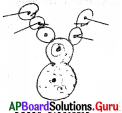
The picture represents
AP 8th Class Biology Bits Chapter 4 Reproduction in Animals with Answers 11
A) Binary fission in Amoeba
B) Budding in Hydra
C) Vegetative propagation in plants
D) Human reproductive system
Answer:
B) Budding in Hydra

AP 8th Class Biology Bits Chapter 3 Story of Microorganisms 1 with Answers

Practice the AP 8th Class Biology Bits with Answers Chapter 3 Story of Microorganisms 1 on a regular basis so that you can attempt exams with utmost confidence.

AP State Syllabus 8th Class Biology Bits 3rd Lesson Story of Microorganisms 1 with Answers

Question 1.
Lactobacillus present in
A) Curd
B) Milk
C) Butter
D) All of these
Answer:
A) Curd

Question 2.
One of the following added to dough for preparing bread
A) Agar
B) Clostridium
C) Yeast
D) Bacillus
Answer:
C) Yeast

AP 8th Class Biology Bits Chapter 3 Story of Microorganisms 1 with Answers

Question 3.
…………. gas is released during fermentation.
A) Carbon dioxide
B) Hydrogen
C) Sulphur
D) All of these
Answer:
A) Carbon dioxide

Question 4.
Sugars are converted into ……….. by yeast
A) Proteins
B) Fats
C) Alcohol
D) None of these
Answer:
C) Alcohol

Question 5.
One of the following helps in curing the disease.
A) Antibiotics
B) Pain killers
C) Nutrients
D) Antigens
Answer:
A) Antibiotics

Question 6.
Immediate effect on disease are
A) Tablets
B) Syrups
C) Injections
D) All of these
Answer:
D) All of these

AP 8th Class Biology Bits Chapter 3 Story of Microorganisms 1 with Answers

Question 7.
The word vaccine comes from “vaca” which means
A) Cat
B) Horse
C) Cow
D) Cattle
Answer:
C) Cow

Question 8.
About 78% of air around us is
A) Oxygen
B) Hydrogen
C) Carbon
D) Nitrogen
Answer:
C) Carbon

Question 9.
Citrus canker of lemon is caused by
A) Virus
B) Bacteria
C) Protozoa
D) Insects
Answer:
B) Bacteria

Question 10.
Food poisoning is due to consumption of
A) Fresh fruits
B) Spoiled food
C) Raw food
D) Bad air
Answer:
B) Spoiled food

AP 8th Class Biology Bits Chapter 3 Story of Microorganisms 1 with Answers

Question 11.
Pencillin was discovered in this year
A) 1929
B) 1932
C) 1917
D) 1940
Answer:
A) 1929

Question 12.
Dr. Y. Subba Rao discovered the following.
A) Vaccine
B) Ampicillin
C) Tetracycline
D) B.C.G
Answer:
C) Tetracycline

Question 13.
Rabies vaccine was discovered by
A) Jenner
B) Pasteur
C) Leeuwenhoek
D) Robert Hooke
Answer:
B) Pasteur

Question 14.
Small pox virus was discovered by
A) Pasteur
B) Flemming
C) Jenner
D) Jonas Salk
Answer:
C) Jenner

AP 8th Class Biology Bits Chapter 3 Story of Microorganisms 1 with Answers

Question 15.
The vaccine that prevents Tuberculosis is
A) MMR
B) DPT
C) B.C.G
D) E.C.G
Answer:
C) B.C.G

Question 16.
Folic Acid discovery is associated with the following scientists
A) Jenner
B) Pasteur
C) Y. Subba Rao
D) Flemming
Answer:
C) Y. Subba Rao

Question 17.
Sugars are converted into alcohols by
A) Bacteria
B) Fungus
C) Yeast
D) Algae
Answer:
C) Yeast

Question 18.
Dengue and Chikungunya are spread by
A) Air
B) Water
C) Food
D) Mosquitoes
Answer:
D) Mosquitoes

AP 8th Class Biology Bits Chapter 3 Story of Microorganisms 1 with Answers

Question 19.
Sir Ronald Ross was awarded with Nobel Prize in the year
A) 1901
B) 1903
C) 1904
D) 1902
Answer:
D) 1902

Question 20.
Tikka disease can be seen in
A) Sugarcane
B) Groundnut
C) Paddy
D) Sorghum
Answer:
B) Groundnut

Question 21.
Food poisoning is due to this bacteria
A) Typhe
B) E-coli
C) Clostridium botulinum
D) Lactobacillus
Answer:
C) Clostridium botulinum

Question 22.
Choose the correct matching from the following.
List – A — List – B
i) Polio — a) B.C.G
ii) T.B — b) D.P.T
iii) Pertusis — c) Oral polio vaccine
A) i – b, ii – c, iii – a
B) i – c, ii – b, iii – a
C) i – b, ii – a, iii – c
D) i – c, ii – a, iii – b
Answer:
D) i – c, ii – a, iii – b

AP 8th Class Biology Bits Chapter 3 Story of Microorganisms 1 with Answers

Question 23.
Choose the mismatched pair from the following.
i) Varticella – Measles
ii) MMR – Mumps
iii) Tet – vac – Tetanus
A) ii, iii
B) iii only
C) i, ii
D) i only
Answer:
D) i only

Question 24.
This is also known as “Triple Antigen”
A) BCG
B) ECG
C) Tet-vac
D) DPT
Answer:
D) DPT

Question 25.
Vaccine for Polio was discovered by
A) Flemming
B) Jonas Salk
C) Y. Subba Rao
D) Jenner
Answer:
B) Jonas Salk

Question 26.
The word ‘Vaca’ is derived from vaccine, which means
A) Disease
B) Sheep
C) Cow
D) Medicine
Answer:
C) Cow

AP 8th Class Biology Bits Chapter 3 Story of Microorganisms 1 with Answers

Question 27.
Microorganisms which cause diseases are called
A) Vectors
B) Pathogens
C) Vaccines
D) Insects
Answer:
B) Pathogens

Question 28.
Milk is preserved by a method called
A) Sterilization
B) Pasteurization
C) Mineralization
D) None
Answer:
B) Pasteurization

Question 29.
Plasmodium causes this disease
A) AIDS
B) Typhoid
C) Malaria
D) Hepatitis
Answer:
C) Malaria

Question 30.
The disease of food poisoning is called
A) Botulism
B) Tetanus
C) Pertusis
D) Mumps
Answer:
A) Botulism

AP 8th Class Biology Bits Chapter 3 Story of Microorganisms 1 with Answers

Question 31.
This disease is completely eradicated from the world
A) AIDS
B) Malaria
C) Chicken pox
D) Measles
Answer:
D) Measles

Question 32.
Dr. Ronald Ross discovered that female mosquito was the carrier for plasmodium. This discovery was made in this city
A) Kolkata
B) Mumbai
C) Secunderabad
D) Goa
Answer:
C) Secunderabad

Question 33.
We should spray the following in the stagnated water pools to prevent the mosquito population?
A) Coconut oil
B) Kerosene
C) Olive oil
D) Water
Answer:
B) Kerosene

Question 34.
Housefly acts as carrier for
A) Typhoid
B) Cholera
C) Amoebiasis
D) All the above
Answer:
D) All the above

AP 8th Class Biology Bits Chapter 3 Story of Microorganisms 1 with Answers

Question 35.
Dr. Edward Jenner discovered Smallpox vaccine in this year
A) 1780
B) 1785
C) 1789
D) 1796
Answer:
D) 1796

Question 36.
Ritwik added some yeast powder to sugar solution and kept it for a day. The next day he will observe that
A) The solution tastes salty and has no smell
B) The solution turns into bluish black
C) The solution remains unchanged
D) The solution smells like alcohol and bubbles are seen on top
Answer:
D) The solution smells like alcohol and bubbles are seen on top

Question 37.
Bacteria present in curd is
A) Lactobacillus
B) Microbacterium tuberculosis
C) Vibrio comma
D) Salmonella
Answer:
A) Lactobacillus

Question 38.
The bacterium that is used as pesticide
A) E-coil
B) Lactobacillus
C) Bacillus thuringiensis
D) Stephalococus
Answer:
C) Bacillus thuringiensis

AP 8th Class Biology Bits Chapter 3 Story of Microorganisms 1 with Answers

Question 39.
Identify the microorganism present in the picture.
AP 8th Class Biology Bits Chapter 3 Story of Microorganisms 1 with Answers 1
A) Anabina
B) Nostoc
C) E – coli
D) Yeast
Answer:
B) Nostoc

Question 40.
Identify the microorganism
AP 8th Class Biology Bits Chapter 3 Story of Microorganisms 1 with Answers 2
A) Anabina
C) E – coli
B) Nostoc
D) Yeast
Answer:
A) Anabina

Question 41.
The sheep in this picture, are suffering from
AP 8th Class Biology Bits Chapter 3 Story of Microorganisms 1 with Answers 3
A) Food and mouth disease
B) Anthrax
C) Encephalitis
D) None
Answer:
B) Anthrax

Question 42.
I am used as antibiotic. Who am I?
AP 8th Class Biology Bits Chapter 3 Story of Microorganisms 1 with Answers 4
A) Yeast
C) Spirulina
B) E – coli
D) Pencillin
Answer:
D) Pencillin

AP 8th Class Biology Bits Chapter 3 Story of Microorganisms 1 with Answers

Question 43.
AP 8th Class Biology Bits Chapter 3 Story of Microorganisms 1 with Answers 5
Name the labelled parts of the yeast ………
A) Daughter cells
B) Buds
C) Micro yeast
D) None
Answer:
B) Buds

Question 44.
AP 8th Class Biology Bits Chapter 3 Story of Microorganisms 1 with Answers 6
Name the labelled parts of the picture
A) Roots
B) Stem
C) Nodules
D) None
Answer:
C) Nodules

Question 45.
Who saved the wine industry in France?
A) Jenner
B) Pasteur
C) Flemming
D) Y. Subba Rao
Answer:
B) Pasteur

Question 46.
“The germ theory of diseases” was proposed by
A) Jenner
B) Flemming
C) Jonas Salk
D) Pasteur
Answer:
D) Pasteur

AP 8th Class Biology Bits Chapter 3 Story of Microorganisms 1 with Answers

Question 47.
The scientist associated with Anthrax vaccine
A) Jenner
B) Flemming
C) Y. Subba Rao
D) Pasteur
Answer:
D) Pasteur

Question 48.
Name the scientist who saved the silk industry in Germany and France …..
A) Flemming
B) Jenner
C) Robert Hooke
D) Pasteur
Answer:
D) Pasteur

Question 49.
Name the scientist, who experimen-tally proved that microorganisms could be killed by boiling in 1768
A) Pasteur
B) Jenner
C) Lazzaro Spallanzani
D) Flemming
Answer:
C) Lazzaro Spallanzani

Question 50.
Examples for Antibiotics
A) Tetracycline
B) Streptomycin
C) Erythromycin
D) All the above
Answer:
D) All the above

AP 8th Class Biology Bits Chapter 3 Story of Microorganisms 1 with Answers

Question 51.
Tetracycline cures
A) Typhoid
B) Tuberculosis
C) Plague
D) AM the above
Answer:
D) AM the above

Question 52.
Oral polio vaccine was discovered by
A) Dr. Albert Sabin
B) Dr. Jonas Salk
C) Jenner
D) Flemming
Answer:
A) Dr. Albert Sabin

Question 53.
Match the following
Group – A — Group – B
i. Flemming — a) Anthrax vaccine
ii. Ross — b) First antibiotic
iii. Jonas salk — c) Smallpox
iv. Jenner — d) Anopheles
v. Pasteur — e) Aureomycin
f) Polio vaccine
A) i – c, ii – a, iii – d, iv – f, v – b
B) i – d, ii – b, iii – a, iv – c, v – f
C) i – a, ii – c, iii – f, iv – d, v – b
D) i – b, ii – d, iii – f, iv – c, v – a
Answer:
D) i – b, ii – d, iii – f, iv – c, v – a

AP 8th Class Biology Bits Chapter 3 Story of Microorganisms 1 with Answers

Question 54.
The disease septicemia is caused by
A) Bacteria
B) Virus
C) Protozoan
D) Fungi
Answer:
A) Bacteria

Question 55.
Name the bacterium that exhibits symbiotic relation with Leguminous plants
A) Lactobacillus
B) Bacillus Thuringeinsis
C) Xanthomonas
D) RMzobium
Answer:
D) RMzobium

Question 56.
What will happen if we use vaccines containing strong or potent disease causing microorganisms?
A) There are high chances of getting infected with the disease.
B) More antibodies will be developed and we will be protected against the disease.
C) More useful microorganisms will grow in the intestine.
D) All the bacteria – both useful and harmful will be destroyed in the body.
Answer:
A) There are high chances of getting infected with the disease.

AP 8th Class Biology Bits Chapter 3 Story of Microorganisms 1 with Answers

Question 57.
Ambika has a milk factory, they carry out pasteurisation of milk. During this process, milk is heated upto 70 degrees C for 15 to 30 seconds and then stored. This prevents growth of most micro-organisms.
Which of the following activities also uses heat for controlling the growth of microbes
A) Raju is a businessman and he packs dry fruits in a air tight container for a long journey.
B) Radha is a chef and makes jams by adding sugar to cooked fruit.
C) David is a doctor and he sterilises the materials for surgery in his sterilisation chamber.
D) Salim is a farmer and sprays pesticides on his crops.
Answer:
C) David is a doctor and he sterilises the materials for surgery in his sterilisation chamber.

Question 58.
Which of the following may be caused by consumption of antibiotics?
A) Food poisoning can occur
B) Useful microorganisms in the intestine may be killed
C) Conversion of sugar into alcohol by fermentation
D) Development of antibodies against disease causing microbes
Answer:
B) Useful microorganisms in the intestine may be killed

Question 59.
Which of the following diseases are affected with virus?
A) Typhoid, Diarrhoea
B) Malaria, Amoebiasis
C) Conjunctivitis, Chicken pox
D) Heart Diseases
Answer:
C) Conjunctivitis, Chicken pox

AP 8th Class Biology Bits Chapter 3 Story of Microorganisms 1 with Answers

Question 60.
Match the following.
1) Red rot disease — a) Sheep
2) Anthrax — b) Hen
3) Birdflu — c) Sugarcane
A) 1 – a, 2 – b, 3 – c
B) 1 – b, 2 – a, 3 – c
C) 1 – c, 2 – a, 3 – b
D) 1 – b, 2 – c, 3 – a
Answer:
C) 1 – c, 2 – a, 3 – b

Question 61.
Rabies disease is caused by
A) The mosquito bite
B) The bite of dog
C) Injuries
D) Contaminated food
Answer:
B) The bite of dog

Question 62.
Study the following statements and find out which is the correct one.
I) We take vaccine when we are suffering from fever
II) To prevent polio we must take antibiotic
A) I – is wrong, II – is correct
B) I and II are correct
C) Both are wrong
D) I – is correct and II – is wrong
Answer:
C) Both are wrong

AP 8th Class Biology Bits Chapter 3 Story of Microorganisms 1 with Answers

Question 63.
The foot of buffalo effected with a disease, it can’t walk properly. What disease it would be?
A) Anthrax
B) Small pox
C) Rabies
D) Hoof and mouth
Answer:
D) Hoof and mouth

Question 64.
Choose the suitable question for a doctor to know about the uses of vaccines in our body.
A) We will be healthy by taking vaccine?
B) Is vaccines are more useful than antibiotics?
C) How vaccines are work in our body?
D) Are we effect by the fever by taking vaccine?
Answer:
C) How vaccines are work in our body?

Question 65.
Which of the following would be followed by you to keep away from the diseases?
A) I drink boiled water
B) I take food when it is hot
C) I keep my premises clean
D) All above
Answer:
D) All above

AP 8th Class Biology Bits Chapter 3 Story of Microorganisms 1 with Answers

Question 66.
Which microorganism are used in preparation of cake in Bakery?
A) Yeast
B) Lactobacillus
C) Virus
D) Rhizopus
Answer:
A) Yeast

Question 67.
To protect your health which precautions would be taken
A) Take preserved drinking water in the bottles
B) Take boiled water
C) Use tap water for drinking
D) Drink well water.
Answer:
B) Take boiled water

Question 68.
Which of the following diseases mainly spreads through air?
A) Tuberculosis
B) AIDS
C) Typhoid
D) Malaria
Answer:
A) Tuberculosis

AP 8th Class Biology Bits Chapter 3 Story of Microorganisms 1 with Answers

Question 69.
Disease-causing microorganisms are killed directly by consuming
A) Antiseptics
B) Antibiotics
C) Vitamin supplements
D) Curd
Answer:
B) Antibiotics

Question 70.
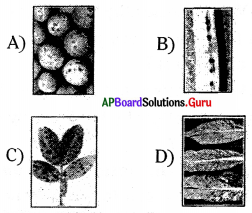
Find the mosaic disease from the following picture.
AP 8th Class Biology Bits Chapter 3 Story of Microorganisms 1 with Answers 7
Answer:
D)

Question 71.
What will happen if you add yeast to dough in the following?
1) Decrease in temperature
2) An increase in the volume of substance
3) An increase in the amount of released water by yeast cells
4) The release of CO2 gas
A) 1,2 only
B) 2, 3 only
C) 2, 4 only
D) 4 only
Answer:
C) 2, 4 only

AP 8th Class Biology Bits Chapter 3 Story of Microorganisms 1 with Answers

Question 72.
An example of a microorganism that is a friend of farmer
A) Rhizobium
B) Lactobacillus
C) Penicillin
D) Amoeba
Answer:
A) Rhizobium

Question 73.
The first vaccine discovered by this scientist in the year
A) Edward Jenner-1696
B) Ronald Ross-1796
C) Edward Jenner-1796
D) Louis Pasteur -1696
Answer:
C) Edward Jenner-1796

Question 74.
Find the mis-match.
A) Root nodules – rhizobium
B) Malaria-virus
C) Citrus canker-virus
D) Red rot of sugar cane – fungi
Answer:
B) Malaria-virus

Question 75.
Typhoid, cholera, diarrhoea, dysentery and jaundice are
A) Water borne diseases
B) Air borne diseases
C) Both
D) None
Answer:
A) Water borne diseases

AP 8th Class Biology Bits Chapter 3 Story of Microorganisms 1 with Answers

Question 76.
The bacteria which symbioses with legume plant are
A) Rhyzobium
B) Clostridium
C) Lactobacillus
D) Penicillin
Answer:
A) Rhyzobium

Question 77.
Which one of these is preserved in pasteurisation method?
A) Fruit Juices
B) Milk
C) Food
D) Meat
Answer:
B) Milk

Question 78.
Antibiotics are used to kill the Micro-organisms which are cause for dis¬eases. Antibiotics prepared from
A) Fungi
B) Algae
C) Protozoan
D) Bacteria
Answer:
A) Fungi

Question 79.
Legume plants have root nodules. Rhizobium bacteria is present in the root nodules. The bacterium provides nitrates to the plant, which gives shelter to the bacterium. This relationship is called
A) Symbiosis
B) Parasitism
C) Autotrophic nutrition
D) Correlation
Answer:
A) Symbiosis

AP 8th Class Biology Bits Chapter 3 Story of Microorganisms 1 with Answers

Question 80.
The microorganism which turns milk into curd
A) Lactobacillus
B) Rhizopus
C) Plasmodium
D) Spirogyra
Answer:
A) Lactobacillus

Question 81.
Read the following sentences about viruses. Identify the wrong statement.
A) They are big in size than bacteria
B) Causative organism for Swineflu and Polio
C) They are the link between living and non-living organisms
D) They are the causative microbes for the diseases both in plants and animals
Answer:
A) They are big in size than bacteria

Question 82.
Read the following statements.
P) Vaccines are used to prevent the diseases.
Q) Anti-bodies for causative microorganisms produced in the body by vaccination.
In the above sentences.
A) P is correct and Q is correct explanation
B) P is incorrect but Q is correct explanation
C) P is correct but Q is incorrect explanation
D) P is incorrect and Q is also incorrect explanation
Answer:
A) P is correct and Q is correct explanation

Question 83.
The first scientist who proved that microorganism could be killed by boiling?
A) Louis Pasteur
B) Lazzaro Spallanazani
C) Alexander Flemming
D) Yellapreggada Subba Rao
Answer:
C) Alexander Flemming

AP 8th Class Biology Bits Chapter 3 Story of Microorganisms 1 with Answers

Question 84.
Read the names of the diseases given below.
Small pox, Hepatitis, Mumps, Tetanus, Whooping cough
A) all are skin diseases
B) all are occured by bacteria
C) vaccines are discovered for all the above diseases
D) they occur only in adults
Answer:
C) vaccines are discovered for all the above diseases

Question 85.
Which of the following questions are suitable to clarify your doubts on contageous diseases?
A) Why do diseases occur?
B) What happens when we are affected by a disease?
C) Why is fever not a contaminated disease?
D) What precautions do we follow to avoid contaminated diseases?
Answer:
D) What precautions do we follow to avoid contaminated diseases?

(86-88) Look at the picture and answer the questions.
AP 8th Class Biology Bits Chapter 3 Story of Microorganisms 1 with Answers 8
Question 86.
Which of the material is added to myda dough in the experiment?
A) Bacteria
B) Yeast
C) Baking soda
D) Iodine
Answer:
B) Yeast

Question 87.
What is the name of the process occured in the experiment?
A) Transpiration
B) Condensation
C) Fermentation
D) Diffusion
Answer:
C) Fermentation

AP 8th Class Biology Bits Chapter 3 Story of Microorganisms 1 with Answers

Question 88.
Which gas is released in the experiment?
A) Oxygen
B) Carbondioxide
C) Nitrogen
D) Hydrogen
Answer:
B) Carbondioxide

Question 89.
Ravi mixed yeast to sugar solution. What changes may be observed by him?
a) It turned into Alcohol
b) Oxygen gas is released
c) CO2 will release
d) Cold drink is prepared
Which of the above are correct?
A) a and c
B) a and b
C) a and d
D) None of the given
Answer:
A) a and c

Question 90.
You want to give suggestions to your villagers for the prevention of diseases, which of the following are correct?
A) Should not eat contaminated food
B) Drink safe and clean water
C) Keep the surrounding environment clean
D) All the given
Answer:
D) All the given

AP 8th Class Biology Bits Chapter 3 Story of Microorganisms 1 with Answers

Question 91.
To avoid spoiling of pickles at my home, I have to Martm
A) Open the lid and keep open the Jar
B) Mix with salt, chilli powder and oil
C) Shall keep in moisture place
D) Heating it frequently
Answer:
B) Mix with salt, chilli powder and oil

AP 8th Class Biology Bits Chapter 2 Cell: The Basic Unit of Life with Answers

Practice the AP 8th Class Biology Bits with Answers Chapter 2 Cell: The Basic Unit of Life on a regular basis so that you can attempt exams with utmost confidence.

AP State Syllabus 8th Class Biology Bits 2nd Lesson Cell: The Basic Unit of Life with Answers

Choose the correct answer.

Question 1.
Microbiology as a science born in
A) 1674
B) 1686
C) 1574
D) 1474
Answer:
A) 1674

Question 2.
Single lens microscope magnifies
A) 3
B) 300
C) 3000
D) 30
Answer:
B) 300

AP 8th Class Biology Bits Chapter 2 Cell: The Basic Unit of Life with Answers

Question 3.
Animalcules are
A) Bacteria
B) Fungi
C) Algae
D) All of these
Answer:
A) Bacteria

Question 4.
Green strands of pond water are
A) Bacteria
B) Fungi
C) Algae
D) All of these
Answer:
C) Algae

Question 5.
Bacteria in buttermilk is
A) Lactobacillus
B) Nitro bacter
C) Ecoli
D) All the above
Answer:
A) Lactobacillus

Question 6.
Bacteria stained by
A) Crystal violet
B) Crystal blue
C) Safranin
D) Crimson red
Answer:
A) Crystal violet

AP 8th Class Biology Bits Chapter 2 Cell: The Basic Unit of Life with Answers

Question 7.
Micro arthropod is
A) Scabies mite
B) Spirogyra
C) Amoeba
D) Yeast
Answer:
A) Scabies mite

Question 8.
Protozoan is
A) Scabies mite
B) Spirogyra
C) Amoeba
D) Yeast
Answer:
C) Amoeba

Question 9.
Typhoid is caused by
A) Bacteria
B) Virus
C) Protozoa
D) All the above
Answer:
A) Bacteria

Question 10.
Amoebiasis is caused by
A) Bacteria
B) Virus
C) Protozoa
D) All the above
Answer:
C) Protozoa

AP 8th Class Biology Bits Chapter 2 Cell: The Basic Unit of Life with Answers

Question 11.
“Bread mould” is
A) Agaricus
B) Mushroom
C) Pencillium
D) Rhizopus
Answer:
D) Rhizopus

Question 12.
Which are considered as the interlink between living and non-living organisms?
A) Algae
B) Bacteria
C) Viruses
D) Protozoans
Answer:
C) Viruses

Question 13.
Viruses reproduce only when they are in
A) Air
B) Water
C) Soil
D) Host living cell
Answer:
D) Host living cell

Question 14.
Scabies is caused by
A) Bed bug
B) Housefly
C) Agaricus
D) Scabies bug
Answer:
D) Scabies bug

AP 8th Class Biology Bits Chapter 2 Cell: The Basic Unit of Life with Answers

Question 15.
Important microorganisms that help in increasing soil fertility by decomposing biomass are
A) Bacteria
B) Algae
C) Micro – Arthropoda
D) Virus
Answer:
C) Micro – Arthropoda

Question 16.
AIDS is caused by
A) TMV
B) Ebola
C) HIV
D) None
Answer:
C) HIV

Question 17.
Which of the following is caused by Bacteria?
A) AIDS
B) Typhoid
C) Amoebiasis
D) Scabies
Answer:
B) Typhoid

Question 18.
Pick out the ‘odd man’ out
A) Amoeba
B) Spirogyra
C) Euglena
D) Vorticella
Answer:
B) Spirogyra

AP 8th Class Biology Bits Chapter 2 Cell: The Basic Unit of Life with Answers

Question 19.
Pick out the odd man out
A) Rhizopus
B) Pencillium
C) Mushroom
D) Spirulina
Answer:
D) Spirulina

Question 20.
Bacteria that is present in the intestine is useful in
A) Excretion
B) Digestion
C) Absorption
D) Assimilation
Answer:
B) Digestion

Question 21.
‘Septicemia’ means
A) Poisoning of body
B) Poisoning of blood
C) Poisoning of organs
D) Poisoning of brain
Answer:
B) Poisoning of blood

Question 22.
Amoebiasis is caused by
A) Algae
B) Fungi
C) Micro Arthropods
D) Protozoans
Answer:
D) Protozoans

AP 8th Class Biology Bits Chapter 2 Cell: The Basic Unit of Life with Answers

Question 23.
The top 8 inches of soil of one acre may contain ………….. of bacteria and fungi.
A) [latex]\frac{1}{2}[/latex] kg
B) 5 [latex]\frac{1}{2}[/latex] tons
C) 1 ton
D) 1 kg
Answer:
B) 5 [latex]\frac{1}{2}[/latex] tons

Question 24.
Choose the correct matching from the following.
List – A — List -B
i) Lactobacillus — a) Root nodules
ii) Rhizobium — b) Alcohol
iii) Yeast — c) Curd
A) i – a, ii – b, iii – c
B) i – c, ii – a, iii – b
C) i – b, ii – a, iii – c
D) i – c, ii – b, iii – a
Answer:
B) i – c, ii – a, iii – b

Question 25.
Identify the mismatched pair.
i) Malaria — Protozoa
ii) Septicemia — Virus
iii) Swine flu — Bacteria
A) i, iii
B) ii, iii
C) i, ii
D) i only
Answer:
B) ii, iii

Question 26.
Choose the correct matching.
List – A — List -B
i) Polio — a) Tobacco
ii) TB — b) Bacteria
iii) TMV — c) Virus
A) i – b, ii – a, iii – c
B) i – c, ii – a, iii – b
C) i – a, ii – b, iii – c
D) i – c, ii – b, iii – a
Answer:
D) i – c, ii – b, iii – a

AP 8th Class Biology Bits Chapter 2 Cell: The Basic Unit of Life with Answers

Question 27.
Viruses can be observed through ………..
A) Simple microscope
B) Compound microscope
C) Electron microscope
D) None
Answer:
C) Electron microscope

Question 28.
Microbiology is the science of …………
A) Fungi
B) Algae
C) Virus
D) Microorganisms
Answer:
D) Microorganisms

Question 29.
Spirulina is used in the preparation of …….
A) Medicines
B) Proteins
C) Carbohydrates
D) Both A and B
Answer:
D) Both A and B

Question 30.
Microorganisms were first studied by ………
A)Jenner
B) Ross
C) Leeuwenhoek
D) Robert Hooke
Answer:
C) Leeuwenhoek

AP 8th Class Biology Bits Chapter 2 Cell: The Basic Unit of Life with Answers

Question 31.
Which converts milk into curd?
A) E – coli
B) Yeast
C) Rhizobium
D) Lactobacillus
Answer:
D) Lactobacillus

Question 32.
Umbrella like growth over rotten materials of dumped wastes ……….
A) Rhizopus
B) Azolla
C) Nostoc
D) Mushroom
Answer:
D) Mushroom

Question 33.
Microorganisms grow on other organisms are
A) Parasites
B) Saprophites
C) Autotrophs
D) Heterotrophs
Answer:
A) Parasites

Question 34.
Animalcule is nothing but ………..
A) Virus
B) Bacteria
C) Fungus
D) Algae
Answer:
B) Bacteria

AP 8th Class Biology Bits Chapter 2 Cell: The Basic Unit of Life with Answers

Question 35.
This will happen if butter milk is added to luke warm milk.
A) Milk would be spoiled
B) Curd would be formed in 2 or 3 hours
C) Curd would be formed in a long time
D) Curd would not be formed
Answer:
B) Curd would be formed in 2 or 3 hours

Question 36.
This chemical is used in bacterial staining ………
A) Methyle Blue
B) Methyl Orange
C) Janus Green
D) Crystal Violet
Answer:
D) Crystal Violet

Question 37.
For the observation of fungi, we use this …………
A) Rotten bread
B) Pond water
C) Grape juice
D) Buttermilk
Answer:
A) Rotten bread

AP 8th Class Biology Bits Chapter 2 Cell: The Basic Unit of Life with Answers

Question 38.
Lactobacillus can be seen in ………..
A) Water
B) Rotten vegetable
C) Buttermilk
D) Bread
Answer:
C) Buttermilk

Question 39.
Protozoans can be observed in ………..
A) Pond water
B) Hay decoction
C) Bread
D) Potato
Answer:
B) Hay decoction

Question 40.
Disease causing microbes spread through
A) Air
B) Water
C) Vectors
D) Above all
Answer:
D) Above all

AP 8th Class Biology Bits Chapter 2 Cell: The Basic Unit of Life with Answers

Question 41.
Name the labelled part of the fungus ………….
AP 8th Class Biology Bits Chapter 2 Cell The Basic Unit of Life with Answers 1
A) Hyphae
B) Body
C) Spores
D) Conidiospores
Answer:
D) Conidiospores

Question 42.
Name the micro-organism present in the diagram.
AP 8th Class Biology Bits Chapter 2 Cell The Basic Unit of Life with Answers 2
A) Agaricus
B) Rhizopus
C) Penicillium
D) Aspergillus
Answer:
B) Rhizopus

Question 43.
Name the microorganism present in the diagram.
AP 8th Class Biology Bits Chapter 2 Cell The Basic Unit of Life with Answers 3
A) Rhizopus
B) Penicillium
C) Spirogyra
D) Spirulina
Answer:
B) Penicillium

AP 8th Class Biology Bits Chapter 2 Cell: The Basic Unit of Life with Answers

Question 44.
The given microorganism belongs to ……….
AP 8th Class Biology Bits Chapter 2 Cell The Basic Unit of Life with Answers 4
A) Algae
B) Fungi
C) Protozoa
D) Virus
Answer:
C) Protozoa

Question 45.
AP 8th Class Biology Bits Chapter 2 Cell The Basic Unit of Life with Answers 5
I’m responsible for causing a deadly disease. Who am I?
A) TMV
B) Swine flu virus
C) HIV
D) Ebola
Answer:
C) HIV

Question 46.
AP 8th Class Biology Bits Chapter 2 Cell The Basic Unit of Life with Answers 6
I am responsible for mosaic disease in Tobacco. Who am I?
A) HIV
B) Polio virus
C) Smallpox virus
D) TMV
Answer:
D) TMV

AP 8th Class Biology Bits Chapter 2 Cell: The Basic Unit of Life with Answers

Question 47.
AP 8th Class Biology Bits Chapter 2 Cell The Basic Unit of Life with Answers 7
Name the micro-organism present in the picture.
A) Spirogyra
B) Diatom
C) Spirulina
D) Ceratium
Answer:
B) Diatom

Question 48.
We should clean our hands with soap before eating because
A) Washing is our hobby
B) Washing makes our hands hygenic
C) Washing makes our hands perfume
D) We eat more food
Answer:
B) Washing makes our hands hygenic

Question 49.
Match the following:
Group – A — Group – B
i. Eyelash mite — a) Virus
ii. Cholera — b) Algae
iii. Polio — c) Micro arthropod
iv. Chara — d) Bacteria
v. Bread mould — e) Protozoa
f) Fungus
A) i – f, ii – b, iii – a, iv – d, v – c
B) i – c, ii – d, iii – a, iv – b, v – f
C) i – b, ii – f, iii – d, iv – a, v – c
D) i – a, ii – b, iii – c, iv – d, v – f
Answer:
B) i – c, ii – d, iii – a, iv – b, v – f

Question 50.
Which of the following belongs to Fungi?
AP 8th Class Biology Bits Chapter 2 Cell The Basic Unit of Life with Answers 8
Answer:
B)

AP 8th Class Biology Bits Chapter 2 Cell: The Basic Unit of Life with Answers

Question 51.
Which of the following belongs to protozoa?
AP 8th Class Biology Bits Chapter 2 Cell The Basic Unit of Life with Answers 9
Answer:
D)

Question 52.
Match the following
AP 8th Class Biology Bits Chapter 2 Cell The Basic Unit of Life with Answers 10
A) a-1, b-3, c-2, d-4
B) a – 3, b – 5, c -1, d – 4
C) a-3, b-2, c-4, d -1
D) a – 3, b – 5, c – 4, d -1
Answer:
D) a – 3, b – 5, c – 4, d -1

AP 8th Class Biology Bits Chapter 2 Cell: The Basic Unit of Life with Answers

Question 53.
Choose the unicellular organism which is green in colour.
AP 8th Class Biology Bits Chapter 2 Cell The Basic Unit of Life with Answers 11
Answer:
B)

Question 54.
Match the following.
1. Bacteria — a) Paramecium
2. Virus — b) E.coli
3. Fungi — c) TMV
4. Protozoan — d) Rhizopus
A) 1 – b, 2 – c, 3 – d, 4 – a
B) 1 – b, 2 – d, 3 – c, 4 – a
C) 1 – c, 2 – b, 3 – d, 4 – a
D) 1 – a, 2 – b, 3 – c, 4 – d
Answer:
A) 1 – b, 2 – c, 3 – d, 4 – a

Question 55.
The following is called a bridge be-tween living and non-living things.
A) Bacteria
B) Viruses
C) Fungi
D) Algae
Answer:
B) Viruses

AP 8th Class Biology Bits Chapter 2 Cell: The Basic Unit of Life with Answers

Question 56.
Read the below sentences. Select the right statements.
a) All the Fungi species are microbes
b) We can see Bacteria with naked eye
c) Microbes lives in water, air and soil
d) All the Arthropodas are microbes
A) a, b, c
B) b, c, d
C) b and c
D) a and c
Answer:
D) a and c

Question 57.
We can see green colour in stagnated water because of the algae growning in it. But many algae does not see with naked eyes. Identify the algae which can be seen with naked eye.
A) Spirogyra
B) Spirulina
C) Seratium
D) Chlamydomonas
Answer:
A) Spirogyra

Question 58.
Read the statements about micro arthropods.
P) They increase soil fertility.
Q) Causative organisms for skin disease like scabies.
In the above sentences,
A) P is only correct
B) Q is only correct
C) Both P and Q are correct
D) Both P and Q are wrong
Answer:
C) Both P and Q are correct

AP 8th Class Biology Bits Chapter 2 Cell: The Basic Unit of Life with Answers

Question 59.
Rajesh is trying to observe with the material like black coloured bread, slide, microscope. Guess what he may be observed.
A) Fungi
B) Algae
C) Bacteria
D) Protozoan
Answer:
A) Fungi

Question 60.
Identify the correct order of stages to observe the bacteria in buttermilk.
a) Slowly heat the slide.
b) Wash the slide gently with water after heating the slide.
c) Put a drop of buttermilk on the slide.
d) Drop crystal voilet solution on the slide.
A) a, b, c, d
B) b, c, d, a
C) c, b, a, d
D) c, a, d, b
Answer:
D) c, a, d, b

Question 61.
Read the following stages of making the protozoan slide in the laboratory and identify the correct order.
a) Observe the slide under Micro¬scope.
b) Take a drop of water collected along with the hay.
c) Put cover slip on the water drop on the slide.
d) Soak dry hay for 3 – 4 days into the water.
A) a, b, c, d
B) c, b, d, a
C) d, b, c, a
D) d, b, a, c
Answer:
C) d, b, c, a

AP 8th Class Biology Bits Chapter 2 Cell: The Basic Unit of Life with Answers

Question 62.
Look at the flow chart. Write correct example in Boxes.
Identify the organisms in A, B, C places orderly.
A) Lactobacillus, Pencillin, Plasmodium
B) Pencillin, Plasmodium, Lactobacillus
C) Lactobacillus, Plasmodium, Pencillin
D) Plasmodium, Pencillin, Lactobacillus
Answer:
A) Lactobacillus, Pencillin, Plasmodium

AP 8th Class Biology Bits Chapter 1 What is Science? with Answers

Practice the AP 8th Class Biology Bits with Answers Chapter 1 What is Science? on a regular basis so that you can attempt exams with utmost confidence.

AP State Syllabus 8th Class Biology Bits 1st Lesson What is Science? with Answers

Choose the correct answer.

Question 1.
The way that was followed by scientists is called
A) Enlightenment Method
B) Questioning Method
C) Scientific Method
D) Supportive Method
Answer:
C) Scientific Method

Question 2.
Science is a tool for searching
A) Truths of nature
B) Amazing to think
C) Many problems
D) History of nature
Answer:
A) Truths of nature

AP 8th Class Biology Bits Chapter 1 What is Science? with Answers

Question 3.
A Geologist examines the …………..
A) Territorial behaviours
B) Distribution of fossils
C) Rate of reaction
D) Angular momentum
Answer:
B) Distribution of fossils

Question 4.
Science is an organized study of knowledge which is based on
A) Controlled conditions
B) Phenomena
C) Experimentation
D) Observation
Answer:
C) Experimentation

Question 5.
Which language does the word ‘science’ come from?
A) English
B) Persian
C) Greek
D) Latin
Answer:
D) Latin

Question 6.
Who tries to understand how certain conditions are passed from one generation to another generation?
A) Geologist
B) Biologist
C) Geneticist
D) Ecologist
Answer:
C) Geneticist

AP 8th Class Biology Bits Chapter 1 What is Science? with Answers

Question 7.
Marigold seeds sprout best in a combination of which soil?
A) Clay, sandy and potting soil
B) Red, clay and black
C) Black, sandy and potting soil
D) In all soils
Answer:
A) Clay, sandy and potting soil

Question 8.
What are the good ways to display data so that it can he interpreted by others?
A) Graph
B) Tables
C) Charts
D) All the above
Answer:
D) All the above

Question 9.
“Study of birds”
A) Paleo Botany
B) Zoogeography
C) Physiology
D) Ornithology
Answer:
D) Ornithology

Question 10.
It helps in exploring the secrets of nature
A) Social studies
B) Commerce
C) Economics
D) Science
Answer:
D) Science

Question 11.
‘Scientia’ is a word that belongs to
A) Greek
B) Latin
C) French
D) English
Answer:
B) Latin

AP 8th Class Biology Bits Chapter 1 What is Science? with Answers

Question 12.
The word ‘Scientia’ mean
A) Truth
B) Experiment
C) Knowledge
D) Intelligence
Answer:
C) Knowledge

Question 13.
Scientists use this skill in data analysis
A) Work skill
B) Language
C) Experiment
D) Hypothesis
Answer:
C) Experiment

Question 14.
This is the first step in Scientific method
A) Display of results
B) Observing
C) Experiment
D) Hypothesis
Answer:
B) Observing

Question 15.
Tables, charts, graphs are useful in
A) Hypothesis
B) Experiment
C) Display of data
D) Observing
Answer:
C) Display of data

AP 8th Class Biology Bits Chapter 1 What is Science? with Answers

Question 16.
A possible answer that can be tested is
A) Generalisation
B) Theory
C) Hypothesis
D) None
Answer:
C) Hypothesis

Question 17.
The primary or fundamental step in scientific thinking
A) Experimentation
B) Investigation
C) Questioning
D) Information
Answer:
C) Questioning

Question 18.
Identify the mismatched pair from the following.
i) Classify – Scientific method
ii) Scientia – Knowledge
iii) Planning an experiment – Process skill
A) i, ii
B) ii, iii
C) i, iii
D) i, ii, iii
Answer:
C) i, iii

Question 19.
We can see ‘Kiwi’ in
A) Canada
B) U.S.A
C) India
D) New Zealand
Answer:
D) New Zealand

AP 8th Class Biology Bits Chapter 1 What is Science? with Answers

Question 20.
‘Kangaroo’ is confined to this continent
A) Africa
B) South America
C) North America
D) Australia
Answer:
D) Australia

Question 21.
The ‘National bird of India’
A) Sparrow
B) Parrot
C) Peacock
D) Eagle
Answer:
C) Peacock

Question 22.
The place where a scientist works in a
A) Library
B) Laboratory
C) Classroom
D) Forest
Answer:
B) Laboratory

Question 23.
The secret of inventions lies in identifying the
A) Change
B) Theory
C) Problem
D) Analysis
Answer:
C) Problem

AP 8th Class Biology Bits Chapter 1 What is Science? with Answers

Question 24.
The persons observing the rates of chemical reaction is
A) Ecologist
B) Chemist
C) Geologist
D) Biologist
Answer:
B) Chemist

Question 25.
“Science is a history of corrected mistakes”. This was said by
A) Albert Einstein
B) Darwin
C) Edison
D) Karl Popper
Answer:
D) Karl Popper

Question 26.
The average rainfall of a desert is less than
A) 20 cm
B) 24 cm
C) 23 cm
D) 28 cm
Answer:
C) 23 cm

Question 27.
The following one is an endemic species of India
A) Kangaroo
B) Kiwi
C) White tiger
D) Peacock
Answer:
D) Peacock

AP 8th Class Biology Bits Chapter 1 What is Science? with Answers

Question 28.
The following one is considered as safety rule in laboratory.
A) Never eat or drink anything in the science lab.
B) Always clean up when you have finished the experiment
C) Wear safety goggles while doing experiments.
D) All the above
Answer:
D) All the above

Question 29.
Thermometer is used to measure
A) Mass
B) Temperature
C) Pressure
D) Gravitation
Answer:
B) Temperature

Question 30.
The following one is used to measure time in the laboratory.
A) Wall clock
B) Time clock
C) Wrist watch
D) Stop clock
Answer:
D) Stop clock

Question 31.
‘Supersonics’ are
A) Instruments
B) Jet planes
C) Missiles
D) None
Answer:
B) Jet planes

AP 8th Class Biology Bits Chapter 1 What is Science? with Answers

Question 32.
The following one is used to measure liquids in laboratory
A) Measuring Cylinder
B) Spring Balance
C) Buret
D) Both A and C
Answer:
D) Both A and C

Question 33.
Heliocentric theory was proposed by
A) Albert Einstein
B) Robert Clins
C) Copernicus
D) F. Cojori
Answer:
C) Copernicus

Question 34.
“History of Science” was written by
A) Robert Hook
B) F. Cojori
C) Newton
D) Copernicus
Answer:
B) F. Cojori

Question 35.
“The theory of gravitation” was discovered by
A) Einstein
B) Newton
C) Aristotle
D) Galileo
Answer:
B) Newton

AP 8th Class Biology Bits Chapter 1 What is Science? with Answers

Question 36.
Choose the correct matching from the following.
List – A — List – B
i) Galaxies — a) Climatology
ii) Climate — b) Ecologist
iii) Environment — c) Astrophysicist
A) i – a, ii – b, iii – c
B) i – c, ii – a, iii – b
C) i – b, ii – a, iii – c
D) i – a, ii – c, iii – b
Answer:
B) i – c, ii – a, iii – b

Question 37.
Match the following:
List – A — List – B
i) An ecologist — a) Records the results of angular momentum
ii) An astrophysicist — b) Observes the reaction of a tissue
iii) A chemist — c) Observes the territorial behaviours
iv) A nuclear physicist — d) Distribution of fossils
V) A biologist — e) Photographs distant galaxies
vi) A geologist — f) Observes the rates of a chemical reaction
A) i – a, ii – b, iii – c, iv – d, v – f, vi – e
B) i – b, ii – c, iii – d, iv – a, v – f, vi – e
C) i – c, ii – e, iii – f, iv – a, v – b, vi – d
D) i – d, ii – e, iii – a, iv – b, v – f, vi – c
Answer:
C) i – c, ii – e, iii – f, iv – a, v – b, vi – d

AP 8th Class Physical Science Bits Chapter 12 Stars and the Solar System with Answers

Practice the AP 8th Class Physical Science Bits with Answers Chapter 12 Stars and the Solar System on a regular basis so that you can attempt exams with utmost confidence.

AP State Syllabus 8th Class Physical Science Bits 12th Lesson Stars and the Solar System with Answers

Choose the correct answer.

Question 1.
The shortest shadow cast by a vertical object on the ground always falls in the direction.
A) East
B) West
C) North-South
D) North
Answer:
C) North-South

Question 2.
Solar eclipse occurs on a ………..
A) Full moon day
B) New moon day
C) Daily
D) None of these
Answer:
B) New moon day

AP 8th Class Physical Science Bits Chapter 12 Stars and the Solar System with Answers

Question 3.
Small objects revolving around sun like planets are called …………
A) Comets
B) Meteors
C) Asteroids
D) Meteorites
Answer:
C) Asteroids

Question 4.
The biggest of all planets in solar system is
A) Earth
B) Jupitor
C) Mercury
D) Saturn
Answer:
B) Jupitor

Question 5.
……….. is self luminous.
A) Planet
B) Asteroid
C) Satellite
D) Star
Answer:
D) Star

Question 6.
An object which comes from outer space and burns and falls on earth producing crator is
A) Meteor
B) Comet
C) Meteorite
D) Asteroid
Answer:
C) Meteorite

AP 8th Class Physical Science Bits Chapter 12 Stars and the Solar System with Answers

Question 7.
The Pole Star does not change its position with respect to earth because
A) It is near Great Bear
B) It is a big star
C) It is near small bear
D) It is on the axis of rotation of earth
Answer:
D) It is on the axis of rotation of earth

Question 8.
The natural satellite of earth is
A) Aryabhatta
B) Rohini
C) INSAT
D) Moon
Answer:
D) Moon

Question 9.
The number of planets in solar system
A) 7
B) 8
C) 9
D) 10
Answer:
B) 8

Question 10.
Lunar eclipse occurs on
A) Full moon day
B) New moon day
C) Daily
D) None of these
Answer:
A) Full moon day

AP 8th Class Physical Science Bits Chapter 12 Stars and the Solar System with Answers

Question 11.
…………. is called red planet.
A) Mars
B) Earth
C) Jupiter
D) Mercury
Answer:
A) Mars

Question 12.
………….. is nearest star to earth.
A) Epsilonariga
B) The Pole Star
C) Sun
D) None of these
Answer:
C) Sun

Question 13.
The first artificial satellite is
A) Rohini
B) Bhaskara
C) Aryabhatta
D) INSAT
Answer:
C) Aryabhatta

Question 14.
Earth rotates from
A) West to East
C) North to South
B) East to West
D) South to North
Answer:
A) West to East

AP 8th Class Physical Science Bits Chapter 12 Stars and the Solar System with Answers

Question 15.
When the moon completely covers the sun as seen from the earth is known as ……..
A) Partial solar eclipse
B) Total solar eclipse
C) Annular eclipse
D) Hybrid eclipse
Answer:
B) Total solar eclipse

Question 16.
The planet which is near to earth is
A) Mercury
B) Venus
C) Jupiter
D) Saturn
Answer:
A) Mercury

Question 17.
The brightest planet among all the planets
A) Mercury
B) Venus
C) Jupiter
D) Saturn
Answer:
B) Venus

Question 18.
Moon is ………… to earth.
A) Natural satellite
B) Artificial satellite
C) Comet
D) Astroid
Answer:
A) Natural satellite

AP 8th Class Physical Science Bits Chapter 12 Stars and the Solar System with Answers

Question 19.
………… was the first Indian artificial satellite.
A) INSAT
B) Kalpana -1
C) Aryabhatta
D) EDUSAT
Answer:
C) Aryabhatta

Question 20.
When the sun looks like travelling towards the south of sky, it is called the
A) Dakshinayanam
B) Uttarayanam
C) Poorvayanam
D) Pakshinayanam
Answer:
A) Dakshinayanam

Question 21.
When the sun looks like travelling towards the north of the sky it is called the
A) Dakshinayanam
B) Uttarayanam
C) Poorvayanam
D) Pakshinayanam
Answer:
B) Uttarayanam

Question 22.
The time when the shortest shadow occurs called the ……….. time at that place.
A) local morning
B) local afternoon
C) local noon
D) local night
Answer:
C) local noon

AP 8th Class Physical Science Bits Chapter 12 Stars and the Solar System with Answers

Question 23.
The changes in appearance of moon are called
A) races of moon
B) chases of moon
C) phases of moon
D) none of these
Answer:
C) phases of moon

Question 24.
The entire illuminated surface of moon is visible from earth on day.
A) full moon
B) new moon
C) old moon
D) empty
Answer:
A) full moon

Question 25.
Great Bear can be easily recognised by its …………….. in the northern sky.
A) triangular head
B) square head
C) pentagonal head
D) rectangular head
Answer:
D) rectangular head

Question 26.
Our sun is a star in ………….. galaxy.
A) Orion
B) Milky way
C) Ursa major
D) Ursa minor
Answer:
B) Milky way

AP 8th Class Physical Science Bits Chapter 12 Stars and the Solar System with Answers

Question 27.
The path is which a planet revolving around the sun is called
A) orbital
B) orbit
C) boundary
D) none of these
Answer:
B) orbit

Question 28.
The time taken by a planet to complete one revolution is called
A) period of rotation
B) period of oscillation
C) period of revolution
D) period of vibration
Answer:
C) period of revolution

Question 29.
The time taken by planet to complete one rotation is called the
A) period of rotation
B) period of oscillation
C) period of revolution
D) period of vibration
Answer:
A) period of rotation

Question 30.
Any celestial body revolving around another celestial body is called the
A) planet
B) star
C) comet
D) satellite
Answer:
D) satellite

AP 8th Class Physical Science Bits Chapter 12 Stars and the Solar System with Answers

Question 31.
The man made satellites revolving around the earth are called ………… satellites.
A) natural
B) periodic
C) linear
D) artificial
Answer:
D) artificial

Question 32.
Earth rotates on its
A) angle
B) axis
C) plane
D) none of these
Answer:
B) axis

Question 33.
……….. is the smallest planet.
A) Earth
B) Mercury
C) Venus
D) Pluto
Answer:
B) Mercury

Question 34.
The only planet on which life exists
A) Earth
B) Mercury
C) Venus
D) Pluto
Answer:
A) Earth

AP 8th Class Physical Science Bits Chapter 12 Stars and the Solar System with Answers

Question 35.
………… is called morning star or evening star.
A) Earth
B) Mercury
C) Venus
D) Pluto
Answer:
C) Venus

Question 36.
Which among these is not a planet?
A) Earth
B) Mercury
C) Venus
D) Pluto
Answer:
D) Pluto

Question 37.
This planet has rings
A) Earth
B) Saturn
C) Mercury
D) Venus
Answer:
B) Saturn

Question 38.
………….. revolve around sun in highly elliptical orbits.
A) Meteor
B) Comet
C) Star
D) Asteroid
Answer:
B) Comet

AP 8th Class Physical Science Bits Chapter 12 Stars and the Solar System with Answers

Question 39.
Asteroids are mainly present between
A) Earth, Mercury
B) Venus, Mars
C) Mars, Jupiter
D) Earth, Mars
Answer:
C) Mars, Jupiter

Question 40.
………… is called blue planet.
A) Mars
B) Venus
C) Earth
D) Mercury
Answer:
C) Earth

Question 41.
The planets which rotate from east to west are
A) Venus
B) Uranus
C) Neptune
D) Both A & B
Answer:
D) Both A & B

Question 42.
Choose correct matching option.
Group – A — Group – B
1. Earth — a) Not a planet
2. Mercury — b) Only planet on which life exists
3. Venus — c) Has rings
4. Pluto — d) Smallest planet
5. Saturn — e) Morning star or evening star
A) 1 – b, 2 – d, 3 – e, 4 – a, 5 – c
B) 1 – a, 2 – b, 3 – c, 4 – d, 5 – e
C) 1 – c, 2 – d, 3 – e, 4 – a, 5 – b
D) 1 – d, 2 – e, 3 – a, 4 – b, 5 – c
Answer:
A) 1 – b, 2 – d, 3 – e, 4 – a, 5 – c

AP 8th Class Physical Science Bits Chapter 12 Stars and the Solar System with Answers

Question 43.
Planets shine more brightly than stars because
A) due to nuclear reactions
B) self luminous
C) reflect light
D) none of these
Answer:
C) reflect light

Question 44.
The nearest planet to sun is
A) Earth
B) Jupiter
C) Venus
D) Mercury
Answer:
D) Mercury

Question 45.
Halley’s comet is periodically seen for every ………. years.
A) 70
B) 76
C) 74
D) 80
Answer:
B) 76

Question 46.
A clock based on shadows of an object due to sunlight is
A) Atomic clock
B) Wall clock
C) Sundial
D) None of these
Answer:
C) Sundial

AP 8th Class Physical Science Bits Chapter 12 Stars and the Solar System with Answers

Question 47.
The illuminated surface of moon is not visible from earth on
A) full moon day
B) new moon day
C) old moon day
D) empty moon day
Answer:
B) new moon day

Question 48.
The diameter of sun is ………….. km
A) 13,92,000
B) 6,000
C) 13,000
D) 9,000
Answer:
A) 13,92,000

Question 49.
The diameter of earth is ………. km
A) 13,92,000
B) 12,756
C) 3,474
D) 15,00,00,000
Answer:
B) 12,756

Question 50.
The diameter of moon is ……….. km
A) 13,92,000
B) 12,756
C) 3,474
D) 15,00,00,000
Answer:
C) 3,474

AP 8th Class Physical Science Bits Chapter 12 Stars and the Solar System with Answers

Question 51.
The distance from sun to earth is ………. km
A) 13,92,000
B) 12,756
C) 3,474
D) 15,00,00,000
Answer:
D) 15,00,00,000

Question 52.
The distance from moon to earth is ………. km
A) 12,756
B) 3,474
C) 5,000
D) 3,84,399
Answer:
D) 3,84,399

Question 53.
Choose correct matching option.
Group – A — Group – B
1. Artificial satellite — a) Earth
2. Comet — b) Venus, uranus
3. Blue planet — c) Aryabhatta
4. Asteroids mainly present between — d) Revolve around Sun in highly elliptical orbits
5. The planets with rotate from east to west are — e) Mars, Jupiter
A) 1 – c, 2 – d, 3 – a, 4 – e, 5 – b
B) 1 – a, 2 – b, 3 – c, 4 – d, 5 – e
C) 1 – b, 2 – c, 3 – d, 4 – e, 5 – a
D) 1 – d, 2 – e, 3 – a, 4 – b, 5 – c
Answer:
A) 1 – c, 2 – d, 3 – a, 4 – e, 5 – b

AP 8th Class Physical Science Bits Chapter 12 Stars and the Solar System with Answers

Question 54.
i. A Lunar eclipse occurs when the shadow of the earth falls on the moon on full moon day.
ii. A solar eclipse occurs when the shadow of the moon falls on the earth on full moon day.
A) Only (i) is true
B) Only (ii) is true
C) (i) and (ii) both are true
D) (i) and (ii) both are false
Answer:
A) Only (i) is true

Question 55.
The country that sent Chandrayan -1 Satellite to observe the moon was
A) Japan
B) India
C) Russia
D) England
Answer:
B) India

Question 56.
“No life on the planet Mercury” – Predict the reason for this identity.
A) It is more hot.
B) There is only water without land region.
C) It has no satellites.
D) It is fully covered with ice.
Answer:
A) It is more hot.

AP 8th Class Physical Science Bits Chapter 12 Stars and the Solar System with Answers

Question 57.
Match the planets in Set – A with their specialities in Set – B.
Set – A — Set -B
P) Mars — X) Giant planet
Q) Venus — Y) Red planet
R) Jupiter — Z) Morning star
A) P – Y, Q – X, R – Z
B) P – Y, Q – Z, R – X
C) P – Z, Q – X, R – Y
D) P – Z, Q – Y, R – X
Answer:
B) P – Y, Q – Z, R – X

Question 58.
The tilted motion of the earth on its axis causes
A) Cyclones
B) Day and nights
C) Seasons
D) Eclipses
Answer:
C) Seasons

Question 59.
Suppose the new planet is discovered between Earth and Mars. It’s time period would be.
A) Less than that of Mars
B) More than that of Mars
C) Equal to that of Mars
D) Less than earth
Answer:
A) Less than that of Mars

AP 8th Class Physical Science Bits Chapter 12 Stars and the Solar System with Answers

Question 60.
The sun appears to move from east to west around the Earth. This means that the earth rotates
A) East to west
B) West to east
C) North to south
D) South to north
Answer:
B) West to east

AP 8th Class Physical Science Bits Chapter 11 Some Natural Phenomena with Answers

Practice the AP 8th Class Physical Science Bits with Answers Chapter 11 Some Natural Phenomena on a regular basis so that you can attempt exams with utmost confidence.

AP State Syllabus 8th Class Physical Science Bits 11th Lesson Some Natural Phenomena with Answers

Choose the correct answer.

Question 1.
The upper layer of the earth is called
A) Crust
B) Mantle
C) Inner core
D) Outer core
Answer:
A) Crust

Question 2.
Seismic waves recorded by an instrument called
A) Electroscope
B) Galvanometer
C) Seismograph
D) None of these
Answer:
C) Seismograph

AP 8th Class Physical Science Bits Chapter 11 Some Natural Phenomena with Answers

Question 3.
Increase in 2 in magnitude of richter scale means ……….. times more destructive energy.
A) 100
B) 1000
C) 10
D) 10000
Answer:
B) 1000

Question 4.
Hyderabad lies in seismic zone of
A) I
B) II
C) III
D) IV
Answer:
B) II

Question 5.
Unlike charges ………….. each other.
A) repel
B) attract
C) does not react
D) none of these
Answer:
B) attract

Question 6.
Which of the following cannot be charged easily by friction?
A) a plastic scale
B) a copper rod
C) a wollen cloth
D) piece of wood
Answer:
B) a copper rod

AP 8th Class Physical Science Bits Chapter 11 Some Natural Phenomena with Answers

Question 7.
When a glass rod is rubbed with a piece of silk cloth
A) Rod and the cloth acquire positive charge
B) Rod becomes positively charged while the cloth has a negative charge
C) Rod and the cloth both acquire negative charge
D) Rod becomes negatively charged while the cloth has a positive charge
Answer:
B) Rod becomes positively charged while the cloth has a negative charge

Question 8.
Discharge takes place between negative and positive charge which produces streaks of bright light is called
A) earthing
B) lightning
C) cracking
D) thunder
Answer:
B) lightning

Question 9.
The outermost layer of the earth is fragmented. Each fragment is called
A) zone
B) plate
C) region
D) area
Answer:
B) plate

Question 10.
The waves produced by tremors on the surface of earth is called
A) earthquake waves
B) seismic waves
C) sound waves
D) light waves
Answer:
B) seismic waves

AP 8th Class Physical Science Bits Chapter 11 Some Natural Phenomena with Answers

Question 11.
………… measures energy released by the earthquake more accurately.
A) Richter
B) Moment magnitude
C) Pauling
D) Milliken
Answer:
B) Moment magnitude

Question 12.
Unlike magnetic each other.
A) repel
B) attract
C) both
D) none
Answer:
B) attract

Question 13.
Like charges each other.
A) attract
B) repel
C) both
D) none
Answer:
B) repel

Question 14.
The process of transferring charge from a charged object to earth is called
A) earthing
B) lightning
C) thunder
D) blowing
Answer:
A) earthing

AP 8th Class Physical Science Bits Chapter 11 Some Natural Phenomena with Answers

Question 15.
……….. protects us from electric shocks due to any leakage of electric charge.
A) Rarthing
B) Lightning
C) Thunder
D) Blowing
Answer:
A) Rarthing

Question 16.
The layer below the crust is
A) core
B) mantle
C) inner core
D) none of these
Answer:
B) mantle

Question 17.
The innermost layer of earth is
A) crust
B) mantle
C) outermost
D) inner core
Answer:
D) inner core

AP 8th Class Physical Science Bits Chapter 11 Some Natural Phenomena with Answers

Question 18.
Choose correct matching options.
Group – A — Group – B
1. Like charges — a) Produce streaks of bright light
2. Unlike charges — (b) Protect us from electric shock due to lekage of charge
3. Earthing — c) Attract
4. Lightning — d) Crust
5. The uppermost — e) Repel
A) 1 – e, 2 – c, 3 – b, 4 – a, 5 – d
B) 1 – a, 2 – b, 3 – c, 4 – d, 5 – e
C) 1 – b, 2 – c, 3 – d, 4 – e, 5 – a
D) 1 – c, 2 – d, 3 – e, 4 – a, 5 – b
Answer:
A) 1 – e, 2 – c, 3 – b, 4 – a, 5 – d

Question 19.
When the glass rubbed with silk cloth, the charge acquired by silk cloth is
A) Positive
B) Negative
C) No charge
D) None of these
Answer:
B) Negative

Question 20.
The device used to test whether an object is carrying charge or not is
A) Microscope
B) Galvanoscope
C) Electroscope
D) Thermoscope
Answer:
C) Electroscope

Question 21.
…………. is a simple device which can be used without any technological back ground to measure the occurrence of earthquake.
A) Seismograph
B) Electroscope
C) Seismoscope
D) Galvanoscope
Answer:
C) Seismoscope

AP 8th Class Physical Science Bits Chapter 11 Some Natural Phenomena with Answers

Question 22.
The instrument is called to approximate measure the intensity of earthquake is
A) Seismograph
B) Sesmoscope
C) Gold leaf electroscope
D) Lightening conductors
Answer:
A) Seismograph

Question 23.
“Lightning and spark from your clothes are essentially same phenomena” This experiment was shown by scientist
A) Faraday
B) Newton
C) Benjamin Franklin
D) Volta
Answer:
C) Benjamin Franklin

Question 24.
The destructive earthquakes have magnitudes higher than on ………. the Richter scale.
A) 3.0
B) 4.0
C) 7.0
D) 2.0
Answer:
C) 7.0

Question 25.
It can protects buildings from the effects of lightening.
A) Seismograph
B) Seismoscope
C) Gold leaf electroscope
D) Lightening conductors
Answer:
D) Lightening conductors

AP 8th Class Physical Science Bits Chapter 11 Some Natural Phenomena with Answers

Question 26.
The power of earthquake can be expressed in terms of scale.
A) Pauling
B) Milliken
C) Kelvin
D) Ritcher
Answer:
D) Ritcher

Question 27.
The weak zones where earthquakes more likely to occur are called
A) resident zones
B) non-resident zones
C) seismic zones
D) non-seismic zones
Answer:
C) seismic zones

Question 28.
Choose correct matching options.
Group – A Group – B
1. Electroscope — a) Device used to protect buildings from lightning
2. Lightning — b) Used to conductor detect charged object
3. Seismograph — c) Power of earthquake
4. Seismoscope — d) Time of occurance of earthquake
5. Richter scale — e) Instrument records seismic waves
A) 1 – b, 2 – a, 3 – e, 4 – d, 5 – c
B) 1 – a, 2 – b, 3 – c, 4 – d, 5 – e
C) 1 – c, 2 – d, 3 – e, 4 – a, 5 – b
D) 1 – d, 2 – e, 3 – a, 4 – b, 5 – c
Answer:
A) 1 – b, 2 – a, 3 – e, 4 – d, 5 – c

AP 8th Class Physical Science Bits Chapter 11 Some Natural Phenomena with Answers

Question 29.
Which activity the given figure represents?
AP 8th Class Physical Science Bits Chapter 11 Some Natural Phenomena with Answers 1
A) Types of charges
B) Testing the presence of charge
C) Effect of rubbing
D) Transfer of charge
Answer:
B) Testing the presence of charge

AP 8th Class Physical Science Bits Chapter 10 Reflection of Light at Plane Surfaces with Answers

Practice the AP 8th Class Physical Science Bits with Answers Chapter 10 Reflection of Light at Plane Surfaces on a regular basis so that you can attempt exams with utmost confidence.

AP State Syllabus 8th Class Physical Science Bits 10th Lesson Reflection of Light at Plane Surfaces with Answers

Choose the correct answer.

Question 1.
Find the values of ∠i, ∠r in the diagram.
AP 8th Class Physical Science Bits Chapter 10 Reflection of Light at Plane Surfaces with Answers 1
A) ∠i = 60°, ∠r = 60°
B) ∠i = 60°, ∠r = 30°
C) ∠i = 30°, ∠r = 60°
D) ∠i = 30°, ∠r = 30°
Answer:
D) ∠i = 30°, ∠r = 30°

Question 2.
Which of the following mirror is used as a rearview mirror?
A) Concave
B) Convex
C) Plane
D) Combination of concave and convex
Answer:
B) Convex

AP 8th Class Physical Science Bits Chapter 10 Reflection of Light at Plane Surfaces with Answers

Question 3.
The principle which states that light takes the path which takes the least time to travel is given by
A) Newton
B) Ampere
C) Pierre de Fermat
D) Pascal
Answer:
C) Pierre de Fermat

Question 4.
In the case of a plane mirror, the object distance is ………… to image distance.
A) Equal
B) Lesser
C) Greater
D) None of these
Answer:
A) Equal

Question 5.
Which of the following images cannot be caught on the screen?
A) Real
B) Virtual
C) Lateral inversion
D) None of these
Answer:
B) Virtual

Question 6.
The angle of incidence is the angle between
A) The incident ray and surface of the mirror
B) The reflected ray and surface of the mirror
C) The normal to the surface and incident ray
D) The normal to the surface and reflected ray
Answer:
C) The normal to the surface and incident ray

AP 8th Class Physical Science Bits Chapter 10 Reflection of Light at Plane Surfaces with Answers

Question 7.
The image of an object formed by a plane mirror is ………..
A) virtual
B) real
C) diminished
D) upside-down
Answer:
A) virtual

Question 8.
The focal length of the plane mirror is ………….
A) zero
B) infinity
C) negative
D) positive
Answer:
B) infinity

Question 9.
Two plane mirrors are kept at the following angles one by one. In which case is the number of images formed are the maximum?
A) 30°
B) 45°
C) 60°
D) 90°
Answer:
A) 30°

Question 10.
When two plane mirrors are placed parallel to each other, then a number of images formed are infinite because ……….
A) Angle between plane mirrors is 0°
AP 8th Class Physical Science Bits Chapter 10 Reflection of Light at Plane Surfaces with Answers 13
D) All are correct
Answer:
D) All are correct

AP 8th Class Physical Science Bits Chapter 10 Reflection of Light at Plane Surfaces with Answers

Question 11.
In the given figure the value of x and y
AP 8th Class Physical Science Bits Chapter 10 Reflection of Light at Plane Surfaces with Answers 3
A) 40°, 40°
B) 90°, 90°
C) 50°, 50°
D) 180°
Answer:

Question 12.
In the given figure the value of δ is ………… degrees.
AP 8th Class Physical Science Bits Chapter 10 Reflection of Light at Plane Surfaces with Answers 2
A) 180°
B) 90°
C) 30°
D) 60°
Answer:
C) 30°

Question 13.
The angle of reflection is equal to the angle of incidence …………
A) always
B) sometimes
C) never
D) under special conditions
Answer:
A) always

Question 14.
For a plane mirror, the incorrect statement is
A) it forms a real image
B) image is as far behind the mirror as far the object is in front of it
C) the image formed is erect
D) the image formed is of the same size as the object
Answer:
A) it forms a real image

AP 8th Class Physical Science Bits Chapter 10 Reflection of Light at Plane Surfaces with Answers

Question 15.
Which of the following is related to plane mirrors?
i) Image is virtual and erect
ii) Object size = image size
iii) Distance from mirror to object = mirror to image
iv) Lateral inversion
A) i, ii, iii
B) ii and iii
C) i and ii
D) All are correct
Answer:
D) All are correct

Question 16.
A real image
A) is formed when reflected rays do not actually meet but appear to diverge from a point
B) can’t be obtained on a screen
C) can be obtained on a screen
D) is always erect
Answer:
C) can be obtained on a screen

Question 17.
Assertion (A): Light forms shadow.
Reason (R): Light always travels in a straight line.
A) A’ and ‘R’ are correct and A’ is supported by ‘R’
B) A and ‘R’ are correct, but A is not supported by ‘R’
C) A is correct, but ‘R’ is incorrect
D) ‘R’ is correct, but A is incorrect
Answer:
A) A’ and ‘R’ are correct and A’ is supported by ‘R’

Question 18.
Assertion (A): Angle of incidence is equal to the angle of reflection.
Reason (R): When the light gets reflected from a surface, it selects the path that takes the least time.
A) A and ‘R’ are correct and ‘A’ is supported by ‘R’
B) A’ and ‘R’ are correct, but A’ is not supported by ‘R’
C) A is correct, but ‘R’ is incorrect
D) ‘R’ is correct, but A is incorrect
Answer:
A) A and ‘R’ are correct and ‘A’ is supported by ‘R’

AP 8th Class Physical Science Bits Chapter 10 Reflection of Light at Plane Surfaces with Answers

Question 19.
Assertion (A): The size of an image seems to be increased when you move the object towards your eye from a plane mirror.
Reason (R): The angle of vision plays a role in judging the size of an object.
A) A and ‘R’ are correct and A is supported by ‘R’
B) A and ‘R’ are correct, but A is not supported by ‘R’
C) A is correct, but ‘R’ is incorrect
D) ‘R’ is correct, but A is incorrect
Answer:
D) ‘R’ is correct, but A is incorrect

Question 20.
Assertion (A1): The light rays which come from our right ear get reflected from the plane mirror and reach our eye.
Assertion (A2): Our brain feels that the ray (reflected) is coming from the inside of the mirror.
These statements are related to
A) shadow
B) lateral inversion
C) refraction
D) Fermat’s principle
Answer:
B) lateral inversion

Question 21.
Choose the correct statements regarding the laws of reflection.
i) The angle of reflection is equal to the angle of incidence.
ii) The incident ray, the normal at the point of incidence, and the reflected ray lie in the same plane.
iii) The frequency of the incident light changes.
iv) The velocity and wavelength of light change.
A) i
B) i and ii
C) ii and iii
D) iii
Answer:
B) i and ii

Question 22.
Fermat principle
i) Applicable for reflection of light
ii) Light selects the path which takes the least time to travel.
iii) It is also applicable for the refraction of light.
iv) Light selects the path which takes maximum time to travel.
A) i, ii, iii
B) iii, iv, i
C) i
D) iv
Answer:
A) i, ii, iii

AP 8th Class Physical Science Bits Chapter 10 Reflection of Light at Plane Surfaces with Answers

Question 23.
A student is standing at a distance of 2 m in front of a plane mirror. The distance between the student and his image will be
A) 2m
B) 3m
C) 4m
D) 6m
Answer:
C) 4m

Question 24.
The focal length of a concave mirror in the experiment set up shown below equals to
AP 8th Class Physical Science Bits Chapter 10 Reflection of Light at Plane Surfaces with Answers 4
A) 4 cm
B) 8 cm
C) 1.2 cm
D) 5 cm
Answer:
C) 1.2 cm

Question 25.
The figure given below shows the image of a clock as seen in a plane mirror. The correct time is ………
AP 8th Class Physical Science Bits Chapter 10 Reflection of Light at Plane Surfaces with Answers 5
A) 2:25
B) 2:35
C) 6:45
D) 9:25
Answer:
D) 9:25

Question 26.
The angle of incidence between the plane of a mirror arid light ray is 45°. The angle of reflection is ……..
A) 45°
B) 30°
C) 90°
D) 60°
Answer:
A) 45°

AP 8th Class Physical Science Bits Chapter 10 Reflection of Light at Plane Surfaces with Answers

Question 27.
Choose the correct mirror image of AP 8th Class Physical Science Bits Chapter 10 Reflection of Light at Plane Surfaces with Answers 6
AP 8th Class Physical Science Bits Chapter 10 Reflection of Light at Plane Surfaces with Answers 7
Answer:
A)

Question 28.
Which information do we have from the given figure?
AP 8th Class Physical Science Bits Chapter 10 Reflection of Light at Plane Surfaces with Answers 8
i) Our brain feels that reflected ray seems to be coming from inside the mirror
ii) We can observe lateral inversion
iii) ∠i = ∠r
iv) Light travels from rarer medium falls on the smooth polished surface
A) i, ii only correct
B) i, iv only correct
C) ii, iii only correct
D) All are correct
Answer:
D) All are correct

Question 29.
AP 8th Class Physical Science Bits Chapter 10 Reflection of Light at Plane Surfaces with Answers 9
Select the correct pair of incidence and reflected rays
A) (l, o) and (m, n)
B) (l, n) and (m, o)
C) (l, m) and (n, o)
D) None of the above
Answer:
D) None of the above

Question 30.
If an object is placed 10 cm from the plane mirror, then the distance between the object and its image is
A) 10 cm
B) 20 cm
C) 30 cm
D) 40 cm
Answer:
B) 20 cm

AP 8th Class Physical Science Bits Chapter 10 Reflection of Light at Plane Surfaces with Answers

Question 31.
Find the distance from O’ to I’ from the following figure if
AP 8th Class Physical Science Bits Chapter 10 Reflection of Light at Plane Surfaces with Answers 10
A) 120
B) 240
C) 60
D) 60 + 2x
Answer:
B) 240

Question 32.
What is the difference between the two images?
AP 8th Class Physical Science Bits Chapter 10 Reflection of Light at Plane Surfaces with Answers 11
A) i) is a lateral inversion
B) ii) is a vertical inversion
C) Both i) and ii) are correct
D) Can’t say
Answer:
C) Both i) and ii) are correct

AP 8th Class Physical Science Bits Chapter 10 Reflection of Light at Plane Surfaces with Answers

Question 33.
The letter ‘P’ appears as ……….. in vertical inversion.
AP 8th Class Physical Science Bits Chapter 10 Reflection of Light at Plane Surfaces with Answers 12
Answer:
A) b

AP 8th Class Physical Science Bits Chapter 9 Electrical Conductivity of Liquids with Answers

Practice the AP 8th Class Physical Science Bits with Answers Chapter 9 Electrical Conductivity of Liquids on a regular basis so that you can attempt exams with utmost confidence.

AP State Syllabus 8th Class Physical Science Bits 9th Lesson Electrical Conductivity of Liquids with Answers

Choose the correct answer.

Question 1.
……….. is called blue vitrol.
A) Copper sulphate
B) Zinc sulphate
C) Iron sulphate
D) Magnesium sulphate
Answer:
A) Copper sulphate

Question 2.
…………… cell does not have any liquid.
A) Volta
B) Dichromate
C) Lechlanche
D) Dry
Answer:
D) Dry

AP 8th Class Physical Science Bits Chapter 9 Electrical Conductivity of Liquids with Answers

Question 3.
………… is added to increase conductivity of distilled water.
A) Sugar
B) Oil
C) Salt
D) Kerosene
Answer:
C) Salt

Question 4.
………… is useful to join or break the circuit.
A) Cell
B) Key
C) Battery
D) Resistor
Answer:
B) Key

Question 5.
Drinking water is good conductor of electricity due to
A) dissolved salts
B) bacteria
C) virus
D) dust particles
Answer:
A) dissolved salts

Question 6.
…………… spot is seen on the potato around the wire connected to the positive terminal of battery.
A) White
B) Yellow
C) Greenish blue
D) Orange
Answer:
C) Greenish blue

AP 8th Class Physical Science Bits Chapter 9 Electrical Conductivity of Liquids with Answers

Question 7.
Pure water is a ……….
A) Electric conductor
B) Semi conductor
C) Insulator
D) Resistor
Answer:
C) Insulator

Question 8.
The material which do not allow electric current to pass through it is known as
A) Electric conductor
B) Insulator
C) Electric resistance
D) Semi conductor
Answer:
B) Insulator

Question 9.
Electroplating is possible through
A) Electrolysis
B) Chemical process
C) Dissolving
D) Filtration
Answer:
A) Electrolysis

Question 10.
One of the following is not an electrolyte
A) Sulphuric acid
B) Lemon juice
C) Tamarind juice
D) Detergent solution
Answer:
D) Detergent solution

AP 8th Class Physical Science Bits Chapter 9 Electrical Conductivity of Liquids with Answers

Question 11.
The material that allow electric current to pass through them easily are called
A) conductors
B) semi conductors
C) insulators
D) resistors
Answer:
A) conductors

Question 12.
The diodes which glow when current pass through them are called
A) LED
B) HED
C) LRD
D) LAD
Answer:
A) LED

Question 13.
…………… proposed that all living be¬ings contained electricity.
A) Volta
B) Ampere
C) Ohm
D) Galvani
Answer:
D) Galvani

Question 14.
The first cell was prepared by
A ) ampere
B) volta
C) ohm
D) galvani
Answer:
B) volta

AP 8th Class Physical Science Bits Chapter 9 Electrical Conductivity of Liquids with Answers

Question 15.
The metallic rods or plates used in electrolysis is called
A) electrodes
B) electrolytes
C) electric charges
D) none of these
Answer:
A) electrodes

Question 16.
The substance used for electrolysis is called
A) electrode
B) electrolyte
C) electric substance
D) none of these
Answer:
B) electrolyte

Question 17.
The colour of copper sulphate solution is
A) green
B) blue
C) red
D) yellow
Answer:
B) blue

Question 18.
Which among these is good conductor of electricity?
A) plastic
B) rubber
C) diamond
D) salt solution
Answer:
D) salt solution

AP 8th Class Physical Science Bits Chapter 9 Electrical Conductivity of Liquids with Answers

Question 19.
Which among these is bad conductor of electricity?
A) gold
B) silver
C) copper
D) kerosene
Answer:
D) kerosene

Question 20.
………….. useful as tester.
i) LED
ii) Magnetic compass
iii) Magnet
iv) Fuse
A) Both i and ii
B) Both i and iii
C) ii and iv
D) iii and iv
Answer:
A) Both i and ii

Question 21.
…………. converts chemical energy into electrical energy.
A) Motor
B) Generator
C) Electrolytic cell
D) None of these
Answer:
C) Electrolytic cell

Question 22.
Choose correct matching option.
Group – A — Group -B
1. Electrode — a) Dissociation into ions with passage of current
2. Electrolysis — b) Kerosene
3. Electrolyte — c) Metallic rods used in electrolysis
4. Good conductor — d) The material which allows passage of current
5. Bad conductor — e) Salt solution
A) 1 – c, 2 – a, 3-d, 4 – e, 5 – b
B) 1 – a, 2 – b, 3 – c, 4 – d, 5 – e
C) 1 – b, 2 – c, 3 – d, 4 – e, 5 – a
D) 1 – c, 2 – d, 3 – e, 4 – a, 5 – b
Answer:
A) 1 – c, 2 – a, 3-d, 4 – e, 5 – b

AP 8th Class Physical Science Bits Chapter 9 Electrical Conductivity of Liquids with Answers

Question 23.
Magnetic compass acts as tester when it is connected in a circuit due to ……………. effect of current.
A) heating
B) magnetic
C) chemical
D) none of these
Answer:
B) magnetic

Question 24.
The passage of electric current through solution causes ………… effects.
A) mechanical
B) chemical
C) magnetic
D) physical
Answer:
B) chemical

Question 25.
The process of depositing a layer of any desired metal on another material by means of electricity is called
A) electrotyping
B) electrolysis
C) electroplating
D) none of these
Answer:
C) electroplating

Question 26.
The process of dissociation of solution of compound into constitute ions with passage of current is called
A) electrolysis
B) pyrolysis
C) photolysis
D) ketolysis
Answer:
A) electrolysis

AP 8th Class Physical Science Bits Chapter 9 Electrical Conductivity of Liquids with Answers

Question 27.
An inferior metal is coated with supe¬rior metal by using electrolysis process is called
A) electrotyping
B) electroplating
C) electroprinting
D) galvanizing
Answer:
B) electroplating

Question 28.
If you pass current through copper sulphate solution, copper deposited on the plate connected to the ………. terminal of the battery.
A) negative
B) positive
C) both
D) none of these
Answer:
A) negative

Question 29.
Choose correct matching option.
Group – A — Group -B
1. Potato — a) Converts chemical energy into electric energy
2. LED — b) To identify positive terminal of cell
3. Electrolytic cell — (c) Electroplating
4. Ornamentation — (d) Galvani
5. Living being contained electricity — (e) Tester
A) 1 – b, 2 – e, 3 – a, 4 – c, 5 – d
B) 1 – a, 2 – b, 3 – c, 4 – d, 5 – e
C) 1 – b, 2 – c, 3 – d, 4 – e, 5 – a
D) 1 – c, 2 – d, 3 – e, 4 – a, 5 – b
Answer:
A) 1 – b, 2 – e, 3 – a, 4 – c, 5 – d

Question 30.
The formula of copper sulphate is
A) FeSO4
B) ZnSO4
C) CuSO4
D) MgSO4
Answer:
C) CuSO4

AP 8th Class Physical Science Bits Chapter 9 Electrical Conductivity of Liquids with Answers

Question 31.
Which of the following is also used in ornamentation and decoration?
A) Electrotyping
B) Electroplating
C) Electroprinting
D) Galvanizing
Answer:
B) Electroplating

Question 32.
The word voltage derived from……….
A) watt
B)volta
C) volt
D) ampere
Answer:
B)volta

Question 33.
Distilled water is ………. conductor of electricity.
A) good
B) partial
C) poor
D) none of these
Answer:
C) poor

Question 34.
………… is useful in identifying positive terminal of battery.
A) Tomato
B) Potato
C) Carrot
D) Beetroot
Answer:
B) Potato

AP 8th Class Physical Science Bits Chapter 9 Electrical Conductivity of Liquids with Answers

Question 35.
Given figure is a
AP 8th Class Physical Science Bits Chapter 9 Electrical Conductivity of Liquids with Answers 1
A) Battery
B) Circuit
C) Current
D) All the above
Answer:
B) Circuit

Question 36.
Given figure is an example for
AP 8th Class Physical Science Bits Chapter 9 Electrical Conductivity of Liquids with Answers 2
A) Bulb
B) LED bulb
C) Current flowing
D) None
Answer:
B) LED bulb

Question 37.
Name of the experiment given here is
AP 8th Class Physical Science Bits Chapter 9 Electrical Conductivity of Liquids with Answers 4
A) Electrotyping
B) Electroplating
C) Electric current
D) None
Answer:
B) Electroplating

Question 38.
Electrolytic cell converts ………… energy into electrical energy.
A) Mechanical
B) Chemical
C) Magnetic
D) Muscular
Answer:
B) Chemical

AP 8th Class Physical Science Bits Chapter 9 Electrical Conductivity of Liquids with Answers

Question 39.
L.E.D means ………….
A) Light Emitting Diode
B) Light Existing Diode
C) Light Equipped Diode
D) Light Energy Diode
Answer:
A) Light Emitting Diode

Question 40.
AP 8th Class Physical Science Bits Chapter 9 Electrical Conductivity of Liquids with Answers 3
In the above diagrams indicates bulb, indicates battery. Then which of the following is correct?
A) ii only
B) i and ii only
C) ii and iii only
D) i only
Answer:
A) ii only

Question 41.
In a voltaic cell
A) Electrical energy is converted into mechanical energy
B) Mechanical energy is converted into chemical energy
C) Electrical energy is converted into chemical energy
D) Chemical energy is converted into
Answer:
D) Chemical energy is converted into

AP 8th Class Physical Science Bits Chapter 9 Electrical Conductivity of Liquids with Answers

Question 42.
The electric current in a circuit represents
A) Formation of charge
B) Motion of conductor
C) Motion of charge
D) Discharge of charge
Answer:
C) Motion of charge

AP 8th Class Physical Science Bits Chapter 8 Combustion, Fuels and Flame with Answers

Practice the AP 8th Class Physical Science Bits with Answers Chapter 8 Combustion, Fuels and Flame on a regular basis so that you can attempt exams with utmost confidence.

AP State Syllabus 8th Class Physical Science Bits 8th Lesson Combustion, Fuels and Flame with Answers

Choose the correct answer.

Question 1.
The example for combustible material
A) sand
B) clay
C) alcohol
D) pebbles
Answer:
C) alcohol

Question 2.
The example for non-combustible material
A) Kerosene
B) Petrol
C) Diesel
D) Iron
Answer:
D) Iron

AP 8th Class Physical Science Bits Chapter 8 Combustion, Fuels and Flame with Answers

Question 3.
……….. gas supports combustion.
A) Oxygen
B) Hydrogen
C) Chlorine
D) Nitrogen
Answer:
A) Oxygen

Question 4.
Fire produced by oil cannot be controlled by
A) water
B) sodium carbonate
C) carbondioxide
D) none of these
Answer:
A) water

Question 5.
Fuel must be heated to its ……….. temperature before it starts burning.
A) Critical
B) Ignition
C) Melting
D) Freezing
Answer:
B) Ignition

Question 6.
The outermost zone of candle is ………… in colour.
A) blue
B) red
C) black
D) yellow
Answer:
A) blue

AP 8th Class Physical Science Bits Chapter 8 Combustion, Fuels and Flame with Answers

Question 7.
………… zone of candle is least hot.
A) Middle zone
B) Outermost zone
C) Dark zone
D) None of these
Answer:
C) Dark zone

Question 8.
The dark zone of candle is …………… in colour.
A) blue
B) black
C) red
D) yellow
Answer:
B) black

Question 9.
The gas needed for combustion among the following is
A) Argon
B) Oxygen
C) Carbon dioxide
D) Hydrogen
Answer:
B) Oxygen

Question 10.
The lowest temperature at which a substance catches fire is called its
A) Ignition temperature
B) Maximum temperature
C) Room temperature
D) Normal temperature
Answer:
A) Ignition temperature

Question 11.
The units of calorific value is
A) Newtons/grams
B) Newtons/kg
C) Kilo jouls/kg
D) Kilo jouls/gram
Answer:
C) Kilo jouls/kg

AP 8th Class Physical Science Bits Chapter 8 Combustion, Fuels and Flame with Answers

Question 12.
Spirit and petroleum turns into gas at
A) Room temperature
B) Ignition temperature
C) Maximum temperature
D) Normal temperature
Answer:
A) Room temperature

Question 13.
A chemical process in which material reacts with oxygen present in the air to generate heat is called
A) combustion
B) partial combustion
C) non combustion
D) none of these
Answer:
A) combustion

Question 14.
The material which undergo combustion is called ………. material.
A) non combustible
B) partial combustible
C) combustible
D) none of these
Answer:
C) combustible

Question 15.
The material which does not undergo combustion is called ………… material.
A) combustible
B) partial combustible
C) non combustible
D) none of these
Answer:
C) non combustible

AP 8th Class Physical Science Bits Chapter 8 Combustion, Fuels and Flame with Answers

Question 16.
………… substances have very low ignition temperature.
A) Inflammable
B) Flammable
C) Partial flammable
D) None of these
Answer:
A) Inflammable

Question 17.
Burning of gas is an example of …………. combustion.
A) spontaneous
B) rapid
C) regular
D) irregular
Answer:
B) rapid

Question 18.
…………. zone is the hottest part of the candle.
A) Innermost
B) Middle
C) Outermost
D) None of these
Answer:
C) Outermost

Question 19.
Middle zone of candle is ……….. in colour.
A) Blue
B) Red
C) Yellow
D) White
Answer:
C) Yellow

AP 8th Class Physical Science Bits Chapter 8 Combustion, Fuels and Flame with Answers

Question 20.
Spirit and petrol turn into …………. at room temperature.
A) solid
B) liquid
C) gas
D) none of these
Answer:
C) gas

Question 21.
…………. among these prevents burning.
A) Oxygen
B) Carbon dioxide
C) Both
D) None of these
Answer:
B) Carbon dioxide

Question 22.
The full form of LPG is
A) Liquefied Pilot Gas
B) Liquified Petroleum Gas
C) Liquid Petrol Gas
D) Liquid Potential Gas
Answer:
B) Liquified Petroleum Gas

Question 23.
Middle zone of candle ………… hot.
A) highest
B) moderate
C) least
D) none of these
Answer:
B) moderate

AP 8th Class Physical Science Bits Chapter 8 Combustion, Fuels and Flame with Answers

Question 24.
Dark zone of candle ………….. hot.
A) least
B) moderate
C) highest
D) none of these
Answer:
A) least

Question 25.
Among these not a combustible material ………….
A) petrol
B) diesel
C) kerosene
D) sand
Answer:
D) sand

Question 26.
Among these ………….. is a com-bustible material.
A) steel
B) iron
C) sand
D) petrol
Answer:
D) petrol

Question 27.
Explosion takes place in
A) lamps
B) lanterns
C) crackers
D) none of these
Answer:
B) lanterns

AP 8th Class Physical Science Bits Chapter 8 Combustion, Fuels and Flame with Answers

Question 28.
The colour of flame of candle at hottest zone is
A) Red
B) Blue
C) Yellow
D) White
Answer:
B) Blue

Question 29.
Choose correct option for matching.
Group – A — Group -B
1. Middle zone of candle gas — a) Liquid petrol
2. Outermost zone of candle hot — b) Moderately
3. Dark zone of candle natural gas — c) Compressed
4. CNG — d) hottest part
5. LPG — e) Least hot
A) 1 – b, 2 – d, 3 – e, 4 – c, 5 – a
B) 1 – a, 2 – b, 3 – c, 4 – d, 5 – e
C) 1 – b, 2 – c, 3 – d, 4 – e, 5 – a
D) 1 – c, 2 – d, 3 – e, 4 – a, 5 – b
Answer:
A) 1 – b, 2 – d, 3 – e, 4 – c, 5 – a

Question 30.
………… gas is released when potassium permanganate is heated.
A) Hydrogen
B) Chlorine
C) Oxygen
D) Nitrogen
Answer:
C) Oxygen

Question 31.
…………. release oxygen on heating.
A) Mercuric sulphate
B) Lead chloride
C) Potassium permanganate
D) Sodium chloride
Answer:
C) Potassium permanganate

AP 8th Class Physical Science Bits Chapter 8 Combustion, Fuels and Flame with Answers

Question 32.
What information does the figure gives us?
AP 8th Class Physical Science Bits Chapter 8 Combustion, Fuels and Flame with Answers 1
A) Necessity of air for burning
B) Ignition temperature
C) Combustion
D) Structure of flame
Answer:
A) Necessity of air for burning

Question 33.
The formula of potassium permangan ate is
A) K2MnO4
B) KMnO4
C) MnO2
D) KClO3
Answer:
B) KMnO4

Question 34.
………… is written on petrol tankers,
A) Flammable
B) Inflammable
C) Highly inflammable
D) None of these
Answer:
C) Highly inflammable

Question 35.
………… is used in matchsticks.
A) Potassium chloride
B) Sodium chloride
C) Antimony sulphide
D) Potassium sulphide
Answer:
C) Antimony sulphide

AP 8th Class Physical Science Bits Chapter 8 Combustion, Fuels and Flame with Answers

Question 36.
……….. is used in surface of match- stick,
A) White phosphorous
B) Red phosphorous
C) Yellow phosphorous
D) None of these
Answer:
B) Red phosphorous

Question 37.
Choose correct option for matching.
Group – A — Group – B
1. Combustible material — a) KJ/kg
2. Non-combustible burning material — b) Prevents
3. Carbondioxide — c) Petrol
4. Phosphorous — d) Sand
5. Calorific value — e) Stored in water
A) 1 – c, 2 – d, 3 – b, 4 – e, 5 – a
B) 1 – a, 2 – b, 3 – c, 4 – d, 5 – e
C) 1 – b, 2 – c, 3 – d, 4 – e, 5 – a
D) 1 – c, 2 – d, 3 – e, 4 – a, 5 – b
Answer:
A) 1 – c, 2 – d, 3 – b, 4 – e, 5 – a

Question 38.
Choose correct option for matching.
Group – A — Group – B
1. Low ignition temperatures — a) Matchstick
2. Crackers — b) Inflammable substances
3. Potassium permanganate — (c) Explosion
4. Antinomy sulphide — (d) Surface of match box
5. Red phosphorous — (e) Oxygen
A) 1 – b, 2 – c, 3 – e, 4 – a, 5 – d
B) 1 – a, 2 – b, 3 – c, 4 – d, 5 – e
C) 1 – b, 2-c, 3-d, 4-e, 5-a
D) 1 – c, 2 – d, 3 – e, 4 – a, 5 – b
Answer:
A) 1 – b, 2 – c, 3 – e, 4 – a, 5 – d

AP 8th Class Physical Science Bits Chapter 8 Combustion, Fuels and Flame with Answers

Question 39.
Among the following High Calorific valued substance is ……….
AP 8th Class Physical Science Bits Chapter 8 Combustion, Fuels and Flame with Answers 2
Answer:
C)

Question 40.
The liquid fuel used in homes is
A) CNG
B) LPG
C) Coal gas
D) None of these
Answer:
B) LPG

Question 41.
Burning of wood and coal causes severe ………… pollution.
A) water
B) land
C) air
D) none of these
Answer:
C) air

Question 42.
The type of combustion in which material suddenly burns into flames without the application of any external agent is called ………
A) Rapid combustion
B) Slow combustion
C) Spontaneous combustion
D) Explosion
Answer:
C) Spontaneous combustion

AP 8th Class Physical Science Bits Chapter 8 Combustion, Fuels and Flame with Answers

Question 43.
Burning of a matchstick is an example of ………… combustion.
A) spontaneous
B) rapid
C) explosion
D) none of these
Answer:
A) spontaneous

Question 44.
In which situations we are misusing the fuel resources while cooking in our daily life?
A) Cooking with out lid
B) Using more water while cooking
C) Leakages in pipes, burners and regu-lators
D) All the above
Answer:
D) All the above

Question 45.
Units of calorific value is
A) Kilo joule
B) Kilo joule – kilogram
C) Kilo joule / kilogram
D) Kilogram
Answer:
C) Kilo joule / kilogram

Question 46.
Geetha: Fire is necessary to burn a substance.
Harini: Sufficient temperature is necessary for burning.
Whom do you support?
A) Geetha
B) Harini
C) Both Geetha & Harini
D) Neither Geetha nor Harini
Answer:
B) Harini

AP 8th Class Physical Science Bits Chapter 8 Combustion, Fuels and Flame with Answers

Question 47.
Which causes less pollution?
Among the fuels that we use in our daily life.
A) Kerosene
B) LPG
C) Dung cakes
D) Wood
Answer:
B) LPG

Question 48.
Observe the following graph.
AP 8th Class Physical Science Bits Chapter 8 Combustion, Fuels and Flame with Answers 3
Which have same calorific value?
A) Coal, Diesel
B) Coal, Petrol
C) Hydrogen, Diesel
D) Petrol, Diesel
Answer:
D) Petrol, Diesel

Question 49.
The correct order of the following sentences is
1) Insert a glass tumbler over it
2) Then flickers and finally, flame goes off
3) Take a small burning candle and put it on a table
4) The candle continues to burn for some time
A) 3, 2, 1, 4
B) 3, 1, 4, 2
C) 3, 1, 2, 4
D) 3, 4, 2,1
Answer:
B) 3, 1, 4, 2

Question 50.
On placing an inverted tumbler over a burning candle, the flame extinguishers after sometime. This is because of non-availability of ….
A) Water vapours
B) Oxygen
C) Carbon dioxide
D) Wax
Answer:
B) Oxygen

AP 8th Class Physical Science Bits Chapter 8 Combustion, Fuels and Flame with Answers

Question 51.
Which one among the following is considered as the cleanest fuel?
A) Petrol
B) Diesel
C) Cow dung cake
D) Hydrogen gas
Answer:
D) Hydrogen gas

Question 52.
Clothes catch fire, the best way to extinguish the fire is to
A) Throw water on the clothes
B) Use fire extinguisher
C) Cover the person with a woolen blanket
D) Cover the person with a polythene sheet
Answer:
B) Use fire extinguisher

Question 53.
In villages, people use wood as fuel because ………
A) It is considered to be an ideal fuel
B) Of its easy availability and low cost
C) It is environment friendly
D) It catches fire very easily
Answer:
B) Of its easy availability and low cost

Question 54.
Which one of the following has the highest calorific value?
A) Kerosene
B) Biogas
C) LPG
D) Petrol
Answer:
C) LPG

AP 8th Class Physical Science Bits Chapter 8 Combustion, Fuels and Flame with Answers

Question 55.
One of the following substances is expected to have the highest ignition temperature
A) Kerosene
B) Petrol
C) Coal
D) Alcohol
Answer:
C) Coal

Question 56.
The following is not a combustile substance
A) Camphor
B) Glass
C) Straw
D) Alcohol
Answer:
B) Glass

AP 8th Class Physical Science Bits Chapter 7 Coal and Petroleum with Answers

Practice the AP 8th Class Physical Science Bits with Answers Chapter 7 Coal and Petroleum on a regular basis so that you can attempt exams with utmost confidence.

AP State Syllabus 8th Class Physical Science Bits 7th Lesson Coal and Petroleum with Answers

Choose the correct answer.

Question 1.
………. is called black gold.
A) Coal
B) Petroleum
C) Natural gas
D) None of these
Answer:
B) Petroleum

Question 2.
………. gas obtained during the processing of coal to get coke.
A) Coal
B) LPG
C) CNG
D) None of these
Answer:
A) Coal

AP 8th Class Physical Science Bits Chapter 7 Coal and Petroleum with Answers

Question 3.
Coal fired power plants emits
A) magnesium
B) aluminium
C) mercury
D) silicon
Answer:
C) mercury

Question 4.
……….. is inexhaustible source of energy in the given below.
A) Coal
B) Solar energy
C) Petroleum
D) Natural gas
Answer:
B) Solar energy

Question 5.
……….. is a mixture of 200 substances.
A) Coal
B) Coal gas
C) Carbon
D) Coal tar
Answer:
D) Coal tar

Question 6.
CNG means ………..
A) condensed natural gas
B) compressed natural gas
C) complete natural gas
D) condemned natural gas
Answer:
B) compressed natural gas

AP 8th Class Physical Science Bits Chapter 7 Coal and Petroleum with Answers

Question 7.
Purest form of carbon is called
A) coal
B) charcoal
C) lamp black
D) coke
Answer:
D) coke

Question 8.
……….. use wind energy to produce current.
A) Panels
B) Wind guage
C) Wind mill
D) None of these
Answer:
C) Wind mill

Question 9.
Napthalene is obtained from
A) coal
B) coal gas
C) coal tar
D) none of these
Answer:
C) coal tar

Question 10.
Why does we call coal and petrol are exhaustible resources?
A) They are limited in stock
B) They cannot produce immediately
C) They emits pollution
D) Both A and B
Answer:
D) Both A and B

AP 8th Class Physical Science Bits Chapter 7 Coal and Petroleum with Answers

Question 11.
What will happen if there is no petrol and coal?
A) Ail the vehicles, now available, will become useless.
B) Thermal power plants will shut down.
C) Transportation charges will increases.
D) Above all
Answer:
D) Above all

Question 12.
Petroleum components are separated by a technique called
A) distillation
B) evaporation
C) sublimation
D) fractional distillation
Answer:
D) fractional distillation

Question 13.
Process of conversion of dead vegetation into coal is called
A) hydrogenation
B) calcination
C) carbonisation
D) oxidation
Answer:
C) carbonisation

Question 14.
Separation of petroleum products from petroleum is called ……….
A) refinery
B) distillation
C) poling
D) liquification
Answer:
A) refinery

Question 15.
AP 8th Class Physical Science Bits Chapter 7 Coal and Petroleum with Answers 1
This experiment shows
A) Burning of coal gas
B) Burning of petrol
C) Burning of coke gas
D) None
Answer:
A) Burning of coal gas

AP 8th Class Physical Science Bits Chapter 7 Coal and Petroleum with Answers

Question 16.
Metals are extracted from
A) petrochemicals
B) dried up trees
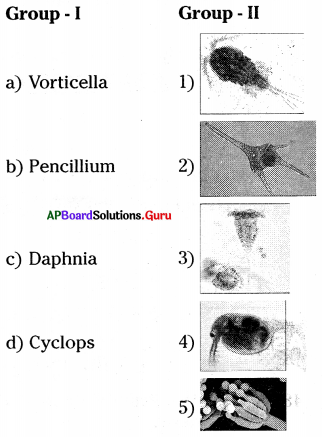
C) sand
D) ores
Answer:
D) ores

Question 17.
More pollutant among fossil fuels is
A) coal
B) petroleum
C) natural gas
D) none of these
Answer:
A) coal

Question 18.
……….. balls repel moths and other insects.
A) Benzene
B) Naphthalene
C) Anthoacene
D) Acitene
Answer:
B) Naphthalene

Question 19.
……… is exhaustible source among these.
A) solar energy
B) wind energy
C) tidal energy
D) natural gas
Answer:
D) natural gas

AP 8th Class Physical Science Bits Chapter 7 Coal and Petroleum with Answers

Question 20.
……… is used for extraction of metals.
A) Coal
B) Coke
C) Coal tar
D) Coal gas
Answer:
B) Coke

Question 21.
Choose correct option to sure matching.
Group – A — Group – B
1. Exhaustible source — a) Naphthalene
2. Inexhaustible source — b)Extraction of metals
3. Coal tar — c) Tidal energy
4. Coke — d)Lighting )
5. Coal gas — e) Natural gas
A) 1 – a, 2 – b, 3 – d, 4 – c, 5 – e
B) 1 – e, 2 – c, 3 – a, 4 – b, 5 – d
C) 1 – c, 2 – e, 3 – b, 4 – d, 5 – a
D) 1 – d, 2 – b, 3 – a, 4 – e, 5 – c
Answer:
B) 1 – e, 2 – c, 3 – a, 4 – b, 5 – d

Question 22.

Material How is it obtained ?
Glass By melting sand with other materials and then, cooling it rapidly
Clay By mixing the mineral kaolinite with water
Wood From dried up trees
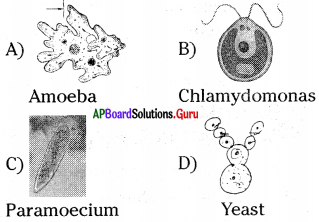
Plastics From petrochemicals
Metals From their respective ores

Plastic tables and plastic chairs are made with
A) Petroleum
B) Coal
C) Natural gas
D) Trees
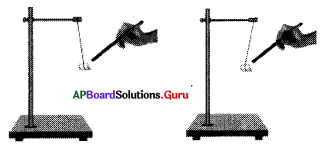
Answer:
A) Petroleum

Question 23.
AP 8th Class Physical Science Bits Chapter 7 Coal and Petroleum with Answers 2
Coal is used to manufacture
A) Napthalene
B) Paints
C) Kerosene
D) Both A and B
Answer:
D) Both A and B

AP 8th Class Physical Science Bits Chapter 7 Coal and Petroleum with Answers

Question 24.
This is not a product of petroleum
A) Candle
B) LPG
C) Petrol
D) Naphthalene
Answer:
A) Candle

Question 25.
AP 8th Class Physical Science Bits Chapter 7 Coal and Petroleum with Answers 3
Given figure is an example for ………. type of energy resource.
A) natural
B) renewable
C) non-renewable
D) both A and B
Answer:
D) both A and B

Question 26.
AP 8th Class Physical Science Bits Chapter 7 Coal and Petroleum with Answers 4
Part ‘a’ is
A) Boiling tube
B) Delivery tube
C) Jet tube
D) Stand
Answer:
B) Delivery tube

Question 27.
Liquid gold is
A) Petrol
B) Coal
C) Petroleum
D) Kerosene
Answer:
C) Petroleum

AP 8th Class Physical Science Bits Chapter 7 Coal and Petroleum with Answers

Question 28.
These microbes, which were produced petroleum are appreciable
A) Plankton
B) Dengue
C) Sea animals
D) Starfish
Answer:
A) Plankton

Question 29.
………… is exhaustible fuel among the fuels given below.
A) Solar energy
B) Wind energy
C) Coal
D) Tidal energy
Answer:
C) Coal

Question 30.
Solar energy ……….. source of energy.
A) exhaustible
B) inexhaustible
C) both
D) none of these
Answer:
B) inexhaustible

Question 31.
Coal, petroleum and natural gas are called ……… fuels.
A) fossil
B) natural
C) artificial
D) none of these
Answer:
A) fossil

AP 8th Class Physical Science Bits Chapter 7 Coal and Petroleum with Answers

Question 32.
……….. is used in the manufacture of steel and extraction of many metals.
A) Nickel
B) Cobalt
C) Zinc
D) Coke
Answer:
D) Coke

Question 33.
……….. is used for lighting.
A) Coal
B) Coke
C) Coal tar
D) Coal gas
Answer:
D) Coal gas

Question 34.
This product of ‘coal’ protects from moths and insects to our clothes
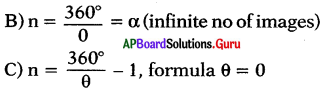
A) Napthelene
B) Vaseline
C) Wax
D) Paints
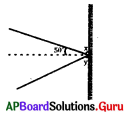
Answer:
A) Napthelene

Question 35.
Global warming is caused by
A) O2
B) CO2
C) N2
D) H2O
Answer:
B) CO2

AP 8th Class Physical Science Bits Chapter 7 Coal and Petroleum with Answers

Question 36.
Coal fired power plants (thermal power plants) emits
A) Mercury
B) Selenium
C) Arsenic
D) Above all
Answer:
D) Above all

Question 37.
Which of the following is not harmful to our health?
A) Solar power stations
B) Thermal power station
C) Hydrel power stations
D) Both A and C
Answer:
D) Both A and C

Question 38.
This is not a product of paraffin wax
A) Face cream
B) Grease
C) Candle
D) Paints
Answer:
D) Paints

Question 39.
This is a renewable and non-toxic fuel
A) Bio fuels
B) Petroleum fuel
C) LPG
D) Above all
Answer:
A) Bio fuels

AP 8th Class Physical Science Bits Chapter 7 Coal and Petroleum with Answers

Question 40.
Complete the given analogy
Carbon dioxide : Global warming : : ………….. : Nausea
A) Sulphur dioxide
B) Toxic substances from paints
C) Oxygen
D) Hydrogen
Answer:
B) Toxic substances from paints

Question 41.
Which of die following is Gas fuel
A) LPG
B) Petrol
C) Coal
D) Diesel
Answer:
A) LPG

Question 42.
i) Solar energy ii) Petroleum
iii) Wind energy iv) Hydro energy
Which of the above are inexhaustible resources?
A) only (i)
B) (i) and (iii)
C) (i), (ii) and (iii)
D) (i), (iii) and (iv)
Answer:
D) (i), (iii) and (iv)

Question 43.
Which of the following is not obtained from coaltar?
A) Naphthalene
B) Dyes
C) Sugar
D) Pesticides
Answer:
C) Sugar

AP 8th Class Physical Science Bits Chapter 7 Coal and Petroleum with Answers

Question 44.
P) Take a hard boiling tube and fill it with coal. Arrange a rubber cork and pass delivery tube through rubber cork
Q) Brownish black colour gas released from test tube
R) Take a boiling tube and fill it with water
S) We can observe the white flame at the mouth of jet tube
The correct sequence of arranging the apparatus.
A)Q-R-S-P
B)P-R-Q-S
C)P-S-Q-R
D)P-Q-R-S
Answer:
B)P-R-Q-S

Question 45.
Write the precautions to be taken in conducting an experiment showing the burning of gas released by heating a high quality coal.
a) test tubes must be very hard
b) maintain distance from bunsen burner
c) heat the test tube by keeping in
A) a and b only
B) a and c only
C) a, b and c only
D) a only
Answer:
C) a, b and c only

Question 46.
Petrochemical which is used in our daily life and which is not very harmful?
A) LPG
B) Kerosene
C) Diesel
D) Coaltar
Answer:
A) LPG

(47-48)
AP 8th Class Physical Science Bits Chapter 7 Coal and Petroleum with Answers 5
Identify the correct answers.
Question 47.
The above table indicates
A) the increasing the energy consump-tion year by year
B) the increase in energy deficiency percentage
C) the decrease in energy deficiency percentage
D) the increasing energy needs year by year
Answer:
B) the increase in energy deficiency percentage

AP 8th Class Physical Science Bits Chapter 7 Coal and Petroleum with Answers

Question 48.
Write the difference in energy deficiency percentage from 1993 to 1996.
A) 0.3
B) 0.8
C) 1.1
D) 11
Answer:
C) 1.1

(49-50)
Read the following paragraph and answers.
Petrochemicals are obtained by the fractional distillation of petroleum. Different compounds are formed at different temperatures. The first product obtained from petroleum is kerosene. Asphalt is the residue formed in fractional distillation. We also can get petrol, diesel, etc. from petroleum.
Question 49.
Name the first compound formed from petroleum.
A) Diesel
B) Kerosene
C) Asphalt
D) Petrol
Answer:
B) Kerosene

Question 50.
Name the residue formed from petroleum.
A) Diesel
B) Petrol
C) Asphalt
D) Kerosene
Answer:
C) Asphalt

Question 51.
If the energy sources are consumed, they will be exhausted. Which of the following is an inexhaustible resource?
A) CNG gas
B) Petroleum
C) Wind power
D) Coal
Answer:
C) Wind power

AP 8th Class Physical Science Bits Chapter 7 Coal and Petroleum with Answers

Question 52.
a) Using drier in washing machine to dry the clothes even when sunlight is present.
b) Using petrol likes for a shorter distance without walking. The above two sentences indicate
A) Using Alternate energy sources
B) Using energy sources
C) Misusing energy sources
D) Using petrochemicals
Answer:
C) Misusing energy sources

Question 53.
Compounds obtained from petro-chemical coal are
A) Coke, Coaltar, Coal gas
B) Coaltar, Kerosene, Coke
C) Coke, Coal gas, Petrol
D) Diesel, Coke, Coal gas
Answer:
A) Coke, Coaltar, Coal gas

Question 54.
Generally petrochemicals are harmful to environment.
Name the petrochemical which is not harmful.
A) Petroleum
B) Natural gas
C) Wood
D) Coal
Answer:
B) Natural gas

Question 55.
Set – A — Set – B
a) Coal — i) Plankton
b) Petroleum — ii) Fractional distillation
c) Petrol — iii) Carbonisation
Establish a relation between the com-pounds in Set – A and the formation process in Set – B.
A) a – iii, b – i, c – ii
B) a – i, b – ii, c – iii
C) a – ii, b – iii, c – i
D) a – iii, b – ii, c – i
Answer:
C) a – ii, b – iii, c – i

AP 8th Class Physical Science Bits Chapter 7 Coal and Petroleum with Answers

Question 56.
Which among the following is not a petrochemical?
AP 8th Class Physical Science Bits Chapter 7 Coal and Petroleum with Answers 6
Answer:
C) Conical flask

Question 57.
In the given picture X – indicates
AP 8th Class Physical Science Bits Chapter 7 Coal and Petroleum with Answers 7
A) Coal powder
B) Wax
C) Petroleum
D) Water
Answer:
A) Coal powder

Question 58.
Petroleum is a fossil fuel and is a nonrenewable source. Which among the following indicates the proper utilisation of fuels?
a) Minimising the mis-use of fuels.
b) Stop using the utilisation of nonrenewable sources.
c) Developing alternate resources of fuels.
A) a and b
B) a and c
C) a, b and c
D) a only
Answer:
B) a and c

Question 59.
The incorrect statement from the following is
A) Coal is formed due to carbonization
B) LPG is better fuel than CNG
C) Petroleum formed by plankton
D) Petrochemicals have various uses
Answer:
B) LPG is better fuel than CNG

AP 8th Class Physical Science Bits Chapter 7 Coal and Petroleum with Answers

Question 60.
When coal burns in air ……….
A) Carbon monoxide is formed
B) Oxygen is formed
C) Sulphur dioxide is formed
D) Carbon dioxide is formed
Answer:
D) Carbon dioxide is formed

Question 61.
Purest form of carbon is
A) Coal
B) Charcoal
C) Coke
D) All the above
Answer:
C) Coke